
Dangote Refinery IPO Draws N6.4 Trillion in Orders
The Dangote refinery domestic IPO attracted about N6.4 trillion in orders, redefining the scale of Nigerian equity issuance.
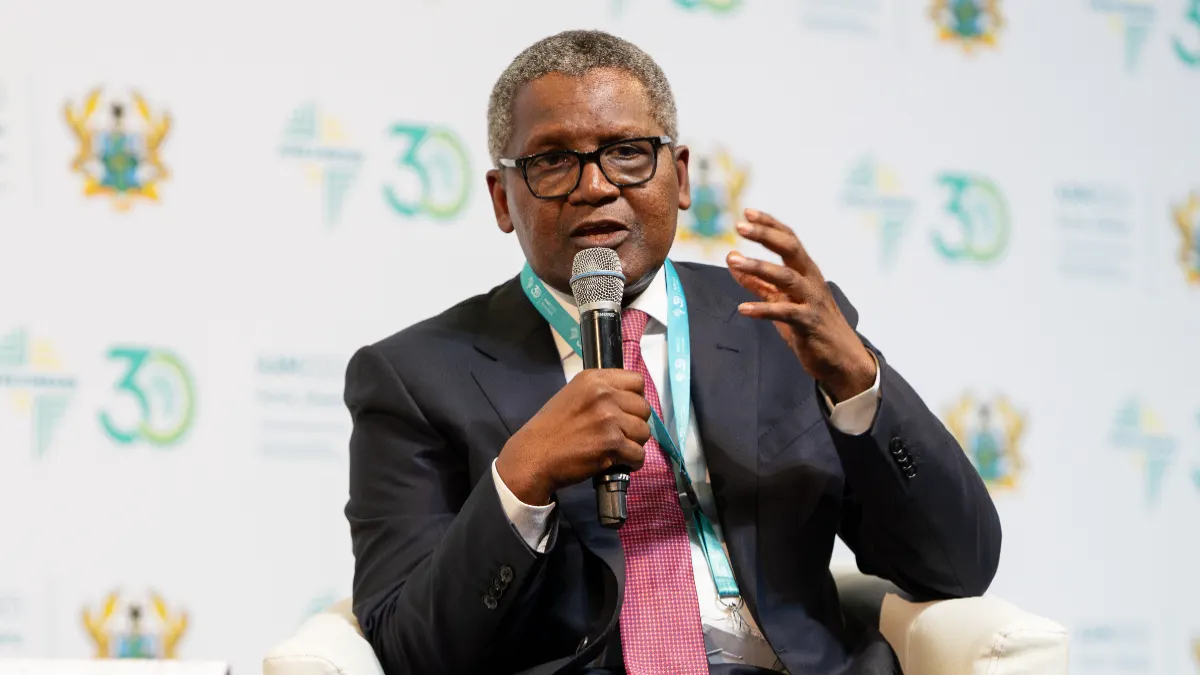
The Dangote Refinery's initial public offering attracted some 6.4 trillion naira — roughly $4.78 billion — in orders from retail and institutional investors before closing last week, according to a person involved in the offering who spoke to Reuters, capping a capital-market event that has redrawn the scale at which Nigerian equity issuance is measured.
The figure is unusual in every dimension investors apply to African markets. It represents, on its own, orders for a single listing that exceed the annual equity-raising capacity of most sub-Saharan exchanges, and its arrival in a year when domestic institutional money has been chasing fixed income at 15 to 18 per cent yields is itself a signal: Nigerian savers and institutions were prepared to lock capital into an industrial equity at scale.
What the order book tells about the market
The subscription math hides the more interesting structure. Retail and institutional investors ordered amounts several times larger than the offering allocated, meaning the IPO's final book was heavily oversubscribed — an allocation exercise rather than a funding question. Oversubscription of that magnitude, in a market where the NGX All-Share Index has climbed more than 63 per cent this year and market capitalisation now exceeds N165 trillion, confirms that the fastest-growing source of demand for Nigerian assets is domestic, not foreign: pension funds, insurers, high-net-worth retail and the growing cohort of first-time equity investors opened accounts through this listing.
The offering also extended a pattern this year's markets have established: the private capital arriving at scale is Nigerian. The Dangote industrial complex — refinery, petrochemicals, fertiliser and cement franchise — has been financed through a mix of loans, bonds and equity that relied heavily on domestic institutions, and the domestic IPO's reception indicates where that constituency is going. Every subsequent Nigerian mega-offering — including the state oil company's proposed listing — will price its own market off what this one achieved.
The refinery context behind the listing
The listing marks the moment when the world's largest single-train refinery formally opened its capital structure to the public that it sells fuel to. The 650,000-barrel-per-day facility began production with the most consequential operational record in Nigerian energy history: it has displaced a meaningful share of the country's petrol imports, absorbed the fuel price subsidy's legacy economics, and pushed the processing of Nigerian crude onshore at a scale that the state's own refineries never managed. Each of those achievements was the subject of investment scepticism through the project's decade of development.
The commercial rationale for a listing at all is partly succession and partly funding. Listing shares to the public brings the governance disciplines of audited reporting, independent directors and quarterly disclosure into a private industrial empire — which matters for a project whose debt infrastructure has been the subject of extensive commentary — while the proceeds fund the next phase of the industrial agenda: petrochemical capacity expansion, fertiliser and the midstream logistics that connect the refinery to the domestic market.
The listing's volatility and governance questions
The scale of oversubscription also raises the standard questions that follow mega-IPOs. Allocation outcomes across retail demand, institutional priority and cornerstone tranches set the stock's float and will determine how volatile the shares are when positioning unwinds; the pricing level — struck against the NGX's 63 per cent annual advance and the refinery's own earnings trajectory — will be the yardstick for every subsequent Nigerian industrial listing; and the lock-up structures for insiders are the mechanism through which the market will judge management's own conviction.
Investors will also weigh the refinery's fundamental exposure. Earnings ride on crude margins and the crack spreads between crude costs and fuel prices, both of which are swinging globally this month as the Iran war's price premium unwinds; the domestic market's regulatory price ladder determines what share of global moves reaches Nigerian pump prices; and the project's export ambitions — supplying jet fuel and refined products into West Africa — remain the growth lever that the prospectus will have argued hardest.
What it changed for every future Nigerian raising
For the market's architecture, the event's most durable significance is its demonstration effect. Nigerian ASCE exchanges have historically relied on foreign flows for mega-transactions, and the 2026 listing calendar's largest order book was almost entirely domestic — evidence that the institutional savings surge this year's rates environment has built can absorb deals that would have gone to Eurobond markets a decade ago. That is the funding architecture of a genuinely deepened capital market, and it arrived through a private industrial project rather than through state issuance.
The next natural question is whether the success repeats: the state oil company's proposed 5 to 10 per cent IPO is the natural comparison, and its CEO has already signaled the domestic-market-first approach modelled here. Between the NGX's year-to-date returns, a treasury-bill market absorbing trillions and a public that just demonstrated its appetite for industrial equity at scale, the conditions for a repricing of what "capital market depth" means in Africa have arguably never been better met than by a single order book of N6.4 trillion.
Up next
Africa Digital Agriculture Shifts from Apps to Shared Infrastructure
The AU digital agriculture strategy pivots toward interoperable data systems, reframing how the continent connects farmers to services.
More in Business
See allFG Backs Plan to Give Students 10 Dangote Refinery IPO Shares Each
FG hails Aliko Dangote Foundation plan to give eligible tertiary students 10 Dangote Refinery IPO shares each, potentially reaching four million students.
FT: Africa's Fastest-Growing Cities to Add 19 Million People a Year
The Financial Times' Big Read on the world's fastest-growing cities reports that Africa's urban centres are set to expand by 19 million people a year, nearly two Londons annually, with growth concentrating in a handful of hubs and spreading in unfamiliar patterns.
Ethiopia Opens $50 Million Gold Refinery in Domestic Processing Push
Ethiopia launched its first gold refinery, a US$50 million joint venture, as Prime Minister Abiy Ahmed seeks to process more of the country's minerals at home.
About the author
Chinedu Nwosu
Technology Editor
Chinedu Nwosu writes for BusinessPress.
More by Chinedu Nwosu


