Layer3 Raises N1.5 Billion to Back Local Data-Sovereignty Infrastructure
Layer3 has completed the issuance of N1.5 billion in commercial paper, its first raise under a larger N15 billion programme, to finance local cloud and data infrastructure.
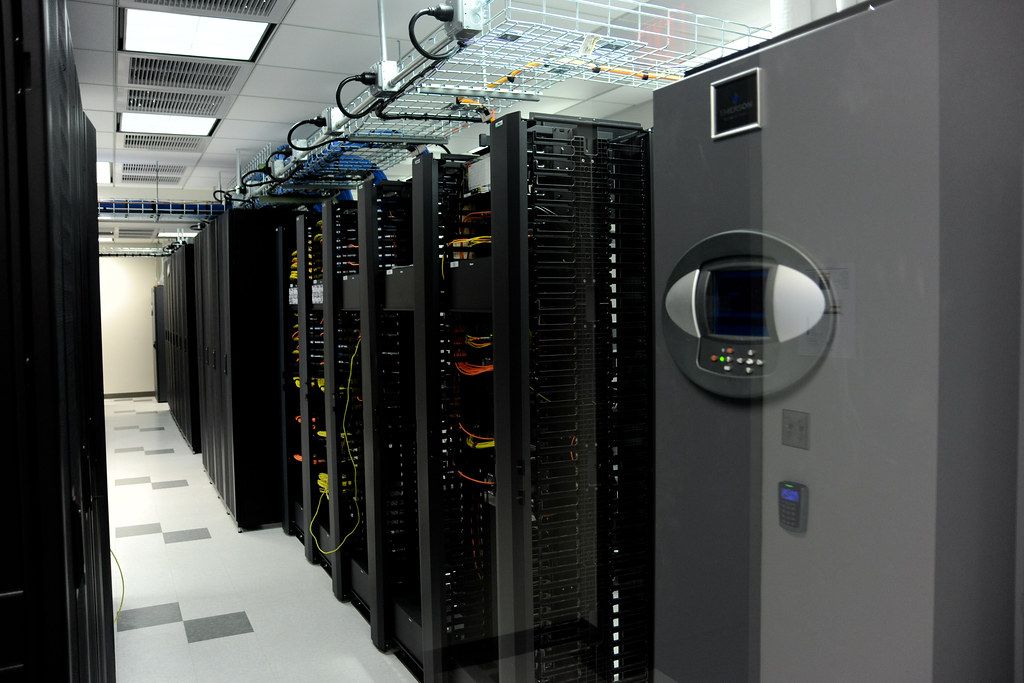
Layer3, the Nigerian cloud and connectivity company, has completed the issuance of N1.5 billion in commercial paper, its first fundraising under a larger N15 billion programme, to finance the expansion of local data infrastructure.
The company said the Series 1 and Series 2 notes were issued under a commercial paper programme whose trust deed was signed on October 9, 2026, at the offices of Emerging Africa, with Emerging Africa Trustees Limited acting as programme trustee. The funds will support enterprise cloud services through Layer3Cloud, connectivity and managed operations.
Why data sovereignty is now a capital-markets story
For years, the argument for local data infrastructure was largely about cost and latency. It is now increasingly about regulation. Financial institutions, telecoms operators and government agencies face growing pressure to keep sensitive data within Nigeria and to demonstrate that they can keep operating if an external link is disrupted. That pressure transforms data residency from a preference into a compliance requirement, and it turns local data centres and cloud platforms into essential infrastructure.
Layer3's decision to raise money through commercial paper rather than equity reflects the maturing of that market. Commercial paper is short-dated debt suited to financing working capital and near-term capital expenditure, and its use by a technology company signals that local debt investors are willing to fund digital infrastructure, not just banks and industrial groups.
The regulatory backdrop
Nigeria's financial regulators have been tightening expectations around data localisation, operational resilience and the ability of institutions to withstand disruptions to their technology providers. For the banks that recently raised fresh capital, these requirements translate into spending on systems, security and redundancy. A domestic cloud and connectivity provider stands to capture part of that spending, provided it can meet the security, uptime and compliance standards that regulated institutions demand.
The global context reinforces the theme. Several high-profile outages at major international cloud providers over the past year have shown that even the largest platforms can fail, and that reliance on a single foreign provider is a concentration risk. That has strengthened the case for local capacity that can serve as a complement or an alternative.
What it means for Nigerian institutions
For banks, insurers, hospitals and government agencies, the availability of credible local infrastructure is a strategic asset. It reduces dependence on international links, shortens the distance data travels and, in principle, gives institutions more control over where their information is held. For the technology sector, the ability to raise debt against these projects opens a funding channel that does not dilute founders and does not depend on the mood of the venture capital market.
A N1.5 billion issuance is modest against the scale of Nigeria's infrastructure needs, but its significance is structural. It demonstrates that a Nigerian technology company can access the domestic debt market to build hard assets, a route that has mostly been open only to banks, manufacturers and larger, better-established corporates.
The scale of the task
The challenge ahead is whether the funds and the larger programme translate into capacity that meets demand. Building data centres and cloud capacity is capital-intensive, requires reliable power and skilled staff, and competes with global providers on price and features. The test for Layer3 will be whether it can win regulated customers on compliance and reliability rather than price alone, and whether it can tap the debt market again to fund its next stage of growth. For Nigeria's wider digital economy, a stronger local infrastructure layer is a foundation on which more software, services and jobs can be built.
Up next
Cascador and Sterling Bank Launch $200 Million Fund to Unlock Credit for Nigerian SMEs
Cascador and Sterling Bank have launched a $200 million SME Credit Backstop Fund designed to unlock credit for startups and small businesses that struggle to borrow.
More in Technology
See all
NCC Moves to Block Unapproved Phones as Users Get 30-Day Alerts
Nigerians are receiving alerts warning their phones could be disconnected after 30 days under the NCC's new Device Management System for type-approved devices.

Yellow Card Expands to Canada After $40 Million Stablecoin Round
Nigeria-founded fintech Yellow Card has launched in Canada weeks after closing a $40 million funding round, as it pivots from consumer crypto trading to business-to-business stablecoin payments across emerging markets.

Nigerian Startups Raise $254 Million in H1 2026, Regaining Africa Equity Lead
Nigerian startups attracted about $254 million in the first half of 2026, the first time funding has crossed the $250 million mark since 2022, as the country reclaimed its position as Africa's leading destination for startup equity.
About the author
Chinedu Nwosu
Technology Editor
Chinedu Nwosu writes for BusinessPress.
More by Chinedu Nwosu