Cascador and Sterling Bank Launch $200 Million Fund to Unlock Credit for Nigerian SMEs
Cascador and Sterling Bank have launched a $200 million SME Credit Backstop Fund designed to unlock credit for startups and small businesses that struggle to borrow.

Cascador and Sterling Bank have launched a $200 million SME Credit Backstop Fund aimed at unlocking credit for Nigerian startups and small businesses that struggle to borrow because they lack the collateral and track record banks require.
The fund, announced on Wednesday, is designed to act as a credit guarantee mechanism rather than a direct lender, providing backstop capital that absorbs part of the risk on loans originated by banks and other lenders. Organisers say it is structured to support up to $1 billion in lending capacity as it scales.
How the backstop works
The fund's model is to stand behind loans rather than stand in for banks. Loans will start at up to $250,000 and rise to as much as $1 million as borrowers demonstrate repayment capacity. The backstop capital is expected to come from a mix of philanthropy, impact investors and development finance institutions, who provide the cushion that makes lenders willing to advance money to businesses they would otherwise decline.
Two vehicles carry the structure: Riverwell Platform Holding in the United Kingdom and Riverwell Platform Services in Nigeria. The arrangement builds on an earlier, smaller facility. In 2025 Cascador ran a $2 million catalytic fund that lent at rates of around 20 per cent, and at a pitch day in June 2026 it distributed more than $5 million, including a N2.5 billion debt facility, worth roughly $1.7 million, to the agricultural business Agriarche.
Why debt is displacing equity for startups
The fund reflects a broader shift in how African startups are financed. As equity valuations cooled and venture capital became harder to raise, debt has grown as a share of startup funding. Debt reached about $1.64 billion in 2025, or about 41 per cent of total funding, and roughly $614 million in the first half of 2026, or about 43 per cent, according to TechCabal. Yet only 19 African startups raised at least $100,000 in the first half of 2026, showing that access remains concentrated.
For founders, debt has real advantages: it does not dilute ownership, and it forces financial discipline. But it also requires predictable cash flows to service, which is precisely why backstop guarantees matter. By sharing the risk, the fund makes it possible for lenders to say yes to businesses whose cash flows are promising but whose balance sheets are thin.
What it means for small businesses
Access to affordable credit is one of the most persistent constraints on Nigerian small businesses. Without borrowing, companies cannot buy equipment, build inventory or bridge the gap between paying suppliers and collecting from customers, so they grow more slowly and create fewer jobs than they could. A functioning guarantee scheme can widen that access, provided the fund reaches beyond the well-connected and prices risk sensibly.
The partnership with Sterling Bank is useful because it connects the guarantee to an institution with lending infrastructure and a customer base. A guarantee without a distribution channel would be an abstract promise; pairing it with an established bank gives it a route to borrowers.
The execution test
The promise of the $200 million fund is a guarantee capacity that supports lending, and the risk is that it remains underused if the terms are unattractive or the process is cumbersome. The measures that matter will be how quickly loans are disbursed, the default rate on guaranteed loans, and whether the model proves attractive enough to draw additional capital from impact investors and development financiers. If it works, it could become a template for how Nigeria channels credit to the businesses that drive most of its employment.
Up next
Bisedge Secures €10 Million Finnfund Loan to Electrify Nigerian Logistics
Bisedge has secured a €10 million long-term investment loan from Finnfund to expand its electric materials-handling fleet in Nigeria and East Africa.
More in Business
See all
Airlines Risk N6.6 Billion From 25-Day Owerri Airport Closure
Domestic airlines could lose over N6.6 billion from the planned 25-day closure of Owerri's Sam Mbakwe airport for runway rehabilitation, affecting 55,000 passengers.

Nigeria Accounts for $131bn of Africa's $209bn Business Financing Gap
A study by BII and Swedfund found a $209 billion financing gap for Black-owned businesses across five African economies, with Nigeria accounting for $131 billion.
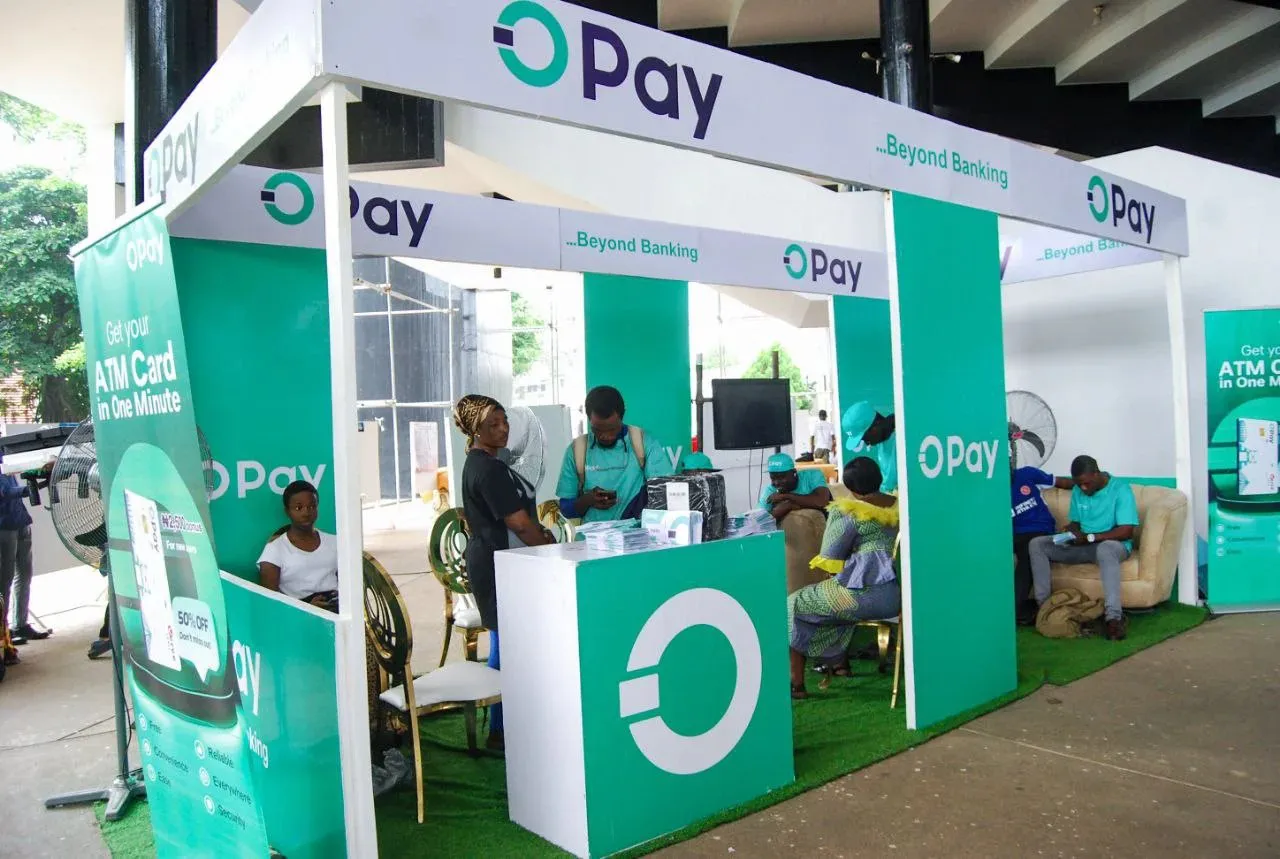
OPay Files for New York Stock Exchange Listing at $4 Billion Valuation
Nigerian fintech OPay has filed for an IPO on the New York Stock Exchange, targeting a valuation of about $4 billion and planning a secondary listing in Lagos.
About the author
Amaka Obi
Senior Business Reporter
Amaka Obi writes for BusinessPress.
More by Amaka Obi
Nigeria's Petrol Subsidy Debate: What the IMF's Warning Really Says
Opinion & Analysis1 hr ago
Nigeria's Debt Maths: Why Interest Is Eating the Budget
Opinion & Analysis1 hr ago
Nigeria's Equity Market Is Booming Without the Foreigners
Opinion & Analysis