Nigeria's Petrol Subsidy Debate: What the IMF's Warning Really Says
The IMF used its fiscal monitor briefing to warn against restoring broad fuel subsidies. This analysis examines the fiscal arithmetic, the politics and the realistic path for Nigeria.
Analysis: This piece interprets Wednesday's International Monetary Fund briefing on fuel subsidies and maps the policy choices facing Nigeria. It is clearly labelled analysis and separates the fund's findings from the author's assessment.
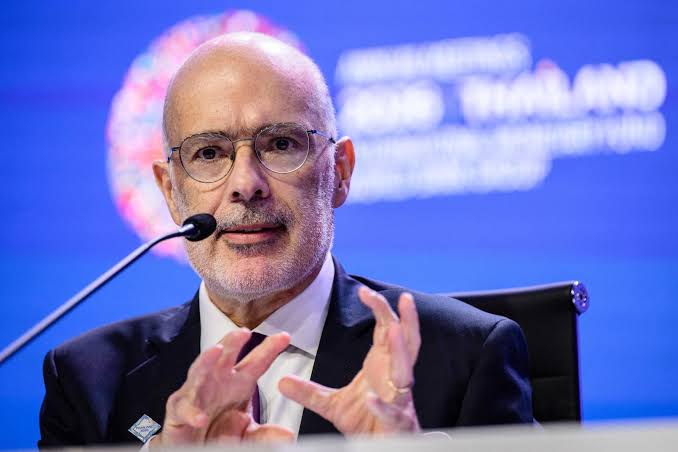
The International Monetary Fund used its fiscal monitor briefing on Wednesday to send a pointed warning to governments weighing a return to broad fuel subsidies, and Nigeria is the subtext. Speaking at the IMF and World Bank Annual Meetings in Bangkok, the fund's fiscal affairs director, Rodrigo Valdés, advised against restoring universal petrol subsidies and argued that support for households should instead be targeted, temporary and limited.
The IMF's numbers give the warning its edge. The fund estimates that energy subsidies cost countries between 1 and 1.5 per cent of gross domestic product in 2026. That is a striking figure for any economy, and for Nigeria it lands on a budget already stretched by debt service and infrastructure needs.
The fiscal arithmetic
Subsidies are seductive because their benefits are immediate and visible. A lower pump price is felt at the filling station on the same day it is announced, and politicians are not wrong to note that voters notice. The cost, however, is deferred and diffuse. Subsidised fuel is typically regressive, because the largest volumes are consumed by wealthier households with more cars, generators and businesses. The money that goes into holding prices down is money that cannot go into schools, clinics, roads or tax relief.
Valdés and his colleagues at the fund make the case that the same fiscal resources would do more good if they flowed directly to poor and vulnerable households. IMF officials point to measures such as subsidised bus fares, school feeding and support for vulnerable farmers, delivered through geographic targeting where individual registries are weak. Their message is not that governments should ignore the hardship caused by high fuel prices, but that they should relieve it without a blanket subsidy whose benefits are captured disproportionately by the better-off.
The political economy
The difficulty is political, and it is severe. Nigeria's Federal Government has moved to cushion the effect of petrol prices with a 30-day discount arrangement through the Nigerian National Petroleum Company, which has been selling at cost and prioritising public transport, while officials including the finance minister insist the relief is temporary and not a return to subsidy. At the same time, cost-of-living pressure and an approaching political cycle create constant pressure to make relief permanent and universal.
History suggests caution. Nigeria's previous attempt to remove petrol subsidies produced a sharp, headline-grabbing price increase and an intense political backlash. Governments learn from that, and the temptation to retreat into a costly blanket subsidy at the first sign of popular anger is strong. The IMF's warning is a reminder of the price of that retreat.
Why targeting is harder than it sounds
If broad subsidies are wasteful, targeted ones are administratively demanding. Effective targeting requires three things Nigeria has historically struggled to deliver at scale: accurate data on who is poor, a reliable payment system that reaches them, and the capacity to adjust the programme as conditions change. Without these, targeting can miss the people who most need help while still incurring significant cost.
There is also a time-consistency problem. Targeted transfers can be politically fragile in a way that a universal subsidy is not, because the beneficiaries of a transfer are a narrower and often less vocal group than the mass of motorists who benefit from cheap fuel. Building durable political support for targeted support is part of the policy challenge, not separate from it.
A realistic path
The fund's own language offers a pragmatic route: keep support temporary, limit it to those who need it, and design it so that it can be withdrawn as conditions normalise. For Nigeria, that argues for using the current relief to buy time and space, while rapidly building the registries and digital payment rails that make targeted support work. Deploying a temporary measure is defensible; drifting into a permanent, untargeted subsidy is not.
The IMF's Wednesday briefing will not by itself settle Nigeria's subsidy debate. But it crystallises the choice: spend scarce fiscal resources on the many through a broad price subsidy, or spend them more efficiently on the few through targeted support. The arithmetic favours the latter. Whether the politics allows it is the harder question, and the answer will shape Nigeria's budget for years to come.
Up next
Layer3 Raises N1.5 Billion to Back Local Data-Sovereignty Infrastructure
Layer3 has completed the issuance of N1.5 billion in commercial paper, its first raise under a larger N15 billion programme, to finance local cloud and data infrastructure.
More in Opinion & Analysis
See allNigeria's Equity Market Is Booming Without the Foreigners
Nigeria's stock market has surged about 66% this year on domestic money alone, raising the question of how durable a rally can be without foreign investors.
Will Nigeria's Biggest Rate Cut Unlock Cheaper Credit?
Nigeria's central bank has delivered its largest-ever cut to the benchmark rate. The question now is whether banks will pass it on to the businesses and households that need affordable credit.
IMF Says Nigeria's N4.65 Trillion Bank Recapitalisation Is Only the First Step
The International Monetary Fund has said Nigeria's bank recapitalisation is necessary but not sufficient, urging stronger supervision, better buffers and timely recognition of non-performing loans.
About the author
Amaka Obi
Senior Business Reporter
Amaka Obi writes for BusinessPress.