LCCI warns export curbs could hurt farmers
Inconsistent export policies could hurt farmers, says LCCI's Tunde Banjoko, calling for guaranteed offtake, better storage, affordable credit and a commodity board to set benchmark prices.

Policy inconsistency threatens gains
The Lagos Chamber of Commerce and Industry has warned that recent export curbs could hurt farmers unless the government maintains policy consistency, with clear implementation rules to guide producers and investors. Speaking on BusinessDay Television's Breakfast Show on 15 October 2026, Tunde Banjoko, chairman of the agriculture group of the Lagos Chamber of Commerce and Industry and Managing Director of B.O Farms Limited, said the intentions behind the policies were good, but the biggest threat to them was the consistency of government. He cautioned that abrupt changes or mixed signals could undermine confidence in the sector at a time when farmers are being encouraged to scale production for domestic and export markets.
Banjoko's comments come amid ongoing debates over export restrictions on agricultural commodities and the need to balance food security with trade opportunities. While restrictions can help ensure domestic supply in times of scarcity, frequent policy reversals make it difficult for farmers to plan planting cycles, secure inputs or enter into contracts. For agribusinesses that have invested in value addition and export logistics, predictability is as important as price incentives. Without a stable policy framework, the risk of losses increases, discouraging both smallholder and commercial farmers from committing resources to long-term production. The LCCI's warning reflects growing concern among industry players that well-intentioned interventions could backfire if implementation remains fragmented.
The chamber also highlighted the broader context of Nigeria's agricultural transformation agenda, which aims to reduce import dependence, create jobs and boost non-oil exports. Achieving those goals requires aligning trade policy with production incentives. Export curbs that are introduced without complementary support measures can create gluts in local markets, depress farmgate prices and erode the profitability of farmers who had anticipated export earnings. To avoid this outcome, Banjoko stressed the need for a more coordinated approach that protects both consumers and producers, while providing the certainty required to attract investment across the value chain.
Need for guaranteed offtake and fair prices
To safeguard farmers from price volatility when export curbs are in place, Banjoko called for guaranteed offtake and a guaranteed offtake price. Such mechanisms would ensure that farmers have a reliable buyer at a fair price, even when export markets are closed. He also advocated for better storage infrastructure to reduce post-harvest losses, affordable credit to finance inputs and operations, and a policy that allows the export of only surplus produce after domestic needs are met. These measures, he argued, would help strike a balance between food security and trade, while protecting the incomes of those at the production end of the value chain.
Improved storage is particularly critical in Nigeria, where a significant share of harvested produce is lost due to inadequate warehousing and poor handling. Coupled with affordable credit, better storage can enable farmers to hold produce until prices are more favourable, rather than selling at distress prices during peak harvest. A surplus-based export policy would provide clarity by defining when exports are permissible, reducing the scope for abrupt bans. Together, these interventions could help stabilise markets and build confidence among farmers and investors alike. However, their effectiveness hinges on consistent implementation and timely disbursement of support.
Commodity board as umpire
As part of a longer-term solution to market distortions, Banjoko proposed the establishment of a commodity board to act as an umpire and set a minimum benchmark price for agricultural produce. A well-structured commodity board could provide price discovery, coordinate offtake, manage strategic reserves and ensure quality standards. By setting a minimum benchmark price, it would protect farmers from predatory pricing while still allowing market forces to operate above that floor. The board would also play a role in enforcing the surplus rule, providing a clear reference point for when exports can resume.
While commodity boards have had mixed records in the past, proponents argue that a modern, transparent and market-oriented version could address current challenges without recreating inefficiencies. For it to work, the board must be insulated from political interference and operate with clear rules. Its success would also depend on effective collaboration with private sector actors, including cooperatives, traders and processors. If implemented well, such a framework could provide the policy consistency that Banjoko identified as critical to the success of export curbs and broader agricultural reforms. For farmers, it would mean greater certainty; for investors, a more predictable operating environment; and for consumers, more stable food prices in the long run.
Up next
Kenya targets April 2027 exit from FATF grey list
Kenya has cleared 19 of 21 FATF action items and aims to exit the grey list by April 2027 after raising its cash-withdrawal reporting threshold and moving to tighten rules on frozen assets and proliferation financing.
More in Agriculture
See all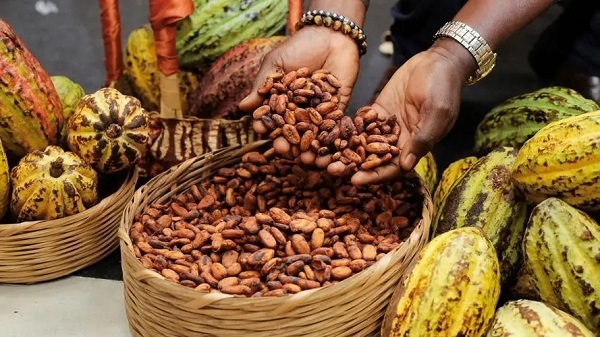
Cocoa grindings rebound, prices rise
Asia's cocoa grindings jumped 29.2% in Q3 2026 and Europe's rose 3.2%, pushing prices higher as demand recovers, with implications for Nigeria and Cote d'Ivoire.
FG, IFAD Begin 13th VCDP Supervision Mission as Programme Approaches Completion
The FG and IFAD launch the 13th Joint Supervision Mission of the Value Chain Development Programme, praising rice and cassava gains while flagging disbursement and counterpart-funding gaps.
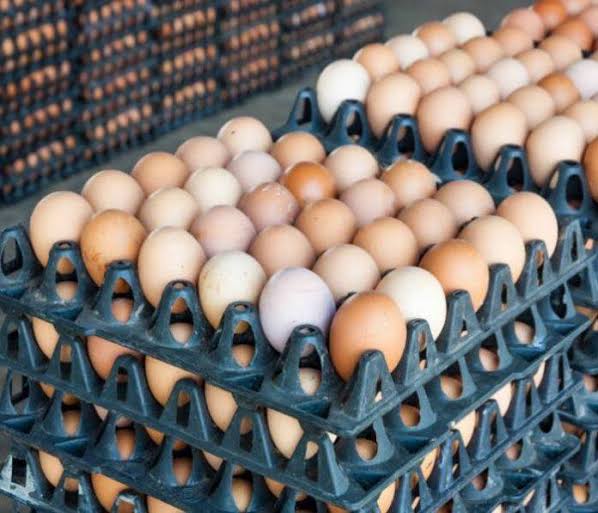
ESDAN Launches EggHome App to Tackle Egg Glut and Cut Out Middlemen
The Egg Sellers and Distributors Association of Nigeria unveils EggHome to link egg producers directly with consumers and ease recurring market gluts.
About the author
Abena Ofori
Agribusiness Correspondent
Abena Ofori writes for BusinessPress.
More by Abena Ofori
DMO offers N1.75tn FGN bonds ahead of Monday's auction
Markets4 hrs ago