Nigeria spent N5.28tn on domestic debt service in H1 2026
Nigeria spent N5.28 trillion servicing domestic debt in the first half of 2026, with interest and rental payments accounting for N4.95 trillion, according to the Debt Management Office.
Nigeria spent N5.28 trillion servicing domestic debt in the first half of 2026, according to data released by the Debt Management Office (DMO) on 15 October 2026. The figure covers debt service payments between January and June 2026 and underscores the continued weight of debt servicing on the government's finances.
Of the total, interest and rental payments accounted for N4.95 trillion, with principal repayments making up the balance. The monthly breakdown shows domestic debt service rising from N741.82 billion in January to N967.67 billion in February and peaking at N1.43 trillion in March, before moderating in the second quarter. Data from the DMO shows domestic debt service fell to N2.14 trillion in the second quarter of 2026, down from N3.14 trillion in the first quarter.
Composition of payments
The DMO's actual domestic debt service figures show that interest payments dominated the outflow, accounting for the bulk of total domestic debt service. Within domestic interest payments, FGN bonds accounted for N3.29 trillion, while Nigerian Treasury Bills (NTBs) accounted for N1.49 trillion, reflecting the structure of the domestic debt stock. Principal repayments were relatively lower over the period, with the elevated March figure driven in part by a large Treasury bill maturity and FGN bond coupon payments.
On a quarterly basis, Q1 2026 domestic debt service of N3.14 trillion was up 37.5 per cent from N2.28 trillion in Q4 2025 and 20.3 per cent higher than the N2.61 trillion recorded in Q1 2025. The subsequent decline to N2.14 trillion in Q2 2026 brought the half-year total to N5.28 trillion, in line with budgetary provisions. The DMO's quarterly reports show total public debt stood at N166.79 trillion as of June 2026, with domestic debt accounting for N91.59 trillion, or 54.91 per cent of the total.
Fiscal implications
The N5.28 trillion spent on domestic debt service in H1 2026 represents a significant portion of government expenditure and remains the largest component of debt service, outstripping external debt service on a naira basis. Annualising the half-year figure gives about N15.60 trillion, which is broadly in line with the N15.80 trillion provided for debt service in the 2026 budget. The DMO and analysts have attributed part of the lower-than-budgeted run rate to the stronger naira, which reduces the naira cost of servicing foreign-currency debt.
With domestic debt still the dominant share of Nigeria's public debt portfolio, high interest rates on domestic instruments continue to drive debt service costs. The concentration of payments in interest, rather than principal, limits fiscal space for capital and social spending. As the government maintains its domestic borrowing programme to meet financing needs, managing the cost of domestic debt remains a key fiscal challenge.
Outlook
The moderation in Q2 domestic debt service provides some relief, but the half-year total of N5.28 trillion highlights the persistent debt service burden. Sustaining recent exchange rate stability and efforts to improve revenue mobilisation will be critical to creating more fiscal space. Meanwhile, the structure of future borrowing, including tenor and instrument mix, will remain important in containing the growth of domestic debt service costs in the coming quarters.
Up next
Nigeria's Inflation Eases to 14.63% in September as Food Prices Fall
The NBS said headline inflation dropped to 14.63% in September from 15.39% in August, with month-on-month food prices falling 1.55% and core inflation at 12.95% year-on-year.
More in Economy
See all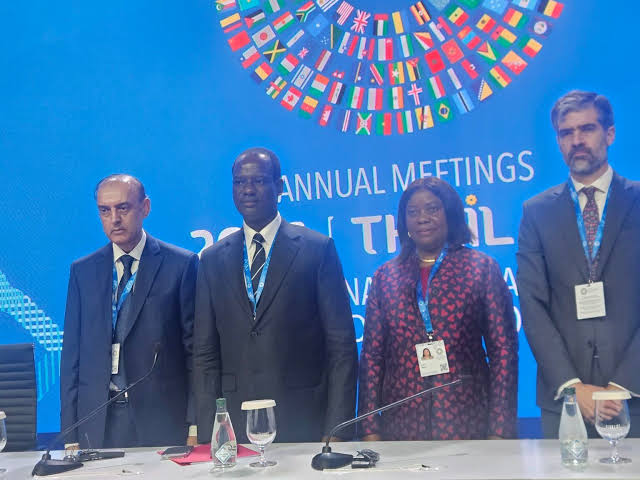
G-24 Warns Developing Nations Pay $500bn More for Debt Than Rich Countries
G-24 chair Taiwo Oyedele said developing countries pay about $500 billion more for debt than developed economies, urging cheaper IMF and World Bank financing.
IMF Sees Sub-Saharan Africa Growing 4.5% in 2026 as Aid Flows Shrink
The IMF's October Regional Economic Outlook upgraded Sub-Saharan Africa's 2026 growth forecast to 4.5% while warning that bilateral aid will fall another 12% after dropping about a quarter in 2025.
FAAC Shares N2.428 Trillion to FG, States, LGs as Oil Revenue Rebounds
The three tiers of government shared N2.428 trillion for September 2026, up N90 billion from August, as gross statutory revenue rose 8.6% on higher oil receipts while VAT collections fell 2.2%.
About the author
Chinedu Nwosu
Technology Editor
Chinedu Nwosu writes for BusinessPress.
More by Chinedu Nwosu
Global PC Shipments Fall 20.1%, Squeezing Nigeria's Import-Dependent Market
Technology4 hrs ago
Ethiopia joins continental payment system
Technology4 hrs ago
Universal Music Group Cuts Costs With Fresh Layoffs and $270m Savings Target
Technology