Naira Holds Near N1,331 as Parallel-Market Gap Narrows to 2.88 per Cent
The official NFEM rate firmed to N1,331.61 to the dollar while street quotes sat around N1,375 to N1,390, leaving a spread that has compressed sharply as reserves climb and central bank FX sales stay low.
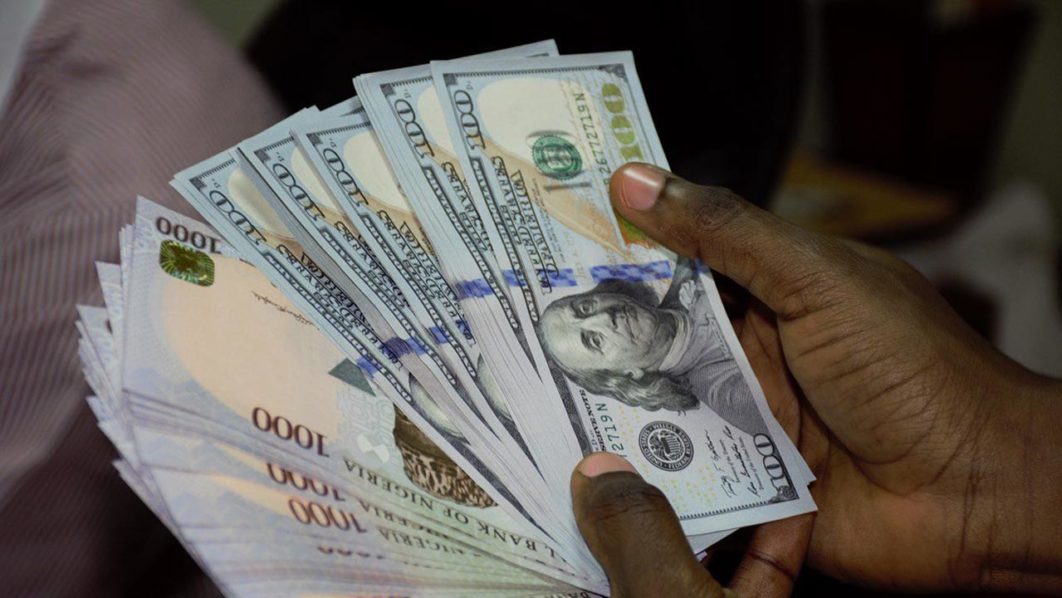
The naira held broadly steady through the official and parallel markets on Friday, quoted at about ₦1,331.61 to the dollar at the Nigerian Foreign Exchange Market for the previous session and a few dozen naira weaker on the street, leaving the gap between the two windows at roughly 2.88 per cent.
The official rate firmed marginally from ₦1,332.58 on Wednesday to ₦1,331.61 on Thursday, a gain of 0.07 per cent, according to Central Bank of Nigeria data. Midday quotes on Friday sat near ₦1,330 to ₦1,333, with the live interbank reference around ₦1,331.4. Parallel-market operators quoted dollar sales at about ₦1,375 to ₦1,390.
For a currency that spent much of the reform period under pressure, the week's calm is notable — but the premium that persists on the street is a reminder that stability is not the same as equilibrium.
Official and street rates move at different speeds
The official window has been remarkably tightly range-bound. The NFEM rate has moved between roughly ₦1,330 and ₦1,336 for most of October: ₦1,331.50 on 6 October, ₦1,332.75 on 7 October, ₦1,332.99 on 12 October, ₦1,335.50 on 13 October, and about ₦1,331.61 on 15 October.
The parallel market has followed the same direction but from a higher base. Bureau de Change operators have quoted selling rates between ₦1,375 and ₦1,390 through the week, producing a spread that narrowed to about 2.88 per cent — a comparatively tight gap by Nigeria's recent standards, when the differential has at times exceeded 10 per cent.
Why the spread matters
A narrow gap signals that official channels are broadly meeting demand for foreign exchange, which limits the incentive for importers and businesses to seek dollars informally. A widening gap would do the opposite: it would revive arbitrage, push more transactions into the parallel market and complicate the CBN's effort to anchor inflation expectations.
The compression over the past year reflects several forces. Stronger oil output and record external reserves — which the CBN has reported at above $55 billion, with net buffers of about $46 billion — have improved dollar supply. Lower central bank intervention, with first-half FX sales at a 19-year low, has coincided with a market that is no longer desperate for liquidity. And elevated yields on government securities have drawn portfolio inflows that add to supply at the official window.
Reserves, oil and the inflation backdrop
The near-term outlook for the naira rests on three variables. The first is oil. Crude has stayed above $100 a barrel for weeks on Middle East supply risk, lifting Nigeria's dollar earnings even as it raises the cost of imported refined products. That is a mixed blessing, but on balance it supports the external account.
The second is the inflation trajectory. Headline inflation eased for a fourth consecutive month to 14.63 per cent in September, according to the National Bureau of Statistics, giving the CBN room to keep its easing posture. A credible disinflation path improves the real return on naira assets and makes holding the currency more attractive.
The third is the global dollar. The greenback has weakened this week as US Treasury yields fell, offering emerging-market currencies a degree of relief. If that reversal continues, it would ease pressure across the board, including on the naira.
What to watch
The durability of naira stability depends less on any single week's fixing than on structural supply: exports, remittances and non-oil foreign earnings. Portfolio flows are fickle, and oil prices are volatile.
Investors will therefore track three things: the pace of reserve accumulation, the trend in the official-to-parallel spread, and any signal of a change in the CBN's FX policy. A spread that stays contained would reinforce confidence that the official market can bear the load. A renewed widening would show that the informal market is still the release valve — and that the reform's hard work is not yet finished.
Up next
Dollar Set for First Weekly Drop in Five Weeks as AI Jitters Cut Yields6th
The dollar index held near 102.07 and headed for its first weekly decline since mid-September as the 10-year Treasury yield fell about 15 basis points and the euro recovered from a 17-month low.
More in Markets
See all
FG to Issue N5.40 Trillion Treasury Bills in Q4, With a Sharp Bias to One-Year Debt
The Central Bank and Debt Management Office plan N5.40 trillion in Treasury bill offers between October and December 2026, with nearly 76% in 364-day instruments, a structure that largely rolls over maturing obligations rather than raising new money.
Naira forwards signal calmer currency expectations
The gap between spot and forward rates has narrowed, easing one source of corporate uncertainty.

CBN introduces NOFR as transaction-based benchmark for naira markets
The secured overnight reference rate is intended to improve pricing transparency and give financial contracts a more reliable base rate.
About the author
Kelechi Nwachukwu
Business Reporter
Kelechi Nwachukwu writes for BusinessPress.