
Naira Stages Friday Rally From Parallel Market
The naira appreciates to N1,375 in the parallel market and N1,349 officially on Friday, narrowing the premium to N29 on surging interbank turnover.
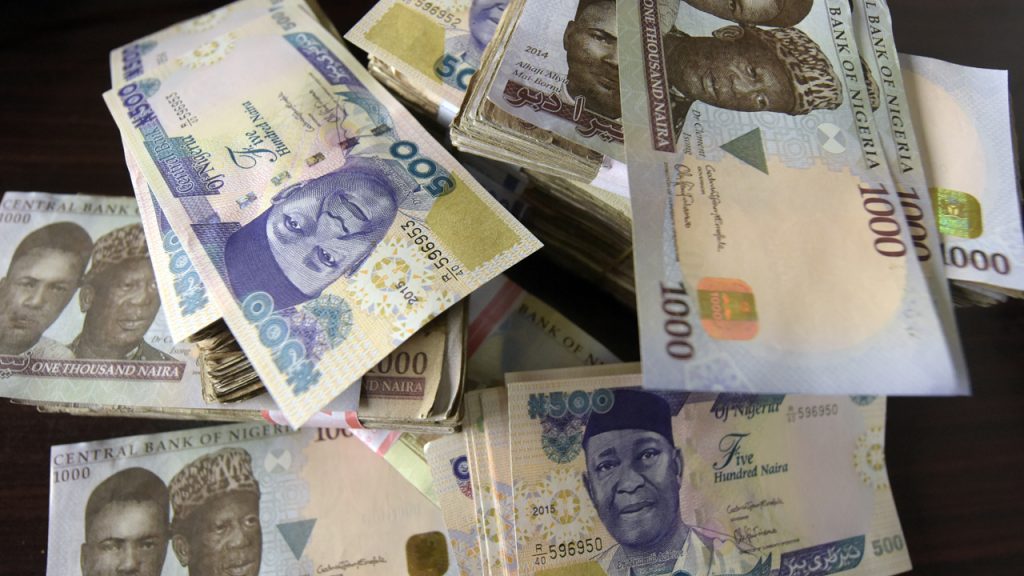
Nigeria's parallel-market naira appreciated to N1,375 per dollar on Friday from N1,380 on Thursday, while the official rate firmed to N1,349 from N1,350.45, narrowing the premium between the two markets to N29 — a spread roughly one-eighth of what it was during the boom of 2024 and among the tightest readings since the reform era began, according to central bank data relayed through market reports.
The parallel appreciation is the day's significant signal precisely because it was discretionary. The official market's rates are administered by auctions and CBN interventions; the parallel market is where individuals, informal traders and those the official window cannot serve clear their demand at whatever price clears. When that market rallies — Friday's N5 move against a week in which the official rate had slipped for four consecutive sessions — it reveals the underlying supply-demand balance strengthening independently of policy operations.
What a N29 premium means in context
The official-parallel gap is the single best summary statistic of Nigeria's FX regime. A N40 spread on Thursday — after a week in which the official rate had slipped from N1,346 to N1,350.45 and the BDC rate held at N1,400 — suggested stress propagating from the week's global dollar appetite; Friday's convergence to N29 reverses most of that reading in a session. For comparison: the gap above 60 per cent in 2023 translated into systemic arbitrage, import invoicing distortions, and the mass migration of remittances into informal channels; the current N29 represents roughly 2 per cent, a level at which those distortions become trivial.
The mechanics of a parallel-market rally are credit-positive. Bureaux de change operating at N1,400 in this week's data are collecting supply not only from the CBN but from inflows migrating formal through-premium spreads, and each basis point of premium narrowing increases the share of dollars routed through the official channel — a virtuous cycle that raises visible supply, deepens the official market's volumes and narrows the gap further.
The week's wedge and where it came from
The week's pattern — four sessions of official-market slippage followed by Friday's dual appreciation — traces to three forces. First is the global dollar bid: the strong U.S. payrolls print and safe-haven flows during the AI-equity rout made every emerging-market currency soft against the greenback, and the naira's official slippage of roughly 0.3 per cent across the week was modest by regional standards. Second is domestic liquidity seasonality: November's N10.85 trillion of maturing securities and government allocations injects naira liquidity that, un-sterilised, can feed FX demand; the CBN's N3.46 trillion absorption this week was addressing that. Third is the naira's own policy tailwinds — external reserves at $55.2 billion, FX utilisation running 60 per cent higher than last year, and the credibility premium the peg-era's end has slowly restored.
Against those, Friday's appreciation tells investors that the balances supporting N1,349-1,350 are genuine — not the product of rationing that suppresses one market while starving the other. When both markets move in the same direction simultaneously, the two-tier risk that shadowed the reform's earliest days has substantially closed.
Interbank turnover deepen the read
The volume column adds confirmation on the week's scale. Interbank turnover in the official market (NFEM) rose 130.8 per cent on Friday to $232.9 million from $100.9 million a day earlier, according to the day's market reporting — a session-level volume spike that coincides with the currency's appreciation. Rising turnover with a rising rate is textbook demand absorption: rather than rationing demand downward to hold prices, the market is transacting more while prices firm, the signature of a well-supplied market rather than an administered one.
For context, the official market's earlier weakness showed turnover falling to $82 million Thursday from $101 million midweek — thinner volumes accompanying softer rates. Friday's reversal on heavier volume is therefore not noise; it is the week's tension resolving toward the supply side as the deviations cleared.
What it means for households, firms and investors
For households receiving dollar remittances, a N1,375 parallel rate and a N29 spread mean that the arbitrage incentive to transact informally has faded near-entirely: formal channels deliver within two per cent of street rates, making banking channels the rational default and supporting the remittance flows that reserve accretion requires. For importers and manufacturers, the combined signal — stable official price, narrow spread, rising turnover — restores the quoted-price planning that 2022-23 made impossible, with no need to hold parallel-market contingency budgets.
For bondholders and equity investors, the premium trajectory is a leading indicator for the rate cycle the fixed-income market is watching. A stable-to-narrowing spread removes the exchange-rate risk that historically kept Nigerian term premia in the high teens; if the gap stays in the N25-35 range through year-end, the argument for yields settling lower than today's 17.7 per cent stops-freeze strengthens, and the DMO's retail offers — which priced 13.25-14.25 per cent for two and three years — will look like forward markers of where the curve is heading.
The week's last session left the naira the strongest major story in Nigeria's markets: official and parallel rates appreciating together on rising volumes, the premium at a reform-era low, and the systemic risk premium this represents — quietly retired from the country's largest price.
Up next
DMO Lifts Savings Bond Returns to 14.25%
The DMO raises FGN Savings Bond rates to 13.25% and 14.25% for the two- and three-year November offers closing Friday, locking retail savings at real-positive yields.
More in Finance
See all
Interbank FX Turnover Jumps 445 Percent in a Session
NFEM interbank turnover jumped 445 percent in one session even as the naira eased under two naira, signalling deeper official FX liquidity.

Naira Steadies at N1,347 as Traders See Rally
Nigeria naira held near N1,347 as traders polled by Reuters expect appreciation next week on post-midterm risk-on flows.

Nigerian Banks Post Continental Lowest Lending Ratios
The five Nigerian groups in a 22-bank African ranking posted the lowest loan-to-deposit ratios as recapitalisation and fresh bad-loan recognition kept credit growth behind deposits.
About the author
Amina Suleiman
Finance Correspondent
Amina Suleiman writes for BusinessPress.
More by Amina Suleiman


