
Interbank FX Turnover Jumps 445 Percent in a Session
NFEM interbank turnover jumped 445 percent in one session even as the naira eased under two naira, signalling deeper official FX liquidity.
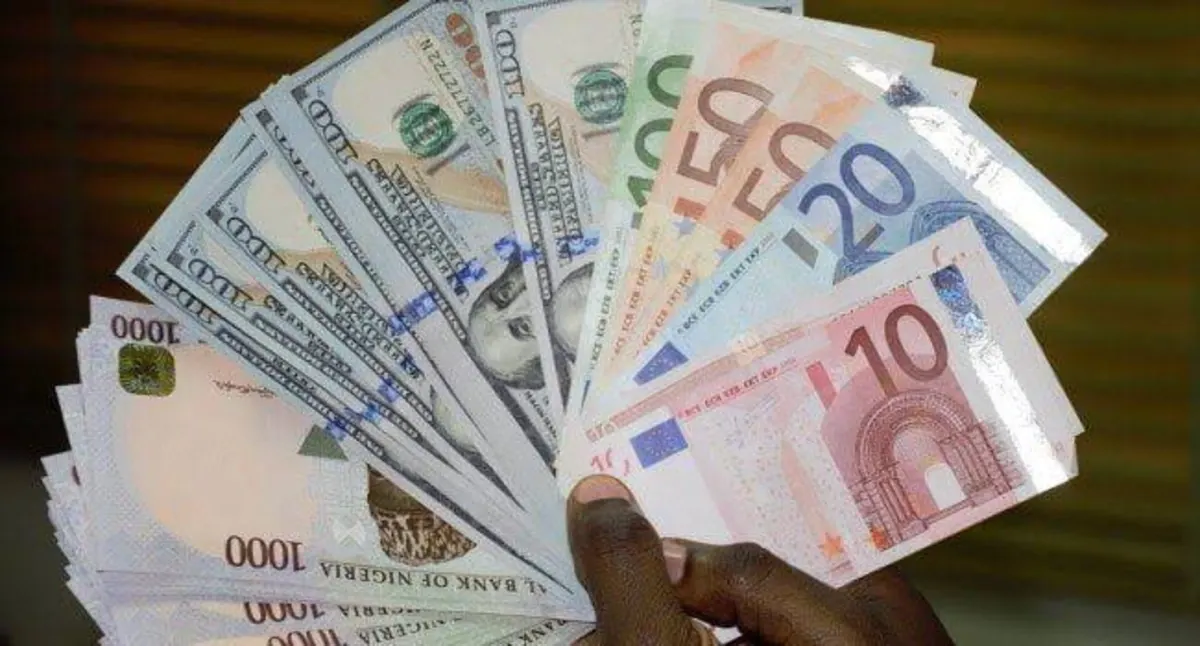
Nigeria's interbank foreign exchange market delivered one of its most striking statistical moments of the year on Tuesday, with turnover jumping by more than 445 per cent in a single session even as the naira eased by less than two naira against the dollar — a combination that suggests the depth behind the official rate has changed materially.
The naira closed at N1,347.75 on the official Nigerian Foreign Exchange Market that day, easing from N1,346.01 the previous session, while the volume of dollars changing hands multiplied several times over, according to market reports. Steady prices with surging turnover is the combination FX strategists read as a market in which banks, corporates and institutions are transacting at scale inside an orderly window rather than queuing desperately for scarcity.
Why high volume matters more than the quote
In a functioning FX market, the price tells you what the marginal dollar costs; the volume tells you whether it can be obtained without distortion. Nigeria's official market has spent much of the reform era in the opposite state — a stable headline rate resting on thin transacted volumes, with demand pushed into parallel channels where the true price of dollars was struck. A 445 per cent jump in official-window turnover with prices barely moving suggests the opposite medicine has arrived: liquidity is now deep enough that size can clear inside the formal system.
The reasons are not mysterious. Foreign reserves have spent 2026 recovering toward the mid-$50 billion range, home to their highest levels since early 2009, giving the Central Bank the buffer to allow genuine two-way trading without элемент interventions. Dangote Refinery's domestic supply has cut Nigeria's petrol import bill — historically the largest single structural leak of hard currency — and crude output has been climbing toward the levels the budget assumed. Every one of those shifts converts pent-up dollar demand that used to leak into the parallel market into tradeable orders on the NFEM.
The parallel market's shrinking discount
The clearest consequence shows in the parallel market itself. Street rates quoted this week at roughly N1,380 to N1,390 for cash transactions, leaving the gap to the official rate compressed to between N30 and N50 — the tightest sustained spread since the liberalised window opened, and a dramatic compression from the multiple-per-cent gaps of the crisis era. When the two windows price dollars within a few per cent of each other, the arbitrage economy that thrived on official and street divergence loses much of its profit pool, and dollars that once circulated in informal channels migrate back into the formal system where they can be taxed, traced and re-exported.
That convergence also rewrites the economics for the businesses that actually need foreign exchange. Manufacturers and airlines that spent the fuel-crisis years paying double-digit premiums for margin FX now clear at near-official rates; importers of intermediate goods face predictable costs that can be modelled into prices rather than guessed each week; and exporters find the official rate competitive enough that remitting receipts into the formal system no longer feels like a penalty. The structural effect compounds: each settlement inside the NFEM makes the next week's turnover baseline higher.
The monetary backdrop still does heavy lifting
None of this happens in a vacuum. The Central Bank's Open Market Operations continue to drain trillions of naira from the banking system, keeping naira liquidity tight enough that holding naira positions — and shorting naira by borrowing and buying dollars — is expensive. Nigeria's interest-rate differential against global rates flatters the currency badly this year: with Treasury Bills yielding 15 to 18 per cent while the Federal Reserve and Bank of England hike from far lower bases, the carry on naira assets has attracted institutional inflows that appear in exactly the kind of turnover growth Nigerian markets recorded this week.
The caveats all run through the oil price. Brent's slide below $100 per barrel this week — putting crude on course for its worst weekly performance since April 2020 on ceasefire expectations — trims the dollars Nigeria earns from barrels, though a softer crude also cuts the imported petrol and diesel bill in tandem. The net effect on reserves becomes the variable to watch, and analysts will track whether the interbank turnover surge survives a lower-oil-price week or proves it was driven by one-off corporate settlements.
Where the naira goes from here
Traders in a Reuters weekly currency poll published Thursday expect the naira to strengthen over the coming week, citing post-election risk-on sentiment in global markets and the positive flows it carries into emerging-market currencies. Whether the poll's optimism is vindicated or not, the week's data — turnover up five-fold, the official-parallel gap at its tightest, prices moving in single naira increments — describes an FX system that has started behaving like the floating market policymakers promised in 2023.
The structural test now is whether depth can be retained through the next external shock. A deeper official market with transparent price discovery is precisely what makes an eventual oil-price squeeze manageable, because the adjustment happens in volume and price inside the window rather than in queues and hoarding outside it. This week's 445 per cent turnover jump is the strongest evidence yet that Nigeria's FX reform has built that capacity.
Up next
Jaiz Bank Assets Rise to N1.69 Trillion
Jaiz Bank reported total assets of N1.69 trillion and deposits of N1.52 trillion at September 30, up 31.6% in nine months.
More in Finance
See all
Naira Stages Friday Rally From Parallel Market
The naira appreciates to N1,375 in the parallel market and N1,349 officially on Friday, narrowing the premium to N29 on surging interbank turnover.

Bank of Industry Secures 50 Million Dollar IFC Loan
BOI signed a $50 million seven-year IFC senior loan for Nigerian MSMEs, with at least 25% of proceeds for women-led businesses.

GTCO and Transcorp Power Lift Nigerian Stocks
GTCO, Transcorp Power and Zenith Bank lifted the NGX All-Share Index 0.2% on Wednesday as Nigerian equities opened November at 63.4% YTD.
About the author
Amina Suleiman
Finance Correspondent
Amina Suleiman writes for BusinessPress.
More by Amina Suleiman


