
NGX loses N1.58 trillion as profit-taking interrupts 2026 rally
The All-Share Index fell 0.97% in the week ended 9 October, while trading value increased despite a drop in share volume.

Nigerian equities ended the week to 9 October lower as investors took profits from one of the world's strongest year-to-date stock-market advances.
The Nigerian Exchange All-Share Index declined 0.97 percent to 248,363.55 points, while market capitalisation fell by N1.58 trillion to N161.26 trillion. Even after the retreat, the benchmark remained up 59.60 percent for the year.
Losses spread across most sectors
Twenty-four stocks advanced during the week, 54 declined and 68 were unchanged. Nineteen of the Exchange's 20 tracked indices closed lower; the industrial-goods index was the only gainer, edging up 0.02 percent.
Oil and gas stocks posted the steepest sector decline at 3.85 percent, followed by banking at 2.64 percent. The breadth of the pullback indicates that the loss was not confined to one unusually large company.
Higher value changed hands
Investors traded 2.715 billion shares, down 14.25 percent from the previous week's 3.166 billion. The value of transactions nevertheless rose 2.1 percent to N158.28 billion from N155.02 billion, suggesting that activity tilted toward higher-priced securities.
A one-week decline does not end a rally, but the divergence between strong year-to-date gains and weaker market breadth raises the bar for earnings and dividend news to sustain valuations.
Source
Nigerian Exchange, Weekly Market Report for the week ended 9 Oct 2026; market data reproduced in contemporaneous Nigerian financial-market reports.
Up next
Fitch revises Nigeria's outlook to positive as reserves pass $54.9 billion
The agency affirmed Nigeria's sovereign rating at B but changed the outlook to positive, citing naira flexibility, disinflation and faster-than-expected reserve accumulation.
More in Markets
See allNGX rally accelerates as banking stocks push index to eight-month high
Lenders led a broad advance after a softer inflation print revived bets on a pause in the tightening cycle.
NGX Turnover Hits N158.29bn as Investors Position for Q3 Earnings Season
Turnover on the Nigerian Exchange rose to N158.29 billion in the first full trading week of October as investors repositioned ahead of third-quarter earnings.
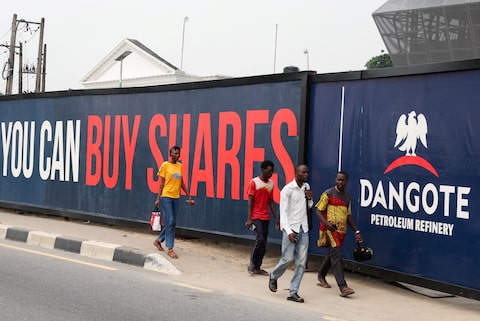
Dangote Refinery Extends $1.6 Billion IPO by Two Weeks as Demand Surges
Dangote Petroleum Refinery has pushed the close of its $1.6 billion IPO to October 27, giving investors more time to subscribe to Africa's biggest listing.
About the author
Adaeze Okonkwo
Markets Editor
Adaeze Okonkwo writes for BusinessPress.
More by Adaeze Okonkwo


