Nigeria, EU and EBRD Sign €14m Grant for 90,000km Fibre Project
The Federal Government, the European Union and the European Bank for Reconstruction and Development signed a €14 million grant in Abuja to fund preparation of a planned 90,000-kilometre national fibre-optic backbone, though the money covers design and capacity building, not deployment.

Nigeria has signed a €14 million grant agreement with the European Union and the European Bank for Reconstruction and Development to prepare a nationwide fibre-optic backbone spanning an estimated 90,000 kilometres, in a step towards closing the country's broadband access gap.
The agreement was signed in Abuja on Wednesday. The grant will fund project scoping, fibre-optic network design, project preparation and capacity-building activities ahead of the proposed deployment, according to the Federal Ministry of Budget and Economic Planning.
What the grant actually funds
The wording of the announcement is important. The €14 million is preparatory funding administered by the EBRD; it does not finance the construction of the 90,000-kilometre network itself. Building national fibre at that scale requires far larger sums and a delivery structure that has not yet been set out publicly.
That distinction is familiar in Nigerian infrastructure. Projects are often launched with grant funding for feasibility and design, then struggle to secure the capital needed for construction. The value of this stage is that a properly designed, costed and bankable project is a precondition for attracting the debt and equity required at scale.
The 90,000-kilometre ambition
The proposed network is intended to expand affordable broadband, strengthen digital services and support inclusive economic growth by connecting businesses, households and public institutions. A high-capacity backbone is the underlying layer that internet service providers and mobile operators need to extend connectivity, particularly in underserved areas where commercial rollout has been slow.
Nigeria's broadband penetration remains well below the level required to support a digital economy of its size, and the cost of data and devices still excludes many low-income users. A national backbone that lowers the cost of carrying traffic to the last mile would address one part of that problem; affordability and device access are separate challenges.
Why it matters for business
Reliable, high-capacity connectivity is increasingly a precondition for formal business activity, from digital payments to remote work to cloud services. For small firms, the difference between a slow, expensive connection and an affordable one can determine whether they can trade online at all. For larger companies and investors weighing digital infrastructure, a coherent national backbone plan improves the case for putting capital into data centres, cloud services and technology-enabled logistics.
The grant also has a strategic dimension. The EU is deepening its digital partnership with Nigeria, and the involvement of the EBRD signals that European institutions see the project as a credible pipeline candidate rather than a purely concessional giveaway.
What to watch
Watch whether a delivery structure and financing plan follow the design phase, and whether targets are published for the cost per kilometre and the timelines for reaching underserved regions. Without a funded construction phase, the 90,000-kilometre backbone remains an ambition rather than a network.
Up next
FG to Issue N5.40 Trillion Treasury Bills in Q4, With a Sharp Bias to One-Year Debt
The Central Bank and Debt Management Office plan N5.40 trillion in Treasury bill offers between October and December 2026, with nearly 76% in 364-day instruments, a structure that largely rolls over maturing obligations rather than raising new money.
More in Technology
See all
MAX Raises Series B3 to $29 Million as Nithio Backs EV Financing
Nigerian electric mobility company MAX has extended its Series B3 round to $29 million after an investment from US climate fintech Nithio, funding expansion of electric vehicle financing and battery swapping across West and Central Africa.

Global PC Shipments Fall 20.1%, Squeezing Nigeria's Import-Dependent Market
Worldwide PC shipments dropped 20.1 per cent in the third quarter of 2026, IDC says, the sharpest third-quarter fall on record, leaving Nigeria's imported laptop market exposed to higher prices.
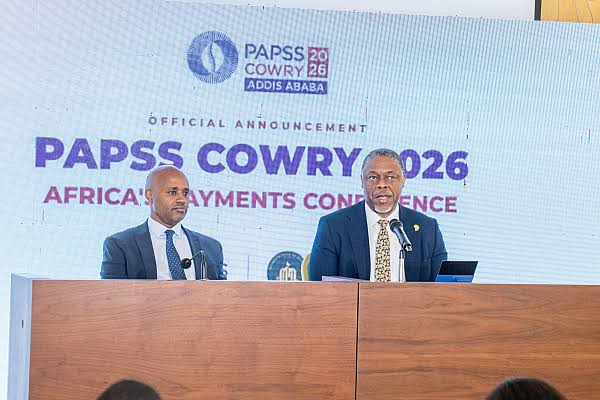
Ethiopia joins continental payment system
Ethiopia has joined the Pan-African Payment and Settlement System to cut hard currency use for intra-African trade, with Addis Ababa set to host PAPSS COWRY 2026 in November.
About the author
Chinedu Nwosu
Technology Editor
Chinedu Nwosu writes for BusinessPress.