Africa's Cheapest Smartphones Are Disappearing as AI Chip Demand Lifts Costs
A memory-chip shortage driven by artificial intelligence data centres is pushing up smartphone prices and shrinking the sub-$100 segment that millions of Africans rely on to get online, with shipments of the cheapest devices falling sharply.

The cheapest smartphones that millions of Africans depend on to access the internet are disappearing from the market, squeezed by a global memory-chip shortage driven by artificial intelligence data centres that has pushed up the cost of making entry-level devices.
Shipments of smartphones priced below $100 in Africa fell 34% year-on-year in the second quarter of 2026, according to the research firm Omdia, as manufacturers withdrew from the least profitable end of the market.
The memory squeeze, explained
The mechanism is a competition for components. AI data centres require enormous quantities of memory chips to train and run models, and the world's three primary memory manufacturers shifted the bulk of their supply towards AI centres rather than consumer electronics. Memory prices more than doubled between the third quarter of 2025 and the first quarter of 2026, then rose a further 80% to 90% in the second quarter, according to Counterpoint Research.
Those increases flow directly into device costs. Globally, existing smartphone models became about 15% more expensive over the past year, while newly launched models were roughly 25% more expensive, with increases of 21% in India, 19% in Asia-Pacific and 18% in the Middle East and Africa.
Why the sub-$100 phone is vanishing
When components cost more, a $75 phone has far less margin to absorb the increase than a $300 device, so manufacturers prioritise higher-margin models. Chinese smartphone makers, which account for the majority of global shipments and have long championed affordable devices, drastically reduced their entry-level projects. Global shipments of sub-$100 smartphones fell almost 60% year-on-year in the second quarter of 2026, and preliminary estimates showed worldwide smartphone shipments down 20% in the third quarter, the lowest for that period since 2012.
In Africa, where 81% of smartphones shipped last year cost less than $200, the disappearance of the sub-$100 device is consequential. The segment stopped being a market where competition drove prices down; it became a market that brands are abandoning.
What it means for Nigeria's digital push
The timing is difficult for Nigeria, which is trying to expand digital access and has been selected as one of several African countries for a GSMA-backed pilot to bring affordable 4G smartphones to more people. That initiative assumed the cost of entry-level devices could fall; the global memory shortage is pushing in the opposite direction.
GSMA data shows an entry-level internet-enabled handset already costs the poorest 20% of people in sub-Saharan Africa the equivalent of about 76% of their average monthly income. If device prices rise further, more households are pushed out of the market or forced to settle for second-hand and refurbished handsets with less storage and memory.
What to watch
Watch whether memory manufacturers respond to the GSMA's call to increase availability of affordable components for entry-level handsets, and whether device financing models expand to keep smartphones within reach. The broader question is whether Africa's digital inclusion gains can withstand a component shortage rooted in an AI boom whose benefits still require an affordable device to access.
Up next
NCC Survey Finds AI Adoption Outpacing Governance in Nigeria's Telecom Sector
A Nigerian Communications Commission survey found that 73% of surveyed licensees use or pilot artificial intelligence in live operations, yet a third have no governance arrangements in place, raising questions about accountability and consumer protection.
More in Technology
See all
Global PC Shipments Fall 20.1%, Squeezing Nigeria's Import-Dependent Market
Worldwide PC shipments dropped 20.1 per cent in the third quarter of 2026, IDC says, the sharpest third-quarter fall on record, leaving Nigeria's imported laptop market exposed to higher prices.
Ethiopia joins continental payment system
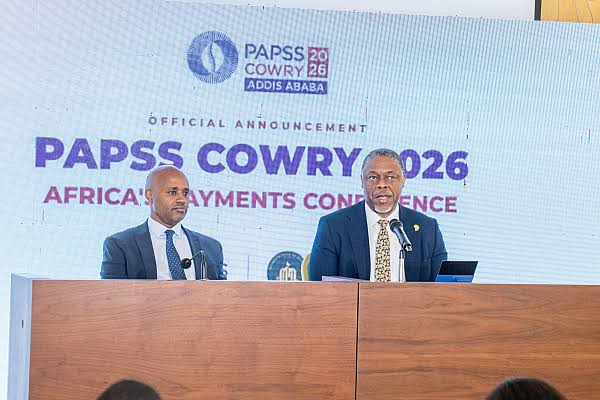
Ethiopia has joined the Pan-African Payment and Settlement System to cut hard currency use for intra-African trade, with Addis Ababa set to host PAPSS COWRY 2026 in November.

Universal Music Group Cuts Costs With Fresh Layoffs and $270m Savings Target
The music major is trimming staff worldwide as it funds AI-era licensing infrastructure and redirects resources to high-growth priorities.
About the author
Chinedu Nwosu
Technology Editor
Chinedu Nwosu writes for BusinessPress.