MAX Raises Series B3 to $29 Million as Nithio Backs EV Financing
Nigerian electric mobility company MAX has extended its Series B3 round to $29 million after an investment from US climate fintech Nithio, funding expansion of electric vehicle financing and battery swapping across West and Central Africa.
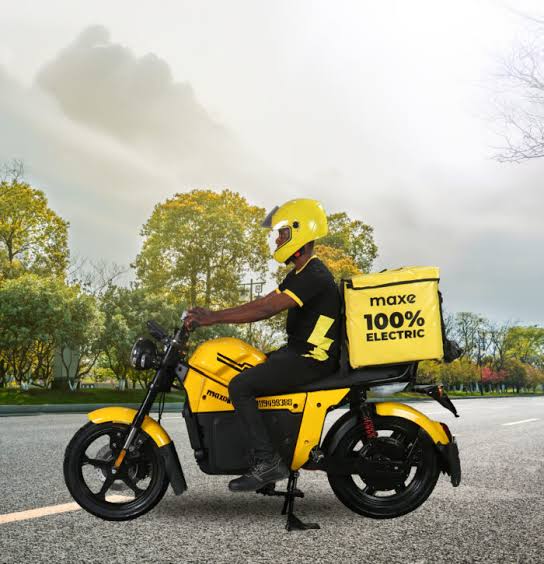
MAX, the Nigerian electric mobility company, has extended its Series B3 funding round to $29 million after an investment from Nithio, a United States-based climate fintech, as it scales electric vehicle financing and battery swapping across West and Central Africa.
Nithio announced the investment on October 12, 2026, though it did not disclose the size of its individual contribution.
What the new capital will do
The round supports MAX's push to make clean, affordable mobility available to more riders and businesses. MAX offers electric two- and three-wheelers through financing arrangements rather than outright purchase, a model designed to lower the upfront cost that keeps many commercial drivers on petrol machines.
Beyond vehicles, the company runs battery-swapping infrastructure that addresses one of the practical barriers to electric adoption: range and charging time. Swapping allows a rider to exchange a depleted battery for a charged one quickly, rather than waiting hours at a charging point. The capital will fund the growth of both the fleet and the swapping network.
The road to profitability
The investment builds on a $24 million equity and debt round MAX announced in January 2026, backed by investors including Equitane DMCC, Novastar Ventures, Triple Jump, Endeavor Catalyst and the Energy Entrepreneurs Growth Fund. At the time, MAX said it had reached profitability in Nigeria, its largest market, after deploying more than $56 million in fleet financing and repaying $44 million to date.
That profitability milestone matters for the sector. Electric mobility in Africa has often been framed as a future proposition dependent on subsidy and patient capital. MAX's position is that the unit economics work now, driven by lower running costs for drivers and a financing model that aligns repayments with daily earnings.
Why EV financing is an African growth story
Nithio's involvement extends a pattern of climate-focused capital moving into African electric mobility. In February 2026, the firm extended a $7 million debt facility to Kenyan electric motorcycle company Spiro as part of a wider $50 million round involving Afreximbank and the Africa Go Green Fund.
The logic is straightforward. Commercial motorcycle and tricycle transport is a huge source of employment and emissions across African cities, and drivers' fuel costs are a large share of their operating expenses. Electric vehicles reduce that cost and cut pollution. The constraint has never been demand; it has been access to affordable financing for the vehicles and supporting infrastructure. That is precisely the gap that rounds such as this are meant to fill.
What to watch
Watch how quickly MAX expands its fleet and swapping stations beyond its current footprint in 20 cities across Nigeria, Ghana and Cameroon, and whether it can maintain the cost advantages that underpin its model as it grows. The next test is whether regional expansion dilutes the unit economics that made the Nigerian business profitable.
Up next
Kenya Targets April 2027 Exit From FATF Grey List After Clearing 19 of 21 Actions
Kenya's Financial Reporting Centre told a parliamentary committee that the country has met 19 of the 21 actions required to leave the global anti-money laundering grey list, but the final assessment will depend on proving the measures work in practice.
More in Technology
See all
Africa's Cheapest Smartphones Are Disappearing as AI Chip Demand Lifts Costs
A memory-chip shortage driven by artificial intelligence data centres is pushing up smartphone prices and shrinking the sub-$100 segment that millions of Africans rely on to get online, with shipments of the cheapest devices falling sharply.
NCC Survey Finds AI Adoption Outpacing Governance in Nigeria's Telecom Sector
A Nigerian Communications Commission survey found that 73% of surveyed licensees use or pilot artificial intelligence in live operations, yet a third have no governance arrangements in place, raising questions about accountability and consumer protection.

Nigeria, EU and EBRD Sign €14m Grant for 90,000km Fibre Project
The Federal Government, the European Union and the European Bank for Reconstruction and Development signed a €14 million grant in Abuja to fund preparation of a planned 90,000-kilometre national fibre-optic backbone, though the money covers design and capacity building, not deployment.
About the author
Chinedu Nwosu
Technology Editor
Chinedu Nwosu writes for BusinessPress.
More by Chinedu Nwosu