House Gives MTN, Airtel, Glo Seven Days to Face Panel Over Poor Network Quality
An ad hoc House committee set an October 28 hearing after operators ignored earlier invitations, directing the NCC to ensure compliance and warning that absent chief executives could face arrest summons.
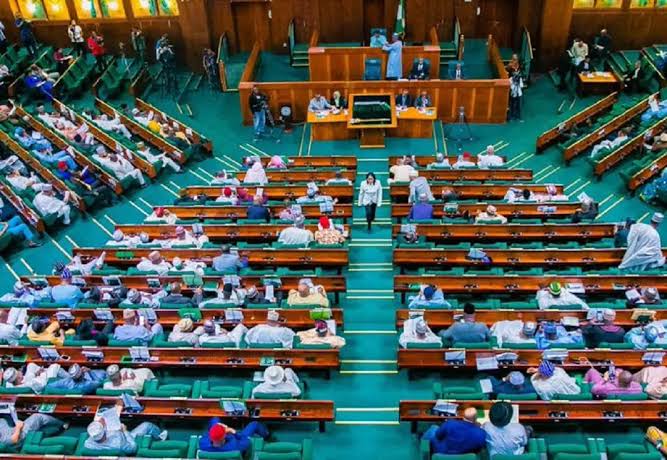
The House of Representatives has given the chief executives of MTN Nigeria, Airtel Nigeria, Globacom, Mafab Communications and other telecommunications operators seven days to appear before an ad hoc committee investigating persistent poor network quality across the country.
The committee fixed October 28, 2026, for the appearance, directing the Nigerian Communications Commission to ensure that the affected operators attend at 2 p.m. in Hearing Room 447 of the New Building of the National Assembly Complex in Abuja. The companies were also ordered to submit relevant documents by the hearing date and to explain the factors behind the decline in service quality. The lawmakers warned that any chief executive who failed to honour the invitation could face an arrest summons to compel attendance, according to Vanguard, The Guardian Nigeria, Independent and Daily Post, all of which reported the hearing on October 21, 2026.
The ultimatum followed the adoption of two motions sponsored by Reps. Sunday Umeha and Afam Ogene, after operators including MTN and Mafab Communications failed to honour earlier invitations to the committee.
Why the committee escalated from invitation to summons
The escalation is the substantive part of the story. An ad hoc committee that cannot get a chief executive into a room is not a committee with a mandate, and Rep. Olumide Osoba, the chairman from Ogun State, was explicit that the pattern of response, excuses and lower-ranking officials sent in place of executives, was the reason the deadline was set. In his words, the operators' failure to appear is itself an answer about how seriously they take the complaint.
Rep. Ibe Osonwa made the economic argument from the other direction, criticising what he called disregard for the House given the substantial revenue the operators generate in Nigeria. The two positions are not identical, and the difference matters for what the hearing can achieve. A regulator's enforcement question is whether service standards are being met; a legislature's question, as framed here, is whether the companies that earn in this market owe an account of the quality they sell in it. Both are legitimate, and they will produce different remedies if the operators turn up.
The part of the complaint that touches commerce
Osoba's case rested on the extension of telecommunications beyond voice and data. He cited point-of-sale transactions, financial services and business operations as the commercial activities now riding on network quality, and described persistent service disruption as a matter of serious national concern given how businesses and financial transactions have come to depend on connectivity.
That is where the commercial stakes are clearest. A failed point-of-sale transaction is not merely an inconvenience: for a small trader it is a lost sale, a delayed payment and, in cash businesses with thin margins, an input cost. The same failure compounds for a business that has moved order-taking, payroll or logistics onto mobile channels that were built for consumer use. The published figures for the operators underline why the committee is unlikely to be satisfied by a technical explanation. MTN Nigeria's revenue has been reported approaching N3 trillion as data demand surged, and the operators' licence fees and taxes are tied to the subscriber base and traffic that service quality determines.
What the hearings will actually test
Three documents and answers will matter on October 28. The first is the network performance record: uptime, dropped-call and failed-transfer data by circle and by cluster, which is the only way to establish whether degradation is systemic or concentrated. The second is capital expenditure and maintenance history, because the committee will want to know whether the operators are investing ahead of expansion or repairing a network whose demand has outrun its capacity. The third is the regulatory file, since the committee has directed the NCC to enforce compliance and the commission's own enforcement record on quality-of-service sanctions is fair to put in front of the operators.
The October 28 hearing also produces an unusual kind of public record. A summoned chief executive explaining network outages to lawmakers is a different disclosure from a regulatory penalty notice, and it is likely to be more detailed, because the operators' defence to the committee is a technical narrative rather than a compliance submission. Whether that narrative is accepted is a separate matter; the hearings can establish facts about causes, but only the NCC can order a remedy, and only the operators' capital plans will deliver one.
The structural risk in the sector
Service quality in Nigerian telecoms is not only an operational question. Subscribers are concentrated on a small number of networks, investment is lumpy, and the commercial model rewards subscriber acquisition and data volumes more reliably than it rewards maintenance of marginal areas, because the cost of extending coverage into low-density zones falls hardest on operators whose revenue per user is already low. A committee can establish that a cell site is unpowered because diesel costs exceed the revenue it generates, and that remains true whether or not the operator's chief executive explains it well in a hearing room.
Operators have also been directed to explain what they have done about quality since earlier invitations went unanswered. For MTN, Airtel, Globacom and Mafab Communications, the immediate commercial question is narrower than the sector question: whether an appearance on October 28 is followed by visible improvement in the locations where service failures are now being documented in the record. Beyond that, the hearing will test whether a rapidly growing revenue base is being matched by the network investment and the enforcement discipline that revenue is supposed to fund.
Up next
Lagos Regulator Takes Ibile Power Lekki Power Pilot to Licensing Review
LASERC has asked Ibile Power to file corporate and technical documents for a Lekki corridor pilot combining gas-fired generation with dedicated distribution, in a state targeting 2,500MW to 3,000MW of corridor capacity.
More in News
See all
NCC Survey Finds AI Adoption Outpacing Governance in Nigeria's Telecom Sector
A Nigerian Communications Commission survey found that 73% of surveyed licensees use or pilot artificial intelligence in live operations, yet a third have no governance arrangements in place, raising questions about accountability and consumer protection.
Lagos Orders MTN, Airtel to Verify Betting Licences Within 30 Days
The directive puts telecom operators at the centre of gambling oversight, requiring them to confirm that betting platforms on their networks hold valid state licences.
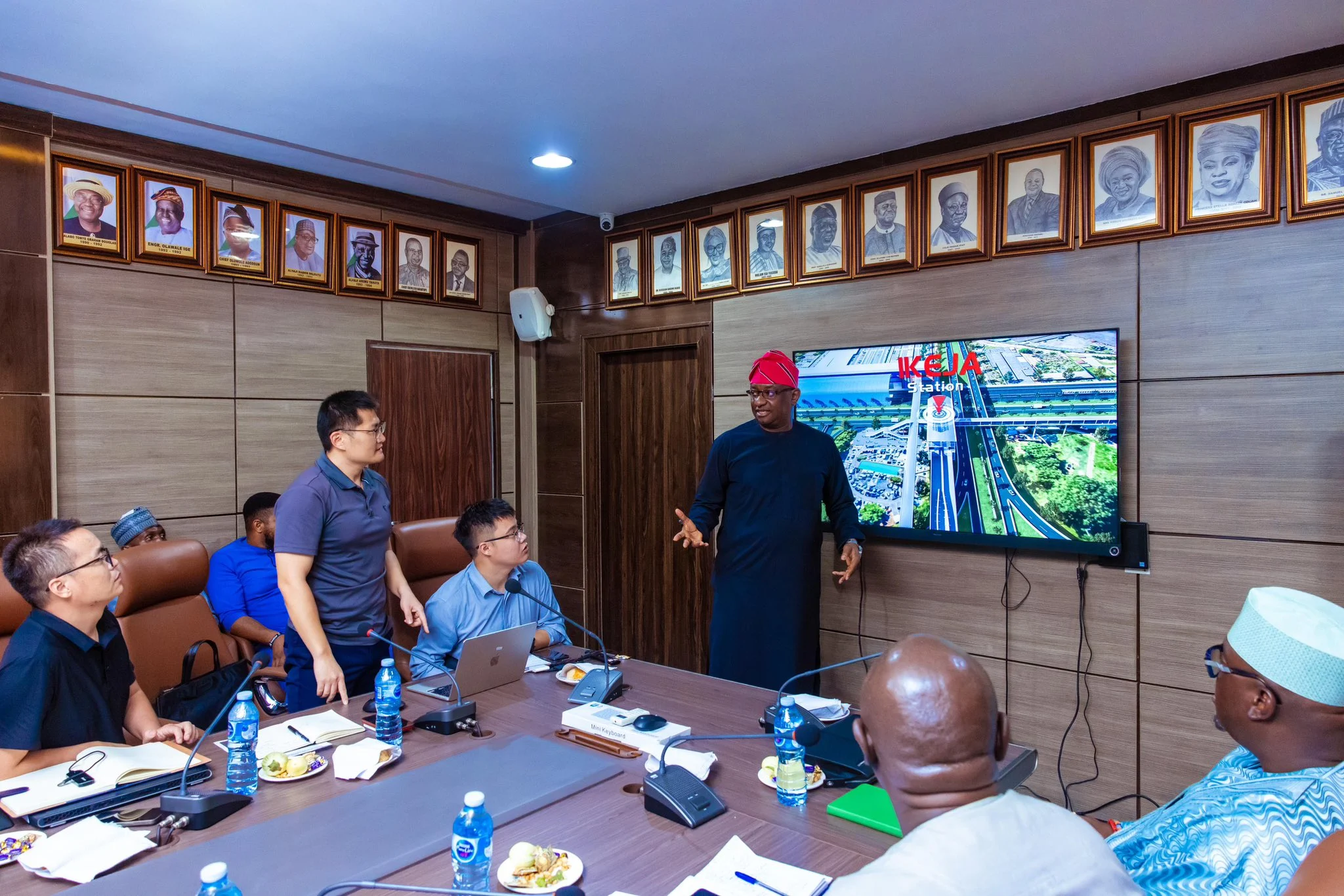
Aviation Ministry Approves Lagos Airport Monorail Design as Financing Talks Advance
The five-stop line from Ikeja Railway Station to Murtala Muhammed International Airport Terminal 1 has an approved design but no published cost or construction schedule, while the terminal reconstruction it is meant to serve is already under way.
About the author
Abiodun Abdullahi
Author / Business and Markets Writer
Abiodun Abdullahi writes for BusinessPress.
More by Abiodun Abdullahi