IsDB, IFAD Seal $750 Million Deal to Finance African Farming and Rural Business
The Islamic Development Bank and IFAD signed a cooperation agreement to mobilise up to 50 million for agribusiness value chains, rural SMEs, market access and climate adaptation across their shared African membership.
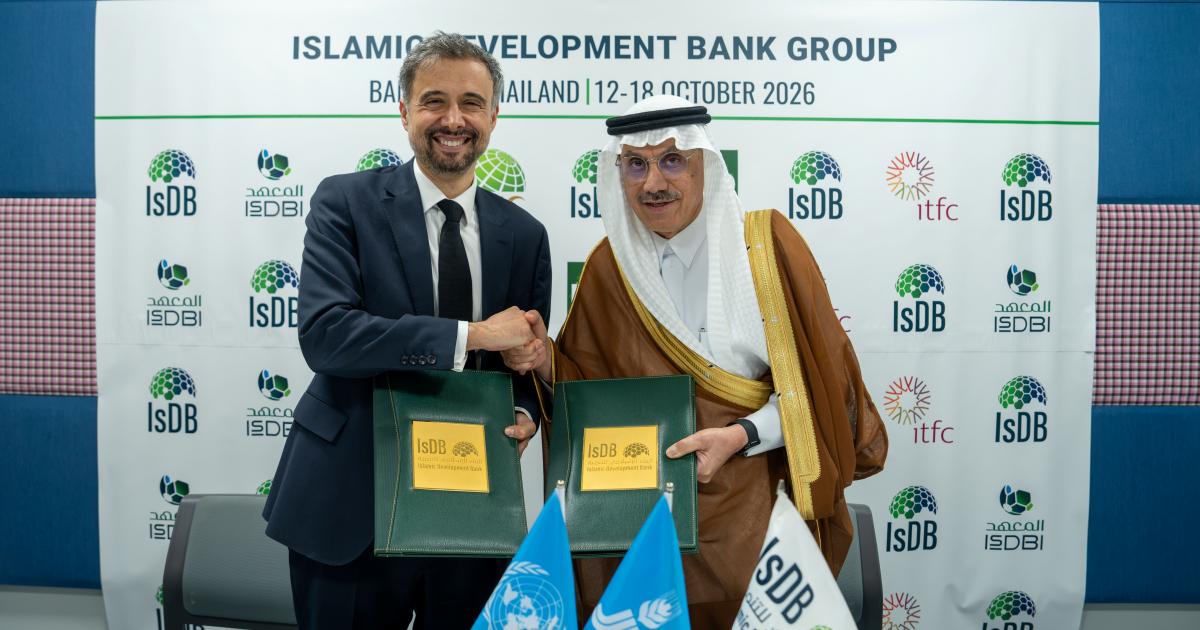
The Islamic Development Bank (IsDB) and the International Fund for Agricultural Development (IFAD) have signed a new cooperation agreement to mobilise up to $750 million for sustainable agricultural development and rural economic transformation, according to an IFAD statement published on 14 October.
The two institutions said they will broaden cooperation across agribusiness value chains, market access, rural small and medium-sized enterprises, climate change adaptation, sustainable natural resource management and water access. For African countries that belong to both institutions, the pact opens a channel for additional financing for agricultural processing, storage, rural credit and market access at a time when food systems remain under pressure from input costs and climate volatility.
Building on a partnership dating to 1980
The agreement is not a new relationship. IsDB and IFAD have co-financed 29 projects worth approximately $1.45 billion since 1980, according to the IFAD statement. The new framework raises the ambition of that long-standing channel at a moment when both institutions are emphasising rural finance and climate resilience in their public messaging.
IFAD said the partnership aims to expand financing for agrifood value chains, market access, rural SMEs and climate adaptation. The institution framed the agreement under its wider "Financing the First Mile" agenda, which targets the overlooked gap between smallholder production and the commercial systems that move food and raw materials to market.
Why $750 million matters for African food systems
For Nigerian and West African stakeholders, the practical questions are where the money lands and on what terms. Agricultural processing, storage and rural credit are perennial binding constraints: cassava alone contributes an estimated 20–25% of Nigeria's agricultural GDP, yet post-harvest losses of 20–30% effectively raise the cost per marketable tonne and reduce farmer margins, according to market analysis of Nigeria's cassava sector.
Financing that addresses storage, processing standards and export certification could attack those losses more directly than production subsidies alone. IsDB's Islamic finance instruments also offer an alternative capital structure for projects that prefer asset-linked or profit-and-loss-sharing arrangements over conventional collateralised lending — a relevant option in markets where land title and movable collateral remain weak.
What to watch after the signature
The headline figure is a ceiling, not a committed disbursement schedule. What matters next is the pipeline of approved projects, the share directed to climate adaptation versus pure productivity, and whether African co-financing and government counterpart funding materialise quickly enough to use the capacity before macroeconomic conditions shift again.
If the institutions convert the $750 million envelope into a dense, well-monitored project portfolio — rather than a handful of large infrastructure loans — the agreement could meaningfully tighten the financing layer around rural SMEs and processors that both institutions have repeatedly identified as the first mile of food system transformation.
Both institutions have framed climate adaptation as core rather than peripheral to the agreement. Water access, sustainable natural resource management and climate-resilient value chains are named cooperation areas, matching the pattern of recent IsDB and IFAD operations that treat irrigation, storage and rural credit as interconnected systems rather than separate sector projects. For rain-fed producers in Nigeria's middle belt and savanna zones, that systems framing is the difference between a short-term input subsidy and durable production risk reduction.
Rural SME financing remains the through-line of both institutions' public case for the agreement. Processors, traders and service providers between the farm gate and the retail shelf typically lack the balance sheets for conventional bank lending, yet they determine whether surplus production reaches formal markets. By naming rural SMEs, market access and processing in the same cooperation framework, IsDB and IFAD are implicitly arguing that project design should finance the intermediaries, not only the producers and the infrastructure.
Nigeria, as a member of both institutions, is a natural candidate for early project pipelines under the renewed framework, particularly in storage, irrigation and rural credit windows where domestic policy has already identified financing gaps. The competitive process for country allocation will show whether the $750 million is genuinely additional capital or largely a re-labelled continuation of existing co-financing rhythms established since 1980.
Up next
Africa Finance Corporation Appoints CBN Governor Cardoso as Board Chairman
The Africa Finance Corporation has appointed CBN Governor Olayemi Cardoso as Chairman of its Board of Directors, linking Nigeria's monetary leadership to a pan-African infrastructure financing platform.
More in Economy
See all
Nigeria's Inflation Falls to 14.63%, Lowest Since October 2020, as Food Prices Ease
Nigeria's headline inflation fell to 14.63% in September, the lowest since October 2020, driven by easing food prices even as core inflationary pressures continued to build in parts of the services economy.
Nigeria, Benin and Cameroon Turn to Afreximbank to Modernise Cross-Border Trade Posts
Nigeria, Benin and Cameroon have aligned with Afreximbank on a border modernisation programme designed to cut delays at key crossing points and lift trade among the three neighbours.
Nigeria's Cash Transfer Programme Hits 10.46 Million Households as World Bank Flags Gaps
Nigeria's N658.9 billion cash transfer programme has disbursed to 10.46 million households, but the World Bank has flagged gaps in coverage and targeting that could limit the programme's poverty impact.
About the author
Abiodun Abdullahi
Author / Business and Markets Writer
Abiodun Abdullahi writes for BusinessPress.
More by Abiodun Abdullahi