Lagos Regulator Takes Ibile Power Lekki Power Pilot to Licensing Review
LASERC has asked Ibile Power to file corporate and technical documents for a Lekki corridor pilot combining gas-fired generation with dedicated distribution, in a state targeting 2,500MW to 3,000MW of corridor capacity.
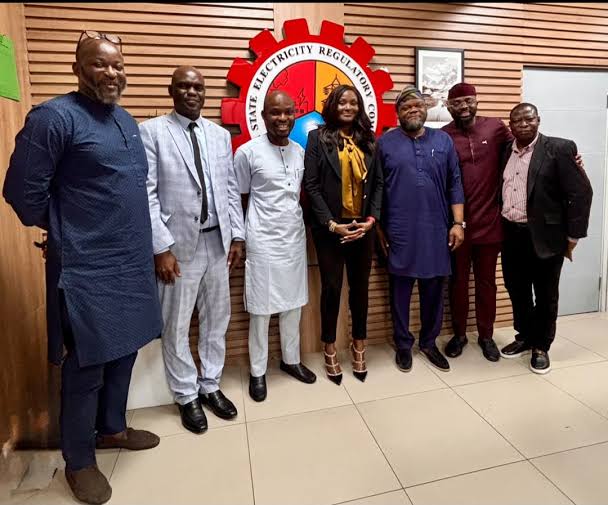
The Lagos State Electricity Regulatory Commission has begun formal engagement with Ibile Power on an integrated gas-fired generation and dedicated distribution project for the Lekki corridor, with the state regulator confirming that the pilot is moving towards licensing review.
LASERC hosted an executive delegation from Ibile Power to explore the regulatory framework and investment case for the project, which would combine generation capacity built on existing gas infrastructure with its own distribution network serving residential and commercial customers. The meeting was led by LASERC's Chief Executive Officer, Mrs Temitope George, alongside the Executive Member for Engineering and Standards, Engr. Adekunle Olopade, and was attended by Ibile Power directors Tayo Gbajumo, Kayode Anibaba, Faruk Agoro and Moshood Olajide, according to a report on the engagement published on October 21, 2026.
Under the model Ibile Power has described, generation capacity would be phased in against localised demand, with modern distribution equipment, smart metering and underground cabling where that is technically and economically viable. The pilot would start in the Lekki corridor, where existing gas pipelines and generation assets are close at hand, before expanding to residential estates and underserved communities elsewhere in the state. LASERC has asked the company to submit the corporate and technical documentation required for a formal licensing review.
Why the Lekki corridor is the hardest place to pilot
The choice of location is the interesting part of the proposal, because Lekki is where Lagos's power problem is most visible and most expensive. The state has said electricity capacity in the corridor could be built up to between 2,500MW and 3,000MW as development and economic activity expand, a figure raised by LASERC's engineering team during an earlier tour of key transmission facilities in the area.
Demand on that network is far below the available transformer capacity. At the Lekki 330kV/132kV/33kV transmission station, transmission availability has averaged between 98 and 99 per cent, and the highest demand recorded so far has been about 120MW to 130MW against roughly 240MW of load the station could take from Eko Disco, leaving around 110MW of headroom. Two of the three Lekki feeders were each carrying about 20MW, and the Lekki 2 feeder, which supplies Lekki Phase 1 and surrounding areas, had been out of service for months because of an underground cable fault. Restoring it, on the figures cited, would have raised Eko Disco's take from the station to roughly 60MW from about 40MW.
A private distribution network built to bypass the ageing network starts with a real advantage there: the customers are concentrated, the load is industrial and commercial, and the outage economics are punitive enough to make an alternative worth paying for. It also starts with a hard constraint, because Lekki's demand is small relative to the state's ambition, and a dedicated network that is built ahead of load is the classic way private distribution projects lose money.
What the regulator is actually testing
LASERC has set out the assessment criteria in unusually specific terms. Engr. Olopade detailed what is under review: grid architecture, network safety, environmental compliance, equipment standards, dynamic fault detection and long-term commercial sustainability. That list is a fair description of what separates a credible embedded-power project from a generator with a customer list.
Mrs George's advice to the delegation was that while Lekki provides a practical starting point, later phases must actively include under-resourced communities facing severe supply deficits. That is the regulatory tension in the model. A dedicated private network makes financial sense where density is high and connections are valuable, and its economics work least well in the low-density areas where the shortfall is worst. Lagos State Electricity Law 2024 gives the commission the authority to design a decentralised market, and the Electricity Act 2023 provides the national framework, but neither settles who pays for the extension of supply into areas that cannot support a commercial network.
Where Lagos private power actually stands
The project arrives in a market that already contains several private generation assets. Fenchurch Power is rebuilding the 26MW Akute independent power plant under a concession with the state government, while supply arrangements involving Mainland Power, Fenchurch and Viathan are intended to lift generation from under 60MW towards between 200MW and 400MW over the next two to three years. Elektron Energy is developing a 40MW Victoria Island plant, and Sahara Power a 12MW independent power plant in Ogba.
Transmission is the parallel track. The Federal Government Power Company's expansion for the corridor runs in phases with Epe as the immediate priority: a 132kV line first, then a 330kV station at Epe and subsequent links connecting Epe to the Lekki Free Trade Zone and back to Lekki. Factory acceptance testing has been conducted and materials were expected to begin shipping. At the Alagbon transmission station, a National Integrated System Operator project involving two 330kV lines from Akangba is planned, with soil testing complete.
The investment logic of Ibile Power's model depends on how those two programmes land. If the federal transmission build-out reaches Lekki on schedule with the headroom the grid engineers describe, a private network competing for the same customers becomes harder to justify. If the Lekki 2 feeder stays out and grid capacity slips, the case for bypassing it strengthens. That is the trade-off the regulator is pricing, and it is why documentation, not enthusiasm, is what LASERC has asked for.
What to watch before licensing
Four items will indicate whether this is a pilot that scales or a presentation. First, the licensing documentation itself, which should state the licensed area, the connection point with Eko Disco, the metering and settlement arrangements with the grid, and the service obligations attached to the licence. Second, the gas supply arrangement, because a phased generation build that depends on pipeline capacity inherits the pipeline's constraints, and the Lekki-Epe corridor gas pipeline right-of-way is a separate programme with its own timetable. Third, the load schedule: whether committed demand is contracted before the network is energised. Fourth, the capital and financing structure, which has not been disclosed and which determines whether the company can carry the asset through the years before demand fills it.
LASERC's stated ambition for the model is a replicable infrastructure framework across the state rather than a single corridor project. If the licensing review succeeds, the test of the Lekki pilot will be whether a dedicated network in the state's most commercially demanding location produces results good enough to justify the same structure in places where the economics are far weaker.
Up next
Dangote Buys 25% of Kenya Pipeline for $327 Million as Lamu Refinery Looms
The $327 million purchase of 25% of Kenya Pipeline, disclosed in London, aligns the group with the Kenyan government equity plan for the $16 billion Lamu refinery and the East African allocation of its Lagos IPO.
More in Business
See allOndo, OCTAGRAM Agree 9m scfd CNG Mother Station at Ore Industrial Park
The Omotosho project would compress and truck gas to industrial and transport customers beyond pipeline reach, moving from a Licence to Establish towards construction approval and offtake deals.
Nigeria Needs 0 Billion for Energy Infrastructure as Investors Demand Policy Consistency
HBSAN energy conference chairman Mayowa Afe says Nigeria needs about 0bn in energy infrastructure investment over five years, warning that capital follows confidence and confidence follows consistency.
Insecurity, Illegal Mining Threaten Nigeria's Solid Minerals Investment Push
Mining Technologies CEO Joshua Egbagbe says insecurity, illegal occupation of licensed sites and policy instability have cost him foreign technical partners and disrupted operations in Nigeria's solid minerals sector.
About the author
Amaka Obi
Senior Business Reporter
Amaka Obi writes for BusinessPress.