Standard Bank Signs Deal to Invest in OPay Ahead of New York Listing
Standard Bank Group has signed a subscription agreement to invest in OPay, expected to close around the fintech's planned New York listing, subject to the offering and regulatory approvals.
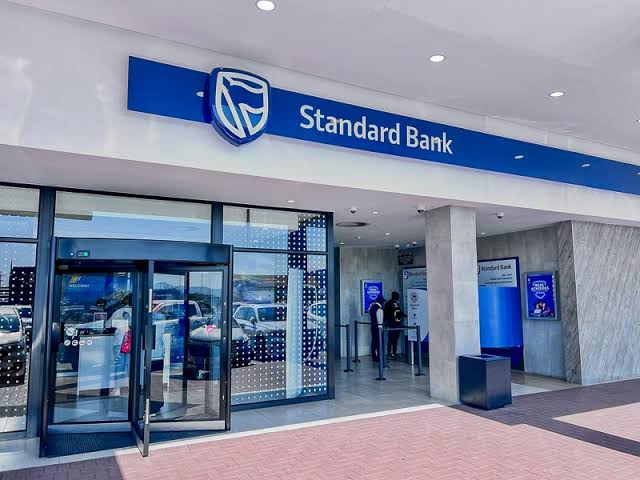
Standard Bank Group has signed a subscription agreement to invest in OPay, the Nigerian fintech, as the payments company prepares for a listing in New York that could become one of the largest technology market debuts ever attempted by an African company.
The South African banking group disclosed the agreement on Wednesday, saying the investment is expected to close at the same time as, or shortly after, OPay's initial public offering, subject to the completion of the offering and the receipt of required regulatory approvals. The size of the investment was not disclosed.
OPay has filed a registration statement on Form F-1 with the United States Securities and Exchange Commission and has applied to list American Depositary Shares on the New York Stock Exchange. The move signals an ambition to tap global public capital markets rather than list locally.
Why the timing matters
The subscription agreement is structured around the listing, which is significant. By tying its investment to the initial public offering, Standard Bank positions itself as a cornerstone investor at the moment OPay becomes a publicly traded company. That structure gives the fintech an anchor backer and gives the bank an entry point into one of Africa's largest digital payments platforms at a defined moment.
For OPay, a partner of Standard Bank's stature lends institutional credibility ahead of a listing that will be scrutinised by international investors who may be unfamiliar with the Nigerian market. A well-known African banking group on the register can help bridge that gap.
What the partnership will cover
Under the broader relationship the two parties will explore collaboration across digital banking, the distribution of Standard Bank products through OPay's channels, merchant acquiring, payments, lending, remittances and the development of new products. The logic is complementary: OPay brings a vast consumer and merchant network and a technology platform, while Standard Bank brings balance-sheet strength, banking licences, product depth and cross-border reach.
OPay's scale explains the interest. The company has reported more than 50 million monthly active users and about 26.8 million daily active users as of July 31, 2026, and revenue of $467.1 million in the first half of 2026. That makes it one of the largest consumer financial platforms in Africa by engagement.
The bank-fintech convergence
The deal fits a wider pattern in African finance, where traditional lenders and technology-led payment companies are moving toward each other. Banks have the capital and the regulatory standing but often lack the agility and customer reach of fintechs; fintechs have the reach and the user experience but need capital, banking infrastructure and, increasingly, the ability to lend from a regulated balance sheet. Partnerships, investments and acquisitions are becoming the standard way to combine the two.
Remittances are a particularly natural area of collaboration. Nigeria is one of the world's largest recipients of diaspora remittances, and a partnership that connects incoming transfers directly to a large local payments network and merchant ecosystem could capture more value within Nigeria rather than letting it leak to informal channels.
What to watch
Three things will determine how much this agreement matters. The first is whether OPay completes its New York listing and on what terms. The second is whether the Standard Bank investment is completed alongside the offering, as anticipated. The third is whether the exploration of digital banking and lending translates into concrete products, since announced partnerships in African fintech have sometimes remained at the memorandum stage.
If it proceeds, the combination of a global listing and an established African bank partner would mark a maturation of Nigeria's fintech sector, moving its most prominent companies from venture-funded startups toward fully fledged financial institutions.
Up next
IMF Says Nigeria's N4.65 Trillion Bank Recapitalisation Is Only the First Step
The International Monetary Fund has said Nigeria's bank recapitalisation is necessary but not sufficient, urging stronger supervision, better buffers and timely recognition of non-performing loans.
More in Finance
See all
Liberia Seeks Nigeria's Insurance Playbook After N720 Billion Recapitalisation
Liberia's central bank has turned to NAICOM for guidance on supervision, after Nigeria's recapitalisation raised about N720 billion and strengthened 50 insurers.

Only 0.3% of Nigeria's Informal Workers Have Pension Cover
Just 245,315 of Nigeria's roughly 84.9 million informal workers are enrolled in a pension plan, exposing a vast retirement savings gap, PenCom data shows.

PenCom Automates Penalties After N36.6 Billion Recoveries
PenCom has automated penalties for employers that delay pension remittances, after cumulative recoveries from defaulters reached N36.6 billion.
About the author
Musa Abdullahi
Finance Correspondent
Musa Abdullahi writes for BusinessPress.