IMF Says Nigeria's N4.65 Trillion Bank Recapitalisation Is Only the First Step
The International Monetary Fund has said Nigeria's bank recapitalisation is necessary but not sufficient, urging stronger supervision, better buffers and timely recognition of non-performing loans.
The International Monetary Fund has said that Nigeria's bank recapitalisation, which saw 33 lenders raise a combined N4.65 trillion to meet new minimum capital requirements, is a necessary step but not a sufficient one, urging stronger supervision and better risk management to secure the gains.
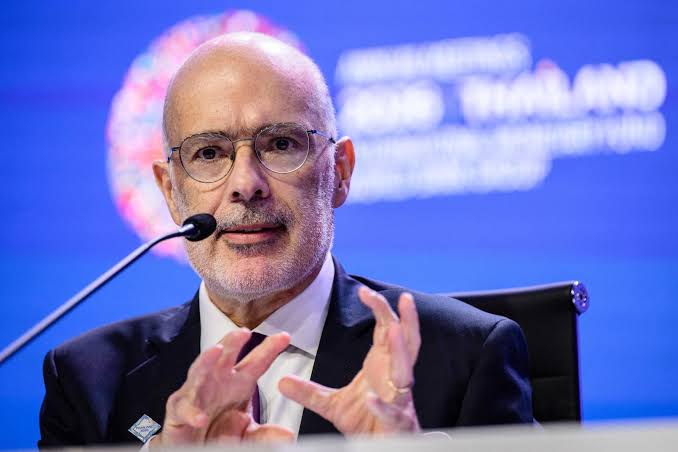
The assessment came on Wednesday during the launch of the fund's October 2026 Global Financial Stability Report at the IMF and World Bank Annual Meetings in Bangkok, Thailand. IMF officials said that while higher capital buffers strengthen banks' ability to absorb shocks, capital alone cannot guarantee stability if asset quality deteriorates or liquidity is mismanaged.
What the IMF actually asked for
The fund's message centred on three priorities. First, stronger supervision, so that regulators have the capacity and the independence to challenge banks on their lending and risk practices. Second, adequate capital and liquidity buffers that reflect the actual risks on banks' books rather than simply the headline ratios. Third, timely recognition of non-performing loans, so that losses are identified and provisioned for early rather than allowed to build up quietly.
The emphasis on asset quality is significant. Recapitalisation raises the denominator of a bank's capital ratio, but if the loans on its books are misclassified or under-provisioned, the apparent improvement in solvency can be illusory. The IMF's point is that a stronger balance sheet is only as good as the quality of the assets it holds and the rigour with which they are monitored.
The capital thresholds
The recapitalisation exercise, initiated by the Central Bank of Nigeria, raised the minimum capital requirements for banks by category. International banks were required to hold N500 billion, national banks N200 billion, and regional banks N50 billion. For non-interest institutions, the thresholds were set at N20 billion for national and N10 billion for regional operators.
The exercise began in March 2024 with a two-year compliance window that ended on March 31, 2026. By that deadline, 33 banks had met the revised minimums, raising N4.65 trillion in the process. The scale of the fundraising made it one of the largest capital-raising episodes in Nigerian banking history and reshaped the competitive landscape, with some lenders merging or being acquired to reach the new thresholds.
Why asset quality is the test
Nigeria's banks have reported strong profits in recent years, boosted by high interest rates and a steep yield curve. But those same conditions make lending riskier for borrowers, who face higher repayment costs. Where households and businesses struggle to service loans, non-performing loans can rise, and it is precisely this channel that the IMF is watching.
The fund's guidance also carries a supervision angle. Independent, well-resourced regulators need to be able to look through reported figures, test provisioning assumptions and act decisively when capital or liquidity falls short. Building that supervisory capacity is as central to financial stability as the capital itself.
What it means for banks and borrowers
For banks, the message is that the post-recapitalisation era will be judged on discipline rather than size. Institutions that use their stronger capital to expand lending prudently will consolidate their franchises, while those that chase volume at the expense of underwriting will store up problems. Banks should also expect closer scrutiny of their exposure to sectors under pressure.
For borrowers, a better-capitalised and better-supervised banking system should, over time, mean more reliable access to credit, including for smaller businesses that have historically been underserved. The immediate cost of credit remains high, but a stronger system is a precondition for the lower, more dependable lending rates that a growing economy needs.
What to watch
Bank earnings disclosures over the coming quarters, the ratio of non-performing loans across the industry, and the Central Bank's supervisory actions will show whether recapitalisation translates into resilience. The IMF's verdict is a reminder that the hard work of building a solid banking system continues long after the capital has been raised.
Up next
DMO Raises N450 Billion in Treasury Bills as Primary Market Pipeline Tops N3 Trillion
The Debt Management Office raised N450 billion at its treasury bills auction on Wednesday, leaning on the 364-day tenor as the market's primary pipeline climbed above N3 trillion.
More in Finance
See allBank lending growth returns as cost of risk climbs
Loan books are expanding again, but provisioning is rising alongside them.

Nigeria's insurance premiums reach N2.3 trillion as market expands
Gross premium written rose 47.3 percent in 2025, while low retention in specialist risks showed why the industry's new capital rules matter.

Fidelity Bank crosses CBN capital threshold after N259 billion private placement
The transaction lifted eligible capital above the N500 billion minimum for an international commercial-bank licence, subject to final approvals.
About the author
Musa Abdullahi
Finance Correspondent
Musa Abdullahi writes for BusinessPress.
More by Musa Abdullahi