
Tourba And ThriveAgric Scale Conservation Farming Push
Tourba and ThriveAgric agreed to scale conservation agriculture across Nigerian farmland, pairing climate finance with the country largest smallholder network.
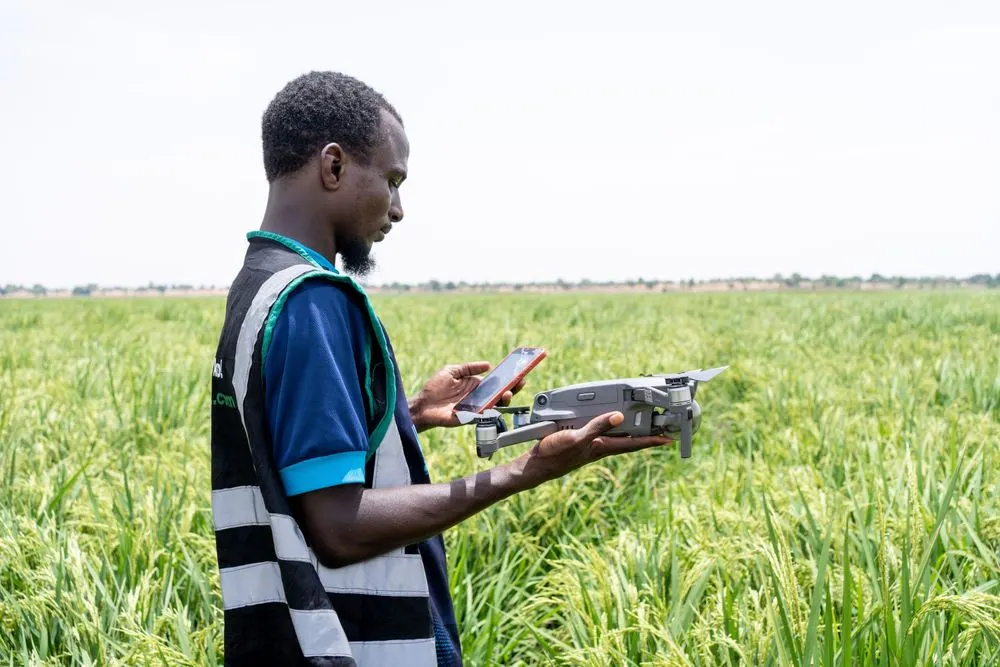
Two of Nigeria's best-known agricultural platforms have agreed to scale up conservation agriculture practices across Nigerian farmland, with Tourba and ThriveAgric combining their farmer networks and technical programmes to push regenerative soil practices from pilot scale into the country's main commercial crop basins — a pairing that places soil health, not just yields, on the smallholder agenda at precisely the moment Nigeria's harvest outlook is weakening.
The partnership, reported by BusinessDay this week, links Tourba — the climate-agriculture platform that develops and finances conservation practice programmes — with ThriveAgric, whose network of smallholder farmers, input financing and produce aggregation spans several of Nigeria's key grain-producing states. Conservation agriculture's toolkit is specific: minimal soil disturbance, permanent soil cover and crop rotation or inter-cropping, a package whose adoption reverses the soil degradation that has quietly curtailed Nigerian yields even where rainfall and input supply cooperated.
Why conservation practice matters to the harvest outlook
Nigeria's food policy conversation this season has been dominated by insecurity, but the agronomic base of the country's food emergency is soil exhaustion. Decades of continuous cultivation without fertiliser-soil rebuilding, removal of crop residues that would return organic matter, and tillage practices that expose soils to erosion have degraded the root-zone fertility on which the national harvest depends. Loss of soil structure is one reason Nigerian yields per hectare in staple crops persist at fractions of global averages — a production gap that no security policy alone closes.
The partnership's significance is distribution mechanics. Conservation agriculture's historical obstacle in Nigeria has been the extension gap: hundreds of thousands of smallholders farming with little technical contact, for whom practice change requires hands-on demonstration, input access and, most critically, financing that accommodates the transition seasons in which yields may dip. ThriveAgric's model — input financing, weekly farmer training through a field-agent network and guaranteed produce offtake — addresses that entire adoption chain, and Tourba's programme design and climate finance capabilities supply the sustainability architecture that has historically made such practices fundable.
The carbon finance dimension
Conservation agriculture's economics in the 2020s carry a second revenue stream that traditional farm extension never had: carbon. Soil-carbon programmes — through which corporations and climate funds pay for verified increases in sequestered soil carbon — have created payment schemes for smallholders whose practice changes this partnership directly supports. Tourba's positioning within that market gives participating farmers a revenue diversification whose payments can offset the transition-season risk of practice change, aligning investor economics with smallholder agronomy.
The pairing also arrives as Nigeria's food-security projections crystallise. Assessments from the national-UN food security monitoring system now anticipate more than 33 million Nigerians facing acute food insecurity by mid-2027 — a scenario driven, in its production dimension, by the contraction of farmed area and yields in the northern belt. Every yield-preserving intervention that succeeds at scale pushes back on the scarcity arithmetic, and conservation practices' documented effect on drought resilience carries additional value in a season whose rainfall variability has repeatedly punished conventional plots.
The commercial logic ThriveAgric brings
ThriveAgric operates the country's most institutionally scaled smallholder aggregation platforms, combining farmer financing at thousands-strong cooperative scale, digital farmer records and produce aggregation that links farms to processors. Its participation addresses the demand question conservation practice change otherwise faces — farmers will adopt practices when the entire channel that finances, inputs and buys their crops endorses them, not merely when an NGO's demonstration plot suggests it. The integration of conservation messaging into that commercial channel is precisely the mechanism through which practice change has scaled at speed elsewhere in Africa's smallholder systems.
For the inputs industry, conservation agriculture shifts the product mix: herbicide for no-till weed control, cover-crop seed, lime and soil amendments — categories whose Nigerian supply chains are thin and whose prices will determine whether practice adoption is affordable at smallholder economics. The programme's buyer network, which aggregates produce at scale, gives input suppliers the visibility into demand that justifies building those supply lines in Nigeria.
What success looks like and the risks it faces
The programme's measure of success is adoption-retention: farmers who complete one season's practice change and keep it. Conservation agriculture's failure mode in African programmes has been pilot success and diffusion failure — practices that perform in funded demonstration batches and die when financing ends. The commercial channel integration this partnership embodies is the structural answer to that failure mode, but the risks remain: practice complexity, cost of the transition, climate variability that damages confidence between seasons and the insecurity conditions on the farm roads whose dangers continue to interrupt farmer access to the land.
Nigeria's agricultural policy conversation now runs on three policy files at once: security on the farm roads, finance for the planting season and the agronomic base renewal this partnership represents. A soil-health partnership whose mechanisms layer commercial financing, climate revenue and practice training into existing farmer networks offers an integrated answer to the third file — and its scale-up success will show whether the country's private-sector agricultural infrastructure can carry practice change faster than government programmes or donor pilots alone have done. For a food supply picture whose most recent projections trend downward, that is not an academic question; it is the 2027 harvest's planting-season race.
Up next
33 Million Nigerians Face Food Insecurity By 2027
Food security projections warn more than 33 million Nigerians will face acute food insecurity by mid-2027 amid harvest shortfalls and farm insecurity.
More in Agriculture
See all
Presco Cuts Debt as Pretax Profit Advances
Presco reports higher nine-month pretax profit, lower borrowings and reduced finance costs as it prepares additional plantation output.

Livestock Feeds Returns to Profit as Financing Costs Ease
Livestock Feeds reports a nine-month profit despite lower revenue, supported by stronger gross profit and reduced financing costs.

Agriculture minister says Nigeria loses $10 billion of farm produce a year as 14 of 17 federal silos fail to function
Agriculture and Food Security Minister Abubakar Kyari told the Nigerian Economic Summit that post-harvest losses cost the economy about $10 billion annually, with grains losing 15 to 20 per cent in traditional storage and fruit and vegetables losing 60 to 70 per cent.
About the author
Tunde Balogun
Economics Correspondent
Tunde Balogun writes for BusinessPress.
More by Tunde Balogun
Nigeria Opens 40 Oil Blocks For Global Bidding
Economy38 mins ago
Nigeria Eyes 50m Savings From Local Data Hosting
Economy1 hr ago
Debt Service Bill Overshadows Five Sector Budgets
Economy2 hrs ago

