
33 Million Nigerians Face Food Insecurity By 2027
Food security projections warn more than 33 million Nigerians will face acute food insecurity by mid-2027 amid harvest shortfalls and farm insecurity.
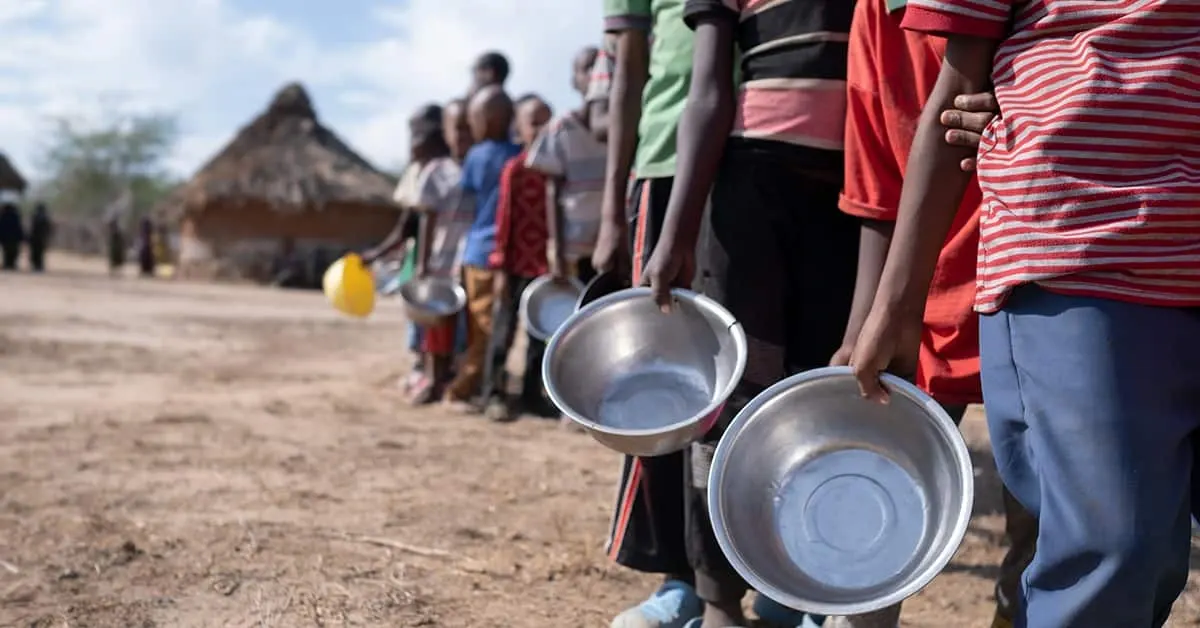
New projections published with the current edition of Nigeria's food security monitoring warn that more than 33 million Nigerians will face acute food insecurity by the middle of 2027 — a forecast that converts the country's farm-level insecurity, harvest shortfalls and urban price pressures into the starkest official analysis so far of the coming two years, and one that will frame every budget, subsidy and security debate between now and the next planting season.
The Cadre Harmonisé analysis — the seasonal assessment tool Nigeria's government runs with the United Nations system and regional food security bodies — establishes the severity boundary with projections that scale Nigeria's food emergency well beyond the pastoral belt towns and IDP populations where the phenomenon concentrates, to food markets and households whose numbers the urban economy experiences most visibly through market prices and purchasing power.
What the 33.5 million forecast actually measures
Acute food insecurity in the Cadre Harmonisé framework is not a vague description of hunger but a defined operational category: populations whose access to food falls to crisis levels during specific projected periods, in projected populations, largely driven by conflict displacement, market distress and seasonal availability. Nigeria's 33.5 million — typically the country's benchmark extreme figure across the analysis' forward projection horizon — points at a situation in which a population larger than most West African nations will require assistance or market interventions to eat adequately through the coming lean windows.
The forecast concentrates its projection cycles between now and the mid-2027 assessment windows, which include the 2026 harvest consumption period and the following year's planting-season distress — the months in which rural incomes bottom out, market supply is thinnest and household purchasing power runs weakest. The projection dates also extend past the pending national budget cycles in which the agricultural allocations will be set, making the analysis a direct input to fiscal decisions rather than an academic exercise.
The harvest deficit behind the number
The projection draws its worrying substance from the 2026 farming season's observed weaknesses. Northern harvests — the maize, rice, sorghum and millet production whose volume feeds national markets — have faced a compounding threat matrix this year: armed groups' operations in the Borgu forest belt and along the farm roads connecting Nigeria's major food-producing corridors, explosives emplaced on rural transport routes, and the abduction economics that empty whole farming communities ahead of key harvest windows. United States Department of Agriculture forecasts already project Nigeria's 2026/27 rice production falling six percent and maize output five percent, with cultivated area shrinking — a supply picture that the Cadre Harmonisé's food price projections stress-test against urban consumption at market rates.
The scarcity arithmetic is straightforward enough to be alarming: a consumption base still growing in population, a production base contracting in staple categories, and an import channel whose foreign-exchange requirements compete with other national obligations. In previous cycles, Nigerian food emergencies have been resolved through import surges; the 2026 setup leaves less room for that valve because of the currency-consolidation trade-offs in which domestic food inflation competes with imported inflation for FX budget allocation.
Where policy faces its limits
The analysis lands on a policy ecology that already struggles with food programmes: fertiliser subsidy distribution whose beneficiary targeting disputes persist, security budgets dominated by kinetic operations whose effects on farm access lag their spending, and state programmes whose irrigation, mechanisation and extension services are chronically underfunded relative to the production base's needs. The 90-day national threat assessment the federal government announced for the Borgu forest belt — the latest operational intervention against the region's farm-road insecurity — will be measured against the price movements households experience at market, not the operations' metrics.
The private sector's adaptation is visible too. Trade houses and processors have shifted procurement volumes toward the states that guarantee access, warehouses have clustered nearer secured corridors and the cost of insecurity is now a line item visible in every food commodity's transport pricing — raising the price base from which the Cadre Harmonisé's projections start. Household coping mechanisms — smaller purchase units, substitution toward cheaper staples, reduced meal counts — are the demand-side adjustments whose public-health consequences the projection horizon captures.
The financing geometry that follows the forecast
Forecasts of this scale set the humanitarian funding agenda. Nigeria's food response architecture — the federal government's emergency grain distributions, state-level buffer stock schemes and the international agencies' own caseload planning — has historically been funded through a mix of federal budget provisions, donor contributions routed through the UN system and the state governments' own technical support. A 33.5 million caseload projection forces the conversation about whether the existing architecture can distribute assistance at that scale, or whether the emergency response requires structural funding decisions reserved for the country's largest humanitarian operations.
For Nigeria's development partnerships, the numbers also reframe the investment debate: development finance for agricultural productivity — seed systems, mechanisation finance, rural road rehabilitation and irrigation — competes with humanitarian response whose caseloads persist and grow where production fails. The most compelling argument the Cadre Harmonisé makes to decision-makers is a fiscal one: every naira of productivity investment in the secure farming belts stands against multiple naira of forecast caseload escalation if the production base keeps contracting.
The projection assumes a specific future and it is worth being precise about what that future is. It assumes the security situation's trajectory continues to erode farm access in the north's food corridors, the 2026/27 agricultural season's production falls broadly as USDA projects, and household purchasing power keeps eroding faster than price rebates arrive. Changed conditions — security gains, harvest recovery, macro repair that restores urban incomes — would trim the caseload arithmetic significantly. What the 33.5 million forecast guarantees is that no Nigerian government can treat agriculture, security and food price policy as three separate files on the desk through the coming budget cycle.
Up next
Nigeria Money Supply Approaches The 100tn Mark
Nigeria broad money supply has climbed to N99.23 trillion despite CBN tightening, reviving inflation and naira concerns ahead of the December MPC.
More in Agriculture
See all
BUA Foods Profit Rises Despite Lower Sales
BUA Foods reports higher nine-month profit as lower input and operating costs offset declining revenue.

Presco Cuts Debt as Pretax Profit Advances
Presco reports higher nine-month pretax profit, lower borrowings and reduced finance costs as it prepares additional plantation output.

Livestock Feeds Returns to Profit as Financing Costs Ease
Livestock Feeds reports a nine-month profit despite lower revenue, supported by stronger gross profit and reduced financing costs.
About the author
Amina Suleiman
Finance Correspondent
Amina Suleiman writes for BusinessPress.
More by Amina Suleiman

