
Toyota Smashes Forecasts, Raises Profit Guidance
Toyota reported Q2 operating profit of 1.13 trillion yen, beat expectations and raised full-year guidance to 3.90 trillion yen.
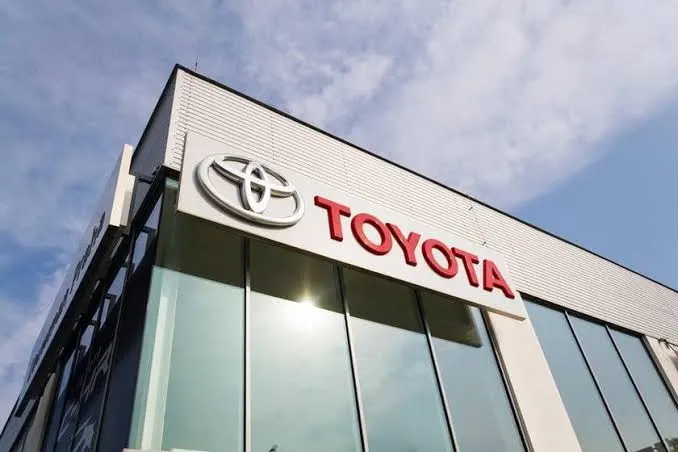
Toyota reported second-quarter operating profit of ¥1.13 trillion — well above consensus expectations of ¥965 billion — and raised its full-year forecast, delivering one of the strongest surprises of a busy Japanese earnings day that saw automakers add fuel to a market-wide rotation out of technology stocks on Thursday.
The world's largest automaker lifted its full-year operating profit forecast to ¥3.90 trillion from ¥3.40 trillion, and expanded its share buyback programme to ¥1.3 trillion — a double upgrade that came as Tokyo's index circulated around a chip-led slide. Toyota's stock was among the day's stronger performers, with Toyota and Honda each gaining around 5 per cent in Asian trade as investors rotated out of semiconductors and into autos on expectations that the United States' new political configuration will soften tariff aggression.
The tariff argument inside the beat
The operating story behind Toyota's beat is as political as it is operational. Japanese automakers have absorbed the full weight of US tariffs on imported vehicles through the past two years — a structural drag that turned Japan's biggest export sector into a margin problem — and the Democratic midterm sweep, which removed the President's party's sole control of Washington, has re-costed that risk in the market's model. Investors bid autos higher this week on exactly that thesis: a Congress opposed to the President's trade extraordinary-scope actions makes a partial tariff rollback or negotiated exception far likelier than it was a week ago.
Toyota's results amplify the argument that operating recovery has its own momentum beneath the tariff issue. Currency worked in the company's favour: a weaker yen, which averaged near historic lows earlier in the year, converts overseas profit into yen terms at favourable rates, and hybrid-vehicle demand — Toyota's structural franchise — continued to outgrow the global car market through 2026. Combined, higher volumes, yen levels and post-tariff pricing strategies let the company guide the full year higher even while absorbing the tariff costs already in effect over the first half.
The rotation trade and what it says about technology
The rotation's context matters for how the results should be read. Thursday's Asian session was dominated by the global AI sell-off: Seoul's Kospi plunged more than 5 per cent with triggers of an emergency halt, Tokyo lost nearly 2 per cent on the chip complex's fall, and memory names crashed against the backdrop of weak US Qualcomm and Arm Holdings results. Against that, the autos' strength is what diversification looks like — the same indexes that depended on semiconductors to climb this spring contained enough industrial and consumer weight to rally while semiconductor names collapsed.
The rotation is also a policy trade. A divided Congress means less chance of aggressive new tariff fronts, a stronger chance of negotiated settlements with Japan, and — through the ceasefire thesis on the Iran war — lower fuel prices for global auto demand. Every leg of that reasoning favours automakers and consumer-industrial names over the AI-complex names investors had crowded into all year, which is why the sector's catch-up trade arrived with enough force to lift the Topix 1.4 per cent while its tech components fell double digits simultaneously.
What Toyota's upgrade signals for 2027
Management's guidance upgrade carries a strategic dimension beyond the arithmetic. Toyota has committed capital to the largest product cycle in its history — the next generation of hybrid platforms, electric-vehicle capacity and battery production across North America and Asia — and capital programmes of that scale require the company's own cash-flow confidence. An expanded ¥1.3 trillion buyback sends the same signal to investors: the company sees its own valuation as underwritten by earnings that will keep arriving.
The competitive backdrop is not static, of course. Chinese automakers continue to take global share aggressively, particularly in Southeast Asia and emerging markets; US peers are racing their own EV and hybrid programmes into a price-competitive market; and European manufacturers are rebuilding profitability through the same cost discipline Toyota has already banked. The tariff relief thesis, if it materialises, applies to all of these players — but Toyota's hybrid economics give it the cost base designed for exactly the transitional phase the global car market is entering.
The investor's takeaway
The practical reading for portfolios is that Thursday confirmed the rotation has fundamental support rather than being a purely sentiment-driven move. Toyota's beat on revenue and operating profit, its upgraded full-year guidance, its expanded buyback and the sector-wide bid it sparked all describe a market reallocating from the AI trade's exhaustion toward the industrial nuts and bolts of the same global economy — the transportation companies, consumer names and infrastructure plays that were the under-owners of the last two years' performance leaders.
Japanese corporate reporting season continues through the week with ArcelorMittal and Commerzbank landing in Europe, but the template is set: earnings beats from the real economy are now the market's most valuable stories, and when a results season can rally an entire rotation off one automaker's overshoot, the balance says more about how stretched the selling alternative had become than about how extraordinary the beat itself was.
Up next
Lagos Targets Industrial Growth, Climate Resilience in 2027 Economic Plan
Lagos Outlines Seven Priorities for Economic Development The Commissioner for Economic Planning and Budget, Mr Ope George, presented...
More in Corporate
See all
NGX Group nine-month profit before tax jumps 83.29% to N20.58bn
NGX Group posted a 9M 2026 profit before tax of N20.58bn, up 83.29% year on year, on revenue of N27.26bn, driven by transaction fees that grew 112.39%, even as THEWILL calculations show a softer Q3.
Secure Electronic Technology Q3 Revenue Falls 15.5% as Quarterly Loss Doubles
The listed lottery operator reported revenue of N920.7 million for the third quarter against N1.09 billion a year earlier, with a loss after tax of N105.8 million and accumulated losses of N2.92 billion against equity of N3.48 billion.
Transcorp Hotels Reports N22.53 Billion Profit Before Tax
Transcorp Hotels Plc posted a N22.53 billion profit before tax as occupancy and room rates held firm across its portfolio, anchored by the Transcorp Hilton Abuja and other properties.
About the author
Ngozi Eze
Companies Reporter
Ngozi Eze writes for BusinessPress.
More by Ngozi Eze


