
NNPC Reports N509bn September Profit, Weighs IPO
NNPC posted N509 billion September profit on N4.61 trillion revenue and plans a 5-10% IPO with possible London or New York listing.
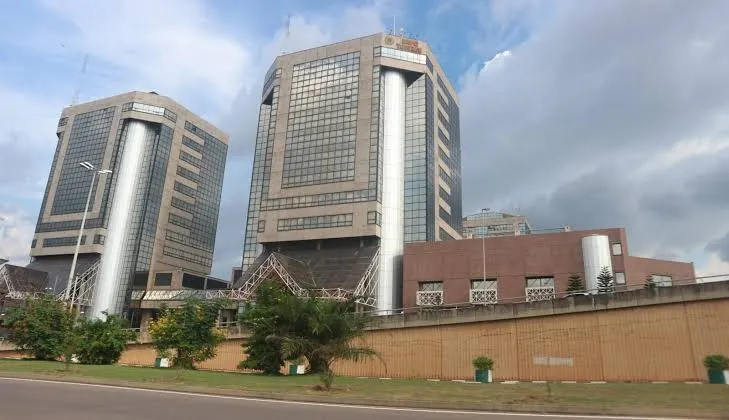
Nigeria's state oil company is preparing one of the largest privatisation-flavoured events in the country's corporate history. NNPC Limited reported September profit after tax of N509 billion on revenue of N4.608 trillion, and its chief executive says the company is likely to float a 5 to 10 per cent equity stake through an initial public offering, initially on the domestic market with a possible secondary listing in London or New York.
The monthly figures, released alongside an operational update, showed total hydrocarbon production averaging 3.04 million barrels of oil equivalent per day in September, marginally up from August's 3.01 million, with crude and condensate accounting for 1.70 million barrels per day and gas production rising from 7,680 million to 7,789 million standard cubic feet per day. Statutory payments for January to September totalled N11.14 trillion. The company stressed the production, sales and financial figures remain provisional and subject to reconciliation — language that matters, because every headline number in this story will eventually be audited before an IPO.
What the 5 to 10 per cent stake implies
A 5 to 10 per cent float is deliberately modest for an entity of this scale: NNPC controls the national oil portfolio through joint ventures, production sharing contracts and the downstream franchise, and even a partial listing would rank among the largest exchange debuts ever recorded in Africa. Group chief executive Bashir Bayo Ojulari told Reuters the offering would focus primarily on Nigeria's domestic capital market, with a secondary listing on either the London or New York Stock Exchange as a later stage, and management has offered no timeline beyond indications that preparations could take at least the whole of next year.
The comparison management is drawing is explicit: the UAE's ADNOC model of staged subsidiary listings, in which state energy assets are progressively opened to public markets to fund growth while retaining sovereign control. Ojulari signalled that listings of NNPC subsidiaries might also follow, meaning the IPO programme could eventually extend from the parent company to refineries, retail networks and infrastructure assets — a multi-year unaudited privatisation-by-stages that would transform the size and composition of the Nigerian stock market itself.
Why now — and why the market still needs convincing
The commercial conditions for a domestic listing have arguably never been better. The NGX has gained more than 63 per cent this year, its market capitalisation has crossed N165 trillion, and domestic institutional demand remains deep: the Dangote refinery's recent IPO attracted some N6.4 trillion in orders from retail and institutional investors, demonstrating the retail appetite that a national champion listing can expect to tap. Pension funds searching for long-dated, dividend-bearing assets in a high-inflation environment are the natural anchor investors for an offering of the scale proposed.
The complications are equally structural. NNPC's accounting will need to survive audit scrutiny that separates the company's commercial operations from its quasi-fiscal historical role, and prospective shareholders will demand clarity on the company's net position, its debt, its joint-venture obligations and the funding relationships with the Federation Account. Recent months have already required prudence: the petrochemical of central government budgets, the technical accounting question of how much of the September profit survives a full audit year, and the ring-fencing of liabilities from the country's historic environmental and contracting legacy all remain open questions for any prospectus.
How the market reads the profit figures
The September profit of N509 billion is the largest monthly figure the company has reported since it converted to the company structure in 2022, and it is built on exactly the conditions that have driven listed oil-sector equities so far this year: production recovery in the creeks, gas volumes rising as the OB3 pipeline's River Niger crossing becomes operational, and high crude prices averaging well above budget through the war period. The Ajaokuta-Kaduna-Kano pipeline, reported 95 per cent complete with early gas delivery to Abuja targeted before the end of 2026, adds the gas-side growth story that the IPO marketing will lead with.
The fine print deserves emphasis, not dismissal: the company itself says its figures are provisional, and reconciliations between production volumes, liftings, losses and cash calls have historically moved reported earnings materially between monthly reports and audited statements. Analysts covering the sector argue investors should anchor expectations to a full audit cycle rather than a single month's print — and the fact that management volunteered that caveat is a positive signal about the transparency the listing bid requires.
The investment case in three pieces
The argument for a listing at all rests on three pieces. First, funding: an equity raise of the proposed scale would supply the capital that NNPC's joint-venture commitments and new field developments require without adding to federal debt. Second, discipline: public markets force the company into quarterly reporting, audited accounts and dividend policies, which successive administrations have tried and failed to impose administratively. Third, democratisation: giving Nigerians a stake in the national oil company converts an opaque public asset into a market asset, extending this year's retail-investor boom to the country's most political balance sheet.
The obstacles are the counterpart of each argument. Achieving clean audited accounts across the historic portfolio is a project measured in years, not months; the political economy of listing assets that fund federal budgets through the Federation Account will generate resistance within government itself; and comparison-with-ADNOC optimism ignores how long Abu Dhabi's staged programme took to execute. Preparation taking "at least the whole of next year" is the realistic timeframe management is negotiating — which makes 2028 the earliest plausible debut under current conditions, and requires the reform narrative that has carried the market's 63 per cent rally to hold until then.
Up next
FAO Food Price Index Slips on Weaker Import Demand
The FAO Food Price Index falls to 133.9 in October from 135.6 as cereal, dairy and meat ease on soft import demand, though prices remain 5.9% above a year ago.
More in Corporate
See allRenda Secures $1.9 Million Pre-Seed Funding for Expansion
Renda has raised $1.9 million in pre-seed funding to expand its operations, according to BusinessDay, in a round that adds to recent venture deal flow in Nigeria's technology and services market.
Dangote Cement Adds Goldman Sachs and UBS for $1bn London Listing
Dangote Cement has appointed Goldman Sachs and UBS as bookrunners for a proposed $1 billion secondary share sale and listing in London, potentially as early November, with investor engagement beginning October 27.
NGX Says Dangote Refinery IPO Has Sparked New Listing Talks in Lagos
Nigerian Exchange Group chief Temi Popoola says the Dangote Refinery IPO has revived private listing talks spanning energy, technology and state-owned companies, with decisions expected from 2027.
About the author
Kwame Mensah
Markets Correspondent
Kwame Mensah writes for BusinessPress.
More by Kwame Mensah


