NGX Group nine-month profit before tax jumps 83.29% to N20.58bn
NGX Group posted a 9M 2026 profit before tax of N20.58bn, up 83.29% year on year, on revenue of N27.26bn, driven by transaction fees that grew 112.39%, even as THEWILL calculations show a softer Q3.
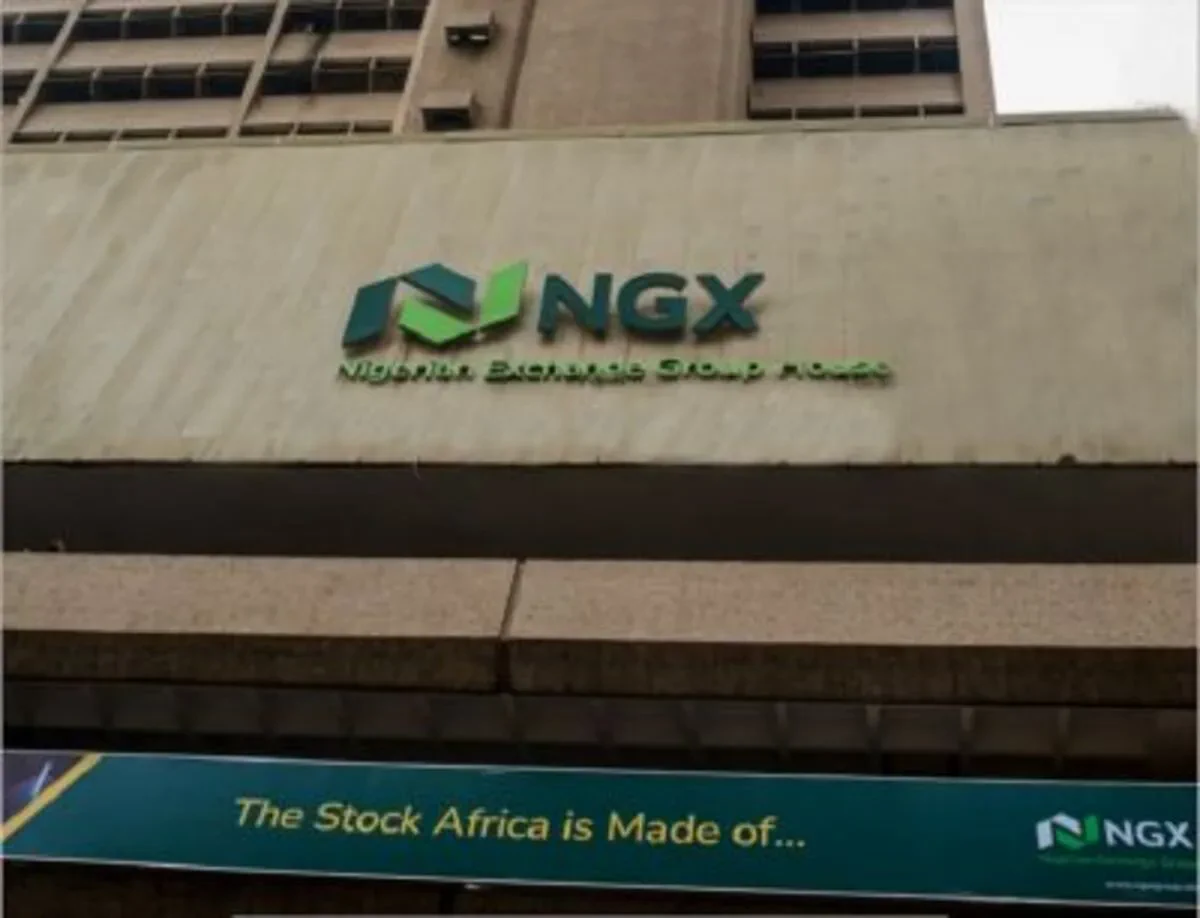
NGX Group has reported a 83.29 per cent increase in group profit before tax for the nine months ended September 30, 2026, to N20.58 billion, up from N11.23 billion in the comparative 2025 period, the exchange's parent company disclosed in its unaudited results released to the market, according to THEWILL's reporting of the filing.
Group profit after tax climbed 86.44 per cent to N14.69 billion from N7.88 billion, while group revenue grew 79.79 per cent to N27.26 billion, driven principally by transaction fees and other ancillary income whose growth reflects the Nigerian Exchange's own record activity levels during 2026, when the All-Share Index advanced 58.87 per cent year-to-date and monthly turnover repeatedly set post-reform records.
What powered the results
Transaction fees, the segment that tracks trading volumes, listing activity and market data sales, grew 112.39 per cent to N20.68 billion, the engine of the profit expansion. Just as notable is where the growth did not come: other operating income fell 16.95 per cent to N2.71 billion, while listing fees contributed N3.73 billion, up 24.44 per cent, confirming that recurring platform activity rather than one-off corporate actions drove the earnings growth.
The cost side rose too, but not as fast as income. Total group operating expenses grew 56.80 per cent to N14.71 billion from N9.38 billion, reflecting staffing, technology and regulatory investments that exchanges typically front-load during bull markets. Together with the strong transaction-fee momentum, that left the group's operating profit rising 73.53 per cent to N14.87 billion, and its share of profits from equity-accounted investments, principally the group's holdings in central securities depository and other market-infrastructure ventures, contributing N5.72 billion, up 69.55 per cent.
[irp]
Balance-sheet position
The group's total assets rose 11.35 per cent to N79.11 billion during the period, a slower expansion than the income statement, which suggests the profit growth is being converted to cash-generative earnings rather than balance-sheet expansion. Cash and cash equivalents of N1.61 billion, down 36.77 per cent, reflect investment deployment during the year, though the group's ability to fund operations without new borrowings keeps its capital position among the more conservative in the Nigerian financial services space.
For an organisation whose core role is to intermediate capital rather than consume it, the combination of growing assets, growing operating profit and rising equity-accounted income from its infrastructure subsidiaries describes a business compounding its position at the centre of Nigeria's capital-raising cycle. It also explains the boardroom confidence with which the group has continued expanding its product pipeline, including support for special-purpose vehicles and new asset classes.
[irp]
The Q3 lens: a decelerating quarter inside a strong nine months
THEWILL's analysis of the unaudited accounts, however, highlights a softer third quarter within the nine-month picture. Its calculations show Q3 operating expenses rose 62.6 per cent, outpacing operating income growth, so Q3 operating profit fell about 3.6 per cent to N4.25 billion, while Q3 profit after tax declined 7.1 per cent to N4.33 billion relative to the previous year's quarter. A deceleration does not negate the nine-month gains, but for investors it flags that cost growth in the bull market has gotten ahead of revenue expansion in recent months.
The market will interpret that inflection in one of two ways. If management frames it as deliberate investment, in trading infrastructure, market data and new product development, that supports the argument that operating profit will compound as volumes grow. If it persists into the fourth quarter and 2027, it will pressure the group's operating leverage and slow the earnings-per-share trajectory that has made the stock one of the capital-market cycle's more interesting growth stories.
[irp]
Why NGX Group's results matter beyond the numbers
As the holding company of the exchange, the group's profitability is a proxy for the health of Nigeria's capital market itself. Rising transaction fees track trading and settlement volumes, listing-fee growth tracks the corporate pipeline, and strengthening profits from infrastructure ventures track the maturation of the market's plumbing. When all three grow together in a nine-month period, it confirms that the Nigerian capital market's expansion, at the asset level and the infrastructure level, is broad-based.
The investment story that follows is straightforward. At the current trajectory, NGX Group's operating profit is compounding faster than the market's activity levels, and its earnings power will support further discretionary capital deployment, in technology, in new ventures and potentially in distributions. For investors in the wider market, the results are one more signal that 2026's bull market has been transformational for the Nigeria Exchange's economics.
[irp]
Up next
SEC opens direct complaints channel for unclaimed dividends and share balances
The Securities and Exchange Commission has launched an Unclaimed Monies Office through which investors can file complaints over unclaimed dividends, share proceeds and balances, with the regulator following up with relevant parties.
More in Corporate
See all
Stanbic IBTC subsidiaries lift nine-month profit 35% as group offers scrip at N159.86
Stanbic IBTC group nine-month profit before tax rose 35% to N113.37bn, driven by subsidiaries across banking, pensions and asset management, alongside a scrip dividend programme at N159.86 per share.

First HoldCo pre-tax profit rises 60.84% to N911.24 billion
Strong interest income and lower provisions lifted First HoldCo’s nine-month profit, boosting dividend expectations and bank-sector sentiment.
Dangote Refinery extends IPO as African investor demand surges
The extension gives more investors time to participate in a landmark listing that tests African capital-market depth and refinery valuation.
About the author
Yaw Boateng
Corporate Reporter
Yaw Boateng writes for BusinessPress.