
UK Factories Begin Quarter at Two-Year Growth Peak
The UK Manufacturing PMI climbed to 52.8 in October with the strongest output growth in more than two years, just as fast-rising costs put a Bank of England rate rise back on the table.
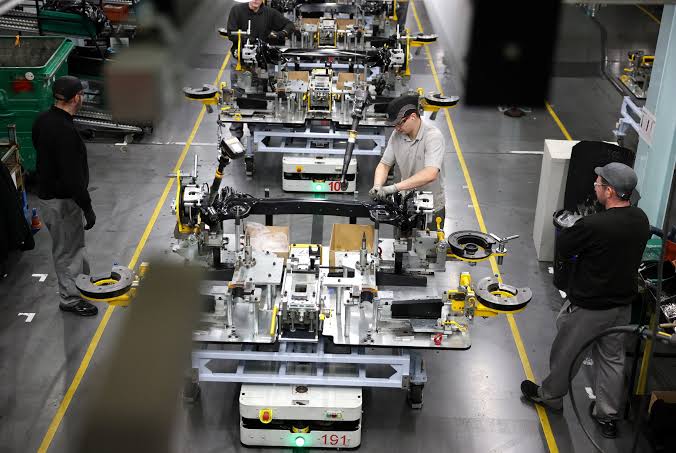
British manufacturers entered the final quarter of 2026 with the strongest output growth in more than two years, October PMI data showed on Monday, but the survey's fast-rising cost lines give the Bank of England an uncomfortable backdrop as the Monetary Policy Committee looks set to raise interest rates this week.
The S&P Global UK Manufacturing PMI climbed to 52.8 in October from 52.3 in September, with output accelerating to its best reading since mid-2024, according to the press summary of the survey and the Reuters global manufacturing wrap compiled from the national PMI releases on Monday. Readings above 50 denote expansion, and Britain's factory upturn lands as the euro area prints another solid — slightly slower — month at 52.7 and as global manufacturing holds overall above the growth line.
Output growth is the celebration, cost inflation is the catch
The strongest output reading in more than two years signals that demand for UK factory goods is genuinely recovering — faster than European peers on the month — but the internals of the survey read like an inflation warning: input costs rising quickly, margin pressures from energy, materials and imported components building again, and the type of cost-driven price adjustment that Britain's own inflation experience has repeatedly taught policymakers to respect.
For the Bank of England, meeting on Thursday this week, October's factory tape reinforces the case for continuing the tightening that markets have already priced in as the base case. A hike into accelerating manufacturing cost pressure sends the message that the inflation fight is not finished, and it offsets the risk that a booming factory demand cycle becomes the next source of underlying inflation pressure — especially with war-related food and fuel costs still in the price pipeline.
The Bank's balancing act this week
The MPC's rate path is being set against a global inflation environment that has changed direction twice this year: disinflation through mid-2026, then renewed cost pressure as Middle East conflict lifted energy and food. UK-specific factors amplify the picture — imported inflation through imported components, war-driven shipping and insurance costs, and a services sector still generating wage-linked price growth — all argue for the committee to err hawkish even as the domestic demand picture improves.
Business groups will ask the familiar question: whether a further rate rise might choke off the very manufacturing recovery the survey celebrates. The reasonable counterpoint is that factory output growth at 52-plus readings in the UK is exports-and-investment-led rather than rate-sensitive-consumption-led, and a quarter-point increase worth of caution carries less risk of stopping an export cycle that begins with overseas orders than of steadying the inflation expectations around which wage bargains form.
What it transmits to Africa and emerging markets
A hawkish Bank of England in November carries two practical implications for African markets. The first is currency: sterling strength on the加强了 rate outlook raises the pound price of UK-imported consumer and capital goods, a cost that lands on Nigerian, Kenyan and Ghanaian importers whose supply books carry more UK-sourced inventory than dollar-exposed rivals. The second is funding: gilts repricing relative to Treasuries steepen the curves off which many African sovereigns and corporations borrow, tightening the cost of capital for those who issue in sterling-linked structures.
The offsetting good news remains the demand pulse. UK factories with the strongest output growth in two years generate a pull for intermediate-goods suppliers — including North African component makers and agro-processors selling into European supply chains — at exactly the moment euro-area demand expansion slows modestly.
The wider read for the UK economy is that the country enters the fourth quarter with a factory sector outgrowing European peers on the day both pull in costs at accelerating rates, meaning the policy question in London and Frankfurt has shifted once more — from how quickly rates can fall to how decisively cost pressure must be answered. Thursday's decision will be the market's tell on whether the Bank of England agrees with the factories that growth is real and with the survey's cost lines that inflation is back.
Up next
Dangote Sugar Swings to Profit After N486bn Rights Issue
Dangote Sugar Refinery returned to a nine-month profit of about $56 million after a N485.9 billion rights issue cut borrowings from N736.2 billion to N89.3 billion.
More in Economy
See all
Japan Factory Output Bounces 2.2% in September
Japan's industrial production rose 2.2% in September to 104.1, the first rise in three months, led by motor vehicles as plants recovered from August disruptions.

China Factories Slip Back Below Growth Line in October
China's October manufacturing PMI fell to 49.3 from above 50 in September, with new orders at 49.4 and production at 49.8, NBS data shows.

India GST Collections Jump 23% to Rs 2.31 Lakh Crore
India's October goods-and-services tax collections rose 23% to Rs 2.31 lakh crore, with net receipts up 26%, after stamp-duty cutoffs.
About the author
Tunde Balogun
Economics Correspondent
Tunde Balogun writes for BusinessPress.
More by Tunde Balogun


