
MTN Ghana Grows Service Revenue 33.5 Percent
MTN Ghana grew nine-month service revenue 33.5 percent to GHS23.2 billion with EBITDA up 40.6 percent and the margin reaching 61.5 percent as data and fintech drove growth.
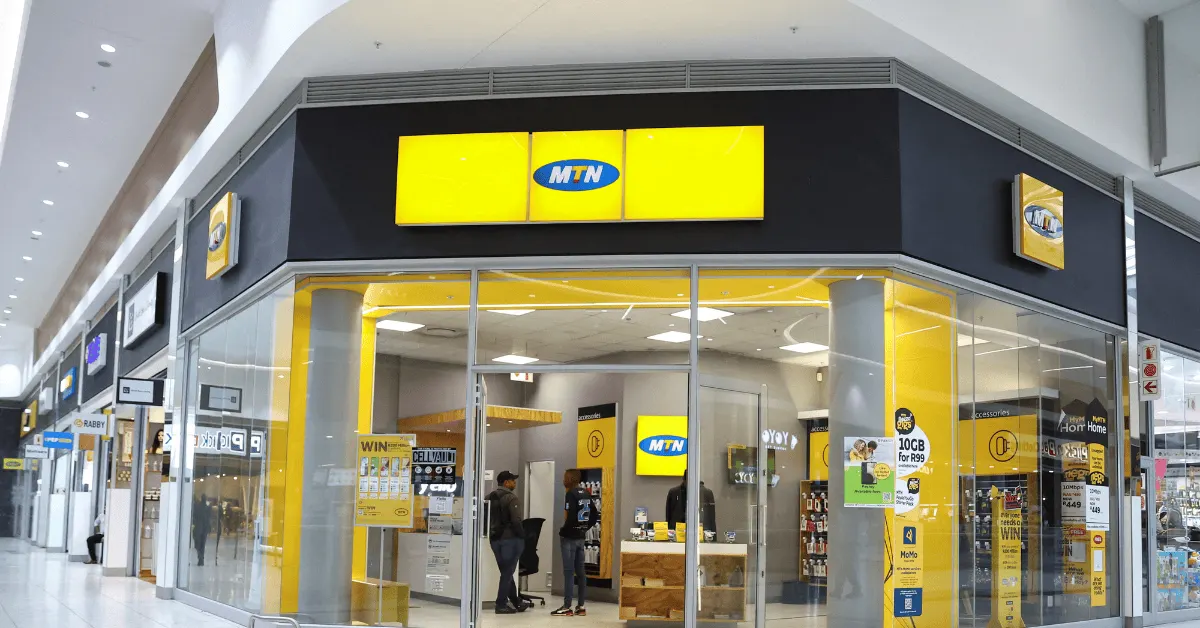
MTN Ghana grew nine-month service revenue by 33.5 percent to GHS23.2 billion for the period to 30 September, with third-quarter service revenue accelerating 35.7 percent to GHS8.2 billion, results approved by the board of Scancom PLC showed — a print that makes Ghana's telecom market one of the strongest revenue-compounding environments on the continent this year.
The growth was broad. Data revenue climbed 44.5 percent to GHS13.5 billion and now contributes 58.1 percent of service revenue, up from 53.6 percent a year earlier, as active data subscribers rose 16.1 percent to 22.0 million and average monthly consumption per user jumped 36.8 percent to 19.8 gigabytes. Mobile Money revenue rose 24.4 percent to GHS5.4 billion on a user base of 18.9 million, voice added 7.6 percent to GHS3.1 billion, and digital services nearly doubled, up 98.0 percent to GHS642 million.
Profitability outran the topline
The margin story is the strongest part of the picture. Nine-month EBITDA rose 40.6 percent to GHS14.3 billion, lifting the margin 3.1 percentage points to 61.5 percent, while profit after tax climbed 43.0 percent to GHS7.8 billion and profit before tax rose 47.0 percent in the combined Scancom and MobileMoney presentation. Ghana's cedi appreciation through parts of 2026 helped by reducing the cedi cost of the network's foreign-currency obligations — tower leases, equipment and spectrum-linked servicing — a currency tailwind Nigerian operators never enjoyed during their own recovery.
Capex stayed disciplined: GHS2.6 billion of ex-lease spending went into network modernisation, capacity expansion and digital platforms, with the company progressing preparations on new 700 MHz and 3 GHz spectrum awards for future deployments. Management guided that fiscal-2026 service revenue growth would track in the low-to-mid-30s percentage range for the full year.
The Ghana model versus the Nigerian one
The two MTN markets now tell a comparative story investors read closely. MTN Nigeria's nine-month service revenue grew 23.7 percent to N4.59 trillion — a larger absolute business on a bigger population — while MTN Ghana prints faster percentage growth on a smaller base. Nigeria's EBITDA margin reached 56.9 percent across nine months; Ghana's sits at 61.5 percent, higher still, on a market where pricing competition is less aggressive and the mobile-money business sits inside a separated fintech entity.
Ghana's fintech split is an experiment in its own right. Running MobileMoney as a separately structured business — with its own licensing, capital and governance — gives regulators a cleaner view of telecom-led financial services and gives investors a cleaner earnings line for the payments franchise. Mobile Money now contributes 23.2 percent of group service revenue, and its user base of 18.9 million makes it one of the largest financial services customer books in West Africa outside Nigeria's.
What the numbers say about African telecoms
The Pan-African reading for the sector is that the post-currency-shock repair is finished and growth is back as the industry's organising theme. Operators across the continent are printing accelerating data revenue, double-digit mobile-money gains, and EBITDA margins in the high 50s and low 60s — deploying into home broadband, cloud-era backhaul and fintech rails simultaneously. With spectrum and tower costs normalising and naira and cedi pressure easing, telecom earnings power is once again outpacing capital costs, the configuration that fuels both capex cycles and shareholder returns.
The risks to that picture are the usual cedi-and-regulation set. Ghana's stabilisation depends on the fiscal programme behind its IMF engagement, and telecom-specific taxation has historically been repriced by both governments and regulators overnight. Data-usage growth at 19.8 gigabytes per month per user is the kind of curve that demands continuous network investment, keeping capex elevated even as margins improve.
For investors, MTN Ghana's nine-month print is a clean demonstration that the African telecom recovery is market-agnostic in its drivers — data, fintech and pricing discipline — while being market-specific in its currencies. Ghana's currency appreciation is giving the operator there a smoother margin runway than its Nigerian sister enjoyed through its own repair, and sector allocators now have two templates for what comes after the currency pressure ends: compounding revenue, widening margins, and capex spending that keeps pace with customer usage.
Up next
AXA Mansard Nine-Month Profit Jumps 81 Percent
AXA Mansard grew nine-month profit after tax 81 percent to N10.90 billion as stronger insurance service results and investment income lifted the listed composite insurer.
More in Business
See all
Oando Holds Production Near 43,000 Barrels Daily
Oando produced 42,985 barrels of oil equivalent per day and grew nine-month revenue 9 percent, confirming its acquired Nigerian assets are operating at run-rate.

Dangote and MRS Sign Fuel Supply Deal for Cameroon
Dangote Group and MRS Oil & Gas signed a fuel supply deal with Cameroon state refiner Sonara, extending Nigerian refinery exports across Central African markets.

Lagos Economic Roundtable to Shape 2027 Development Priorities
“The economic outlook for 2027 requires deliberate policy choices that will strengthen our resilience, sustain economic growth and...
About the author
Amaka Obi
Senior Business Reporter
Amaka Obi writes for BusinessPress.
More by Amaka Obi


