Allan Gray Favours Nigerian Stocks Over South Korea's Kospi
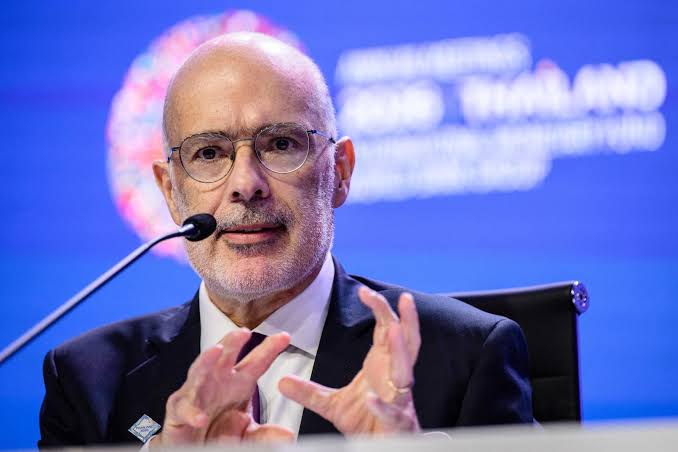
South Africa's Allan Gray is favouring Nigerian equities over South Korea's Kospi, arguing Nigeria's rally is broad-based while the Kospi is narrowly concentrated.
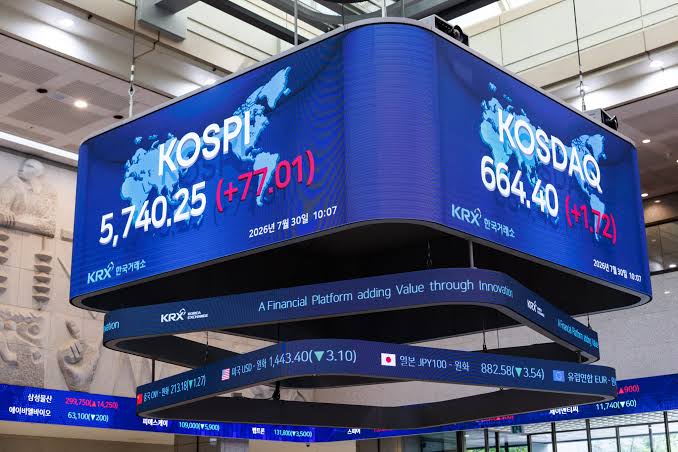
South African asset manager Allan Gray is favouring Nigerian stocks over South Korea's Kospi, arguing that Nigeria's rally is broad-based and driven by fundamentals while the Korean index is dangerously concentrated in a handful of artificial-intelligence-linked chipmakers.
The firm, which oversees about $29 billion in assets, is positioning Nigeria as a diversification play away from the global AI trade that has dominated markets this year.
Two rallies, two stories
Nigeria's benchmark index has risen about 72 per cent in US-dollar terms so far in 2026, on track for its biggest annual gain since 2007, outpacing the Kospi's 54 per cent advance. But Kamal Govan, portfolio manager of Allan Gray's $604 million Africa ex-South Africa Equity Fund, argues the two rallies are qualitatively different.
The Kospi is "narrow and thematic, concentrated in two memory chip companies," Govan said, referring to Samsung Electronics and SK Hynix, which together account for nearly half the index. By contrast, he said, "Nigeria's rally has been broad-based, spanning banks, oil and gas, telecommunications and industrial goods," and is underpinned by "broader fundamentals rather than a single narrative."
The fund itself is up 28 per cent this year, with Nigerian equities accounting for nearly a third of its holdings.
Standout performers
Among the fund's Nigerian exposures, Seplat Energy is its biggest oil and gas holding, up 197 per cent in dollar terms this year and among the eleven best performers on the 151-member index. Sterling Financial Holdings leads the index's gainers, up 1,078 per cent.
The breadth of Nigeria's advance is unusual for a frontier market, where rallies are often driven by a handful of liquid names. That breadth is a sign that the re-rating reflects economy-wide improvements, including falling inflation, a stabilising naira and strong corporate earnings, rather than a single sector story.
Business Insight
Allan Gray's preference highlights a subtle rotation in global capital. After a year in which AI-related stocks absorbed an enormous share of investor attention, some managers are looking for markets whose returns are not tied to the same trade. Nigeria, with its low correlation to the global technology cycle and its cheap valuations, fits that mandate.
The FTSE Russell upgrade of Nigeria back to frontier-market status in September strengthens the case. Govan said the reclassification "could provide a further catalyst through increased foreign participation and improved liquidity." For a market that has rallied almost entirely on domestic money, the return of foreign investors would add depth and price discovery.
Yet the same factors that make Nigeria attractive also make it risky. Frontier markets are volatile, liquidity is uneven and foreign-exchange repatriation has historically been a concern. Investors drawn by the 72 per cent dollar return should remember that much of it reflects a rebound from a deeply depressed base, and that the naira's stability is a precondition for holding onto those gains.
Background
Nigeria was reclassified as unclassified by FTSE Russell in 2023 amid foreign-exchange shortages, then upgraded back to frontier status in September 2026 as the CBN cleared repatriation backlogs and stabilised the currency. Foreign participation in Nigerian equities remains low — under 5 per cent of trading in August — leaving room for a re-rating if global investors return.
Conclusion
Allan Gray's wager on Nigeria over South Korea is a bet on breadth and valuation over momentum. If Nigeria's fundamentals hold and foreign investors gradually return, the market's current domestically driven rally could broaden further. For now, the argument rests on a simple observation: a market rising on many stories is usually safer than one rising on two.
Up next
Oil Climbs to $107 as Middle East Attacks Threaten Supply
Brent crude rose to about $107 a barrel as Middle East attacks threatened supply through the Strait of Hormuz, a windfall and a cost for Nigeria.
More in Markets
See all
NGX Sheds N144.54bn as Profit-Taking Persists
The NGX All-Share Index fell 0.09% to 247,513.63 as profit-taking in heavyweight stocks wiped N144.54 billion off market capitalisation.
Hot US Inflation Jolts Global Markets as Fed Rate-Hike Bets Jump
US consumer prices rose 3.7 per cent year on year in September, above expectations, jolting global markets and lifting bets that the Federal Reserve may raise rates.
DMO Raises N450 Billion in Treasury Bills as Primary Market Pipeline Tops N3 Trillion
The Debt Management Office raised N450 billion at its treasury bills auction on Wednesday, leaning on the 364-day tenor as the market's primary pipeline climbed above N3 trillion.
About the author
Adaeze Okonkwo
Markets Editor
Adaeze Okonkwo writes for BusinessPress.