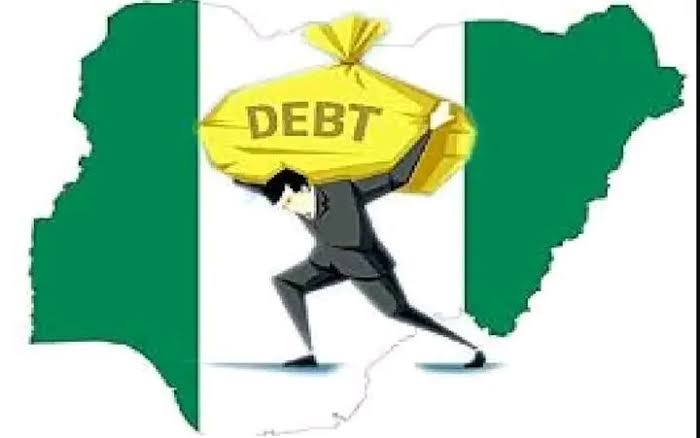
DMO Schedules N5.75 Trillion FGN Bond Auctions for Q4 2026
The Debt Management Office plans to raise N5.75 trillion through FGN bond auctions in October, November and December, as domestic borrowing rises.
The Debt Management Office (DMO) has scheduled Federal Government bond auctions worth N5.75 trillion for the fourth quarter of 2026, as the government leans harder on domestic borrowing to fund its budget deficit.
The provisional calendar covers October, November and December and signals a significant increase in the pace of domestic debt issuance, even as Nigeria's total public debt continues to climb.
Three instruments on offer
The DMO plans to raise the funds through three reopened or new instruments: the 19.00 per cent FGN February 2034 bond, the 16.79 per cent FGN September 2036 bond and the 15.45 per cent FGN June 2038 bond. The February 2034 paper is expected to account for the largest single share of the programme, at about N1.5 trillion.
Spreading the auctions across three long-tenor bonds lets the DMO manage the maturity profile of the debt stock while taking advantage of investor appetite for longer-dated paper. Pension funds and banks, which hold large pools of naira liquidity, have been consistent buyers of FGN bonds, drawn by yields that remain attractive despite the CBN's recent rate cuts.
Borrowing to fund a widening deficit
The scale of the Q4 programme reflects the government's financing needs. Nigeria's budget deficit remains substantial, and domestic borrowing has become the default funding source given limited access to affordable external credit. Total public debt has crossed N166 trillion, with domestic debt forming the dominant share.
The auctions will also test the market's capacity to absorb supply without pushing yields sharply higher. A heavy issuance calendar can raise borrowing costs across the curve if demand fails to keep pace, which would in turn feed into private-sector lending rates.
Business Insight
For investors, the Q4 calendar is an opportunity. FGN bonds offer a relatively safe, liquid instrument with yields that remain elevated in real terms given the moderation in inflation. For pension funds and insurers with long-dated liabilities, the long-tenor bonds on offer are a natural match.
For businesses and households, the implications are less welcome. Sustained heavy government borrowing keeps the sovereign in competition with the private sector for scarce naira capital, and can push up the cost of credit even as the policy rate falls. The government's willingness to pay high yields to fund consumption, rather than to invest in productive infrastructure, remains a structural drag on the economy.
Background
Nigeria has relied heavily on domestic debt since its external borrowing options narrowed during the 2022–2024 period of tight global financial conditions. The DMO has issued FGN bonds, savings bonds, sukuk and treasury bills, and has repeatedly extended its issuance calendar to meet funding targets. The strategy has kept the government funded but has also concentrated a large share of the debt in short- to medium-term domestic instruments.
Analysts have warned that the interest burden on domestic debt now accounts for the majority of the government's debt-service costs, crowding out capital spending.
Conclusion
The N5.75 trillion Q4 programme will keep the government funded through year-end, but it also underlines how dependent the fiscal position remains on domestic investors. Without a durable increase in revenue, each new borrowing round simply rolls the problem forward — and raises the cost of the next one.
Up next
NGX Sheds N144.54bn as Profit-Taking Persists
The NGX All-Share Index fell 0.09% to 247,513.63 as profit-taking in heavyweight stocks wiped N144.54 billion off market capitalisation.
More in Markets
See all
Naira Holds Near N1,370/$ as Reforms Steady the Foreign Exchange Market
The naira held broadly steady around N1,370 to the dollar as stronger reserves, tighter policy and returning portfolio inflows kept the currency within a narrow range.
NGX Turnover Hits N158.29bn as Investors Position for Q3 Earnings Season
Turnover on the Nigerian Exchange rose to N158.29 billion in the first full trading week of October as investors repositioned ahead of third-quarter earnings.
Fitch Revises Nigeria's Credit Outlook to Positive as Reserves Reach $54.9bn
Fitch Ratings has revised Nigeria's credit outlook to Positive from Stable, citing sustained reforms, disinflation and improved foreign reserves of $54.9 billion.
About the author
Adaeze Okonkwo
Markets Editor
Adaeze Okonkwo writes for BusinessPress.