
Analysis: What the Democrats' Midterm Sweep Actually Means for Nigeria
Analysis: the Democrats' House takeover and seven Senate seats narrow US trade, tariff and rates risk. Here is what it means for Nigeria's exports, debt and policy strategy.
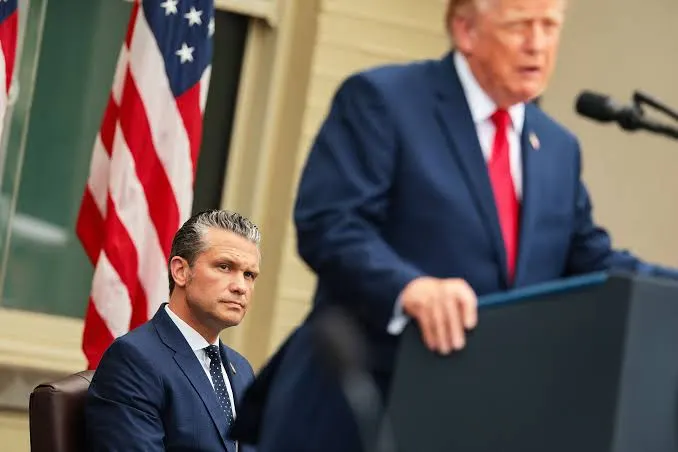
Analysis — The United States midterm elections delivered a Democratic sweep this week, with control of the House at 228 seats against 139 for Republicans and seven new Senate seats including Texas, Ohio, Kansas and Maine. Donald Trump has accepted the outcome but has committed to vetoing the agenda. Global markets reaped the prudence dividend within a day — equities up, yields steady around 4.92 percent, the dollar softer, gold up almost three percent. The question BusinessPress asks here is narrower: what does a divided Washington actually deliver for Nigeria, and where should Nigerian policy and business strategy position themselves this decade?
The first-order effect is the trade one. An aggressive, tariff-forward posture toward African exports — the policy direction that put AGOA-era preferences under threat and pushed South Africa and Rwanda off the programme this year — now faces a legislative check. Trade policy in the United States runs through Congress as much as the White House; a Democratic majority that campaigned on stabilising prices and rebuilding export relationships will not hand a tariff-escalation agenda a free pass. For Nigerian exporters already spending 2026 convincing American buyers that non-oil shipments — agricultural produce, textiles, processed foods, light manufactures — are investable supply chains, the sweep buys time and negotiating leverage.
The monetary and currency channel
The second-order effect is monetary. The 10-year Treasury yield sits near 4.92 percent, and every basis point on it is the benchmark against which Nigeria's Eurobond coupons and its internationally priced borrowing are marked. Divided governments historically narrow fiscal surprises — the reckless-uncertainty premium comes out of the yield curve — and that, more than any single speech, is the channel through which Washington's gridlock eases Africa's debt-service arithmetic. A softer dollar, already visible in the post-election session, feeds directly into the imported-inflation side of the CBN's disinflation campaign: fuel, food imports, pharmaceuticals and industrial inputs are all cheaper to procure when the greenback retreats.
The third channel is the subtler one: aid, development finance and geopolitical signalling. The Democratic wing of the foreign-policy establishment has historically been more committed to multilateral development finance, climate finance and AGOA-style trade Preference regimes than to transactional bilateralism. Megaproject financing through the DFC, Power Africa successors and climate-adaptation funds face better odds under divided government than under a unified tariff-first administration — and for Nigeria, whose infrastructure funding gap runs to scores of billions of dollars annually, those conduits are not marginal.
What Nigeria should not do with the window
The temptation in Abuja will be to read the sweep as American disengagement and lean into alternative partners — China, the Gulf, the European Union. That read is overblown. The United States remains Africa's largest single-country export market and home to the diaspora remittance flows that sustain millions of Nigerian households; the sweep does not diminish American engagement, it moderates its tone. The correct response is neither dependence nor deflection but portfolio management: use the reduced trade-hostility window to lock duty-free access into durable agreements, quantify non-oil export targets against the American market, and negotiate with the incoming Congress while the committees that shape trade policy are still being seated.
The threat to manage is domestic. Nigeria's export potential to the United States has never been constrained by American willingness to buy; it has been constrained by Nigeria's own logistics costs, port inefficiencies, quality certification failures and the difficulty of scaling anything beyond commodity exports. A friendlier Washington does not fix Apapa. If the next two years are spent negotiating rather than reforming, the dividend will be dissipated before it accrues.
The honest bottom line
A divided Congress is not an economic plan; it is an environment. It lowers the variance in America's trade and fiscal behaviour, and lower variance is, for an emerging economy, almost always good news: lower funding costs, steadier commodity demand, fewer political shocks to export programmes. Nigeria's opportunity this decade is to convert a stabilised American policy environment into structural gains — finished-goods exports, diaspora-directed investment, development-finance-funded infrastructure — rather than merely enjoying a cheaper import bill.
The sweep handed African exporters something they have not had in a while: a less hostile counterparty and a market paying attention to price stability at home. That is the wind at the back. The boat still has to be sailed.
Up next
Bank of Industry Eyes N3trn Recapitalisation as Federal Government Unveils National Industrialisation Plan
FG plans about N3trn in Bank of Industry capital by 2026 under a new National Industrialisation Plan targeting 25% renewable energy in industry by 2030.
More in Opinion & Analysis
See allNigeria's Debt Maths: Why Interest Is Eating the Budget
Federal interest payments consumed 124.2% of federal revenue in the first half of 2026, a stark illustration of how debt service is squeezing out investment.
Nigeria's Equity Market Is Booming Without the Foreigners
Nigeria's stock market has surged about 66% this year on domestic money alone, raising the question of how durable a rally can be without foreign investors.
Will Nigeria's Biggest Rate Cut Unlock Cheaper Credit?
Nigeria's central bank has delivered its largest-ever cut to the benchmark rate. The question now is whether banks will pass it on to the businesses and households that need affordable credit.
About the author
Fatima Bello
Analysis Editor
Fatima Bello writes for BusinessPress.
More by Fatima Bello


