
Oil Falls As Democrats Win Congress And US-Iran Talks Progress
Brent crude dropped 1.9 percent to $101.65 as the Democratic midterm sweep and US-Iran peace progress weighed on the war premium that has kept oil above $100.
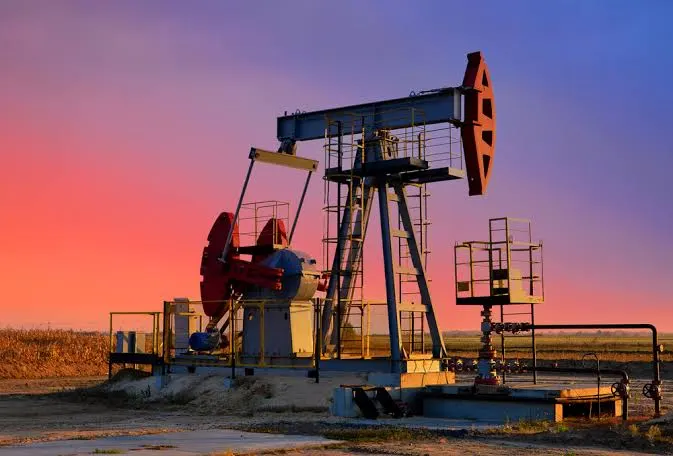
Oil prices fell for a second straight session on Wednesday as investors weighed the Democratic sweep of the US midterms against progress reports in US-Iran diplomacy, with Brent crude swinging through the narrow corridor just above $100 a barrel that has defined the market since the Middle East conflict injected a war premium into the world's most important commodity.
Front-month Brent crude, the global benchmark, dropped 1.9 percent to $101.65 a barrel in a volatile session, and the US benchmark West Texas Intermediate also lost 1.9 percent to $94.33, according to The Wall Street Journal's market desk — a close that leaves the legislative shift and the diplomatic file sharing responsibility for the pullback. US-Iran peace negotiations dominated the tape for a third day: the previous session closed with WTI settling at $96.09 after a $1.17 Brent slide to $103.60, both following reports that Washington and Tehran were making progress toward a possible agreement, NDTV Profit reported. The negotiation optimism had already stripped more than 8 percent from Brent across the week, a remarkable reversal in a market that spent October tightening around supply shocks.
Diplomacy, strikes and the negotiation paradox
The detail shows just how nervous the near-term market remains. Overnight, the United States carried out what it called defensive strikes on Iran's Qeshm island even as American and Iranian officials continued diplomatic exchanges in talks that a senior Iranian official told Reuters still kept the two sides "far from a deal." Iranian President Masoud Pezeshkian signalled flexibility, saying that Supreme Leader Mojtaba Khamenei had authorised discussions on issues previously considered non-negotiable, while US Energy Secretary Chris Wright noted that the strikes had not affected oil flows and that additional refined products were being supplied from the Persian Gulf and India, according to Trading Economics' market summaries.
That mix — strikes and offers in the same cycle — keeps both risk scenarios priced at once. Traders who bet that negotiations will produce a durable discount are buying into a diplomatic path that can be interrupted by the next military incident; traders holding a hard-line war premium face a market in which the political formation in Washington has just changed, and a Congress more sceptical of military intervention may reinforce the stricter negotiating track. The result is a futures curve that has swung within days against a year that produced both a $118 October high and a $58 low twelve months ago, with the November 4 settlement placing Brent roughly 23 percent above three-month levels after a wild autumn.
The midterm read on supply policy
The American political change carries its own oil-market consequences. A Democratic-controlled Congress is more inclined to govern fossil-fuel expansion — through tougher permitting, lease restrictions and oversight of the Strategic Petroleum Reserve — with the expected effect of marginally lowering US crude supply growth and, in the short term, giving a potential upside kick to imported grades that make up the American refining diet. Democrats also often embrace stricter enforcement of the energy sanctions architecture that governs Iranian, Russian and Venezuelan export flows, a policy lever that can tighten global supply overnight.
Countering that is the political direction of demand: a Congress aligned against tariff and consumer-price escalation may reduce the risk of a full-blown global trade recession, which oil traders read, correctly, as demand-supportive. The day's 1.9 percent decline suggests the market ultimately weighed the negative end of that balance harder, with the diplomatic file doing the heavy lifting on the bearish side.
What the pullback means for Nigeria's oil sector
For Nigeria, West Africa's largest crude exporter, the present oil-price window still delivers a windfall by any historical standard. Crude in the low $100s — versus the $60-75 range that framed federal budgets for most of the last decade — gives Abuja an explicit cushion with which to rebuild reserves and reinforce foreign-currency inflows. Whether that cushion survives depends on exactly the dynamics playing out this week: if US-Iran negotiations solidify into an actual framework, Bonny Light can be expected to lose its conflict-linked premium, and the fiscal mathematics of the 2027 budget would need to be rebuilt from the bottom up.
The longer time horizon further complicates the read. The ICE futures curve on Wednesday showed Brent contract-months declining steadily through 2027-28, with January 2027 at $104 and the far curve falling into the $70s-80s — pricing that reflects a market willing to trade long-dated barrels at a substantial discount to spot, and a bet that the current supply-shock regime is an exception rather than a new normal. For Nigerian oil policy — production growth from joint-venture capital calls, new field development plans and the Petroleum Industry Act's delayed licensing rounds — a discount that grows over time would make it more expensive to finance industry expansion at current costs, since project economics priced against softening forward deliveries carry risk the 2027 fiscal framework does not currently account for.
Oil traders will keep watching two politically driven signals on Thursday. One is formal progress reports from the Iran file, which carry the potential to strip out the previous day's support. The other is the incoming Congress's first post-election energy committee agenda, which will reveal whether Democrats can turn their new position into a source of market-moving supply or demand policy — a question that, for oil markets at least, now carries as much significance as the traditional Iran risk route.
Up next
Livestock Feeds: Sunbeth Takeover Clears Major Hurdle As NGX Approves UAC N19.5bn Divestment
The Nigerian Exchange has approved UAC of Nigeria's N19.5bn sale of its 73.29 percent stake in Livestock Feeds to Sunbeth, transferring a listed feed maker to indigenous ownership at N8.85 per share.
More in Markets
See all
Nigerian Stocks Open November With Cautious Pullback
The NGX All-Share Index slipped 0.02 percent in November first session as heavyweight profit-taking offset gains after October record month.
Australia Extends Rate Hike Streak To An 18-Year High
The Reserve Bank of Australia lifted its cash rate for a fifth time in 2026 to 4.85 percent, an eighteen-year high that hardens the global fight with inflation.

Oil Whiplash Tests Markets As US-Iran Talks Wobble
Oil prices swung violently around the 100 dollar mark after a US strike on Iran Qeshm Island revived escalation fears across the market.
About the author
Kwame Mensah
Markets Correspondent
Kwame Mensah writes for BusinessPress.
More by Kwame Mensah


