
Bank of England Lifts Rates to 4 Percent
The Bank of England raised rates 25bp to 4%, the first hike in three years, as war-era energy costs pushed UK inflation back up.
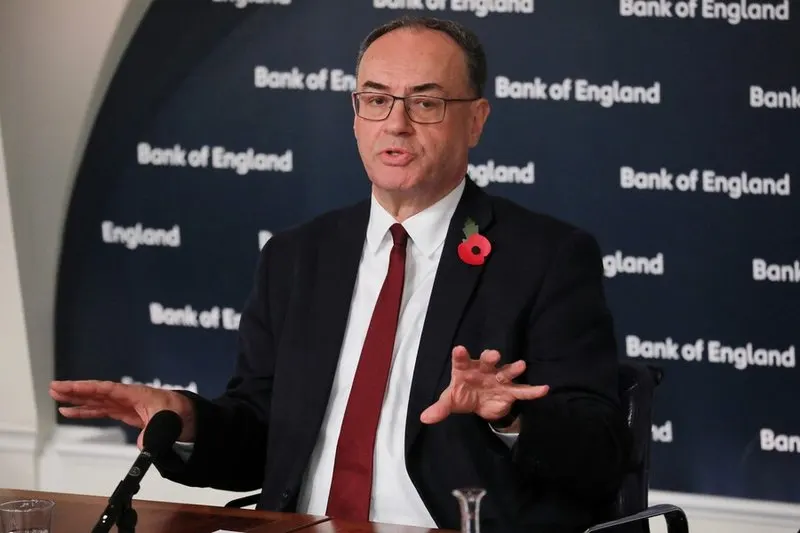
The Bank of England raised interest rates for the first time in three years on Thursday, lifting its main rate by 25 basis points to 4 per cent as spiralling energy costs from the Iran war pushed UK inflation back above target — and it told markets its next moves hinge almost entirely on what happens to oil.
The nine-member Monetary Policy Committee voted to increase Bank Rate from 3.75 per cent, ending the longest hold-still stretch in the bank's modern history as the Federal Reserve and European Central Bank had already resumed tightening through 2026. Governor Andrew Bailey's committee paired the hike with updated inflation forecasts that show energy-driven price growth keeping consumer-price inflation above the 2 per cent target through much of 2027, with committee language indicating that the path of the oil market — not domestic wage pressure — now dominates the policy reaction function.
The fourth central bank on the same road
Thursday's decision caps a global re-tightening cycle with a familiar shape. The US Federal Reserve and the European Central Bank had already raised rates this year as oil-driven inflation swept the world economy, and the Bank of England's hike makes the collective stance of developed-market central banks noticeably more restrictive at precisely the moment the oil price has stopped rising — Brent has collapsed below $100 a barrel this week on ceasefire expectations, its worst weekly performance since April 2020.
That timing creates an awkward prospect: central banks may be delivering their last tightening precisely as the shock that justified it unwinds. Sterling markets had priced the hike with conviction long before Thursday, but the rate path beyond it is contested — money-market curves imply further increases through 2027, and the bank's own forward communications sought to push back gently on those bets by stressing dependency on the ceasefire trade's durability rather than committing to a pre-planned sequence.
What energy did to UK inflation
Britain's inflation experience through 2026 has been a story of imported energy. The Iran conflict's eight months of disruption added a war premium into oil, gas and refined-product markets, and the UK — a large net importer of energy with indexed utility contracts — felt it move almost directly into consumer prices. The committee's updated projections treat the war path as the dominant uncertainty, with scenario language suggesting that a sustained reopening of shipping routes and a return of Iranian barrels would pull inflation back toward target far faster than domestic conditions would.
The domestic side of the ledger — pay settlements, services inflation, housing — is far less volatile than the energy component, which is the distinction policymakers keep emphasising. A rate rise aimed overwhelmingly at an imported shock is a different exercise from one responding to domestic overheating: it addresses the currency channel through which energy costs land in UK prices and defends inflation expectations, rather than draining demand from the domestic economy.
The market's read — and the argument about what comes next
Financial markets took the decision in stride: the FTSE 100 lost only 0.1 per cent on the day, with the index's commodity and banking weightings absorbing the hike while UK gilt yields moved little, suggesting investors believe the hike is a one-off endorsement of the committee's credibility rather than the start of a long campaign. Money-market pricing maintains a possibility of further increases next year, but the inflation forecasts themselves weaken the case for them if oil keeps falling.
The decision's wider significance is the signal it sends about the global policy cycle's direction. If the ceasefire trade holds and crude prices settle well below their October peaks, the major central banks' hike cycle will likely pause by early 2027 — a reversal that would ease the cost-of-carry pressure on emerging-market borrowers including Nigeria, whose own monetary policy has been calibrated against the direction of global rates. Lagos would experience that reversal as softer upward pressure on yields in a market already absorbing heavy domestic liquidity.
The jobs of a rate hike nobody wanted
For British households and firms, the hike is a tax on credit extended in the recovery period. Mortgage products due to refinance in early 2027 will price off the higher base; business investment plans carrying debt against them face a costlier margin; and the government's own borrowing programme — with gilt issuance already forecast at record volumes — absorbs a heavier interest bill. The committee's wager is that inflation credibility, once defended, will recover faster than growth forgone, particularly in an economy whose domestic momentum had been the strongest in the G7 before the oil shock.
The accounting irony is worth recording: the first Bank of England hike in three years owes its existence to a conflict that markets already price as ending. If the ceasefire logic extends through the OPEC meeting and the Gulf's diplomatic rounds, the global system could enter 2027 with a round of completed hikes, a deflating oil price, and the largest coordinated easing cycle since 2020 waiting in the wings. That, and not Thursday's 25 basis points, is the event investors will plan around.
Up next
Nigeria PMI Eases to 55.7 in October, Still Expanding
Stanbic IBTC PMI eased to 55.7 in October from 56.4 in September, remaining deep in expansion territory and fanning growth forecasts.
More in Economy
See all
Australian inflation rises to 4.3% as goods and services pressures strengthen
Headline inflation and the underlying trimmed mean both increased in September, according to figures released on 28 October.
Nigeria's Inflation Falls to 14.63%, Lowest Since October 2020, as Food Prices Ease
Nigeria's headline inflation fell to 14.63% in September, the lowest since October 2020, driven by easing food prices even as core inflationary pressures continued to build in parts of the services economy.
Petrol Discount Eludes Motorists as NNPCL Pump Price Returns to N1,405
Nigeria's 30-day petrol discount has failed to reach most motorists, with NNPCL stations back at N1,405 a litre and the N66 reduction available only through the company's app at self-service pumps, while transport fares keep rising.
About the author
Musa Abdullahi
Finance Correspondent
Musa Abdullahi writes for BusinessPress.
More by Musa Abdullahi


