
Nigeria PMI Eases to 55.7 in October, Still Expanding
Stanbic IBTC PMI eased to 55.7 in October from 56.4 in September, remaining deep in expansion territory and fanning growth forecasts.
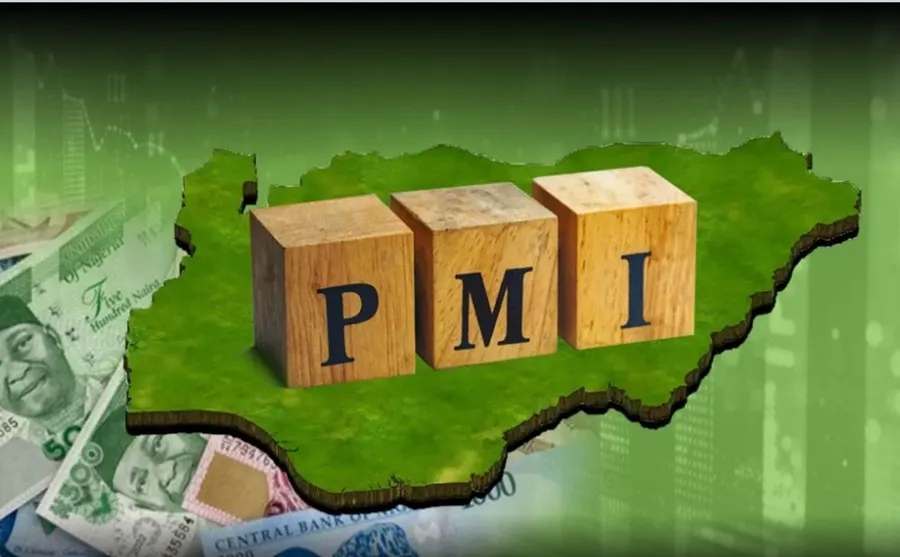
Nigeria's private sector kept expanding at a strong clip in October, with the Stanbic IBTC Purchasing Managers' Index easing to 55.7 points from September's 56.4 — still deep in expansion territory and one of the strongest readings the survey has printed through the reform era, though the deceleration itself carries a message for quarterly growth forecasts.
The Stanbic IBTC headline PMI, which covers purchasing managers across manufacturing, services, agriculture, construction and retail, has now spent consecutive months above the 50-point growth threshold, and October's reading extends that streak even as the pace of improvement cooled marginally. Its last full-quarter print, at 56.4 in September, coincided with the growth acceleration that lifted Nigeria's purchase managers to regional leadership; October's 55.7 keeps the direction intact while hinting at a slower fourth-quarter climb.
What a 55-point reading actually measures
A PMI above 50 indicates that a majority of participating firms reported improving business conditions month-on-month — output, new orders, employment, suppliers' delivery times and purchases viewed as one index. A reading in the mid-50s signals not merely stability but substantial expansion, since every point above 50 implies a rising share of respondents reporting gains. In Nigeria's case, the reading tracks sentiment among the formal, mostly Lagos- and Abuja-anchored corporate base, which is one of the reasons its readings diverge from household-level inflation surveys: the private sector can be growing into a high-cost environment that consumers still find punishing.
The details that usually move the figure are the order book and the demand conditions. PMI strength this year has been driven partly by the naira's relative stability — which gives companies confidence to place orders without hedging anxiety — and partly by the improved FX availability for input imports, which eases the supply constraints that capped manufacturers through 2024 and 2025. With the naira holding near N1,347 to the dollar this week and reserves comfortably above the mid-year's recovery path, the currency pillar of the expansion is intact.
The growth-oil trade-off in the fix
The other side of the ledger is cost. Nigeria's PMI has consistently flagged elevated input-cost pressures — fuel, transport, food and logistics — driven by the energy-price spike that accompanied the Iran-war oil surge, with petrol, diesel and freight all repriced higher through the second half of 2026. October's moderation from the September peak is consistent with businesses absorbing those costs but committing to fewer marginal expansions, a pattern that shows up in the survey's output and employment sub-components before it shows up anywhere in national accounts.
The reconciliation is unglamorous but consequential. The 2026 growth story has been built on a rebound in agriculture, FX-reliant manufacturing recovering from years of import rationing, and the oil sector's output rebound — but each of those pillars faces its own caution signal in the PMI's fine print. Firms' purchasing behaviour, particularly the inventories sub-index, is the leading indicator that tells whether the fourth quarter will match the third's momentum or slow into the festive season.
Why the number anchors the policy argument
For the Monetary Policy Committee meeting this month, the PMI is central evidence on one side of a classic tension. The CBN has engineered genuine price stability at the cost of very high real interest rates, and the strength of private-sector activity prints tells the committee that the economy can carry the rate level without contracting. A PMI at 55.7 supports keeping policy restrictive for longer — because the growth outlook can absorb it — while simultaneously providing the data to argue that the disinflation path is not costing the real economy its recovery.
The countervailing consideration is the fourth quarter itself. Nigeria's Q4 is seasonally its strongest for consumer-facing sectors, on festive spending; agriculture, logistics and retail firms typically report their best months of the year between November and December. A PMI print that moderates into that seasonal window, as October's did, suggests the underlying momentum is softer than the headline number a quarter earlier. Forecasters cited the reading as a signal that third-quarter GDP growth may have decelerated from earlier in the year, with the fourth quarter's print now the one to watch.
What it means for business planning
For corporate Nigeria, the operating implications of a sustained strong PMI are concrete. Stable purchasing momentum justifies the capital commitments that firms have deferred for years — plant refurbishments, fleet expansions, distribution buildouts — and lenders reading the same table are more willing to fund them. At 55.7, most boards can plan for growth rather than defence, provided input costs cooperate.
The catch is distributional. Strong headline PMIs coexist with weaknesses at the bottom of the pyramid, where small firms without access to FX and formal credit face the harshest version of the cost shock. Whether Nigeria's expansion is broad enough to be judged inclusive will only be visible in employment prints, and the PMI's own employment sub-index — reporting steady but unspectacular hiring — suggests the recovery is capital-led before it is labour-led. As the MPC meets and the budget season opens, the economy's ability to convert a strong demand environment into jobs will be the metric that decides how the 2026 recovery is remembered.
Up next
Tinubu Seeks 7.7 Billion Dollar Loan, Replacing Bigger Plan
Tinubu asked lawmakers to approve a revised $7.7 billion external borrowing plan for the 2026 budget, replacing a $20.52 billion request.
More in Economy
See all
India GST Collections Jump 23% to Rs 2.31 Lakh Crore
India's October goods-and-services tax collections rose 23% to Rs 2.31 lakh crore, with net receipts up 26%, after stamp-duty cutoffs.

Korea Exports Double in October on Chip Demand
South Korea's October exports surged 93.7% to $115.28 billion, the second-highest month ever, as semiconductor shipments rose 259%.

Eurozone Growth Beats Forecasts at 0.4% in Q3
Euro area GDP grew 0.4% quarter on quarter in the third quarter, beating forecasts, though France contracted and Italy stalled.
About the author
Tunde Balogun
Economics Correspondent
Tunde Balogun writes for BusinessPress.
More by Tunde Balogun


