
NGX Group's nine-month profit before tax climbs 83.3 per cent to N20.6 billion as digital trading lifts the exchange
NGX Group, the parent of the Nigerian Exchange, reported nine-month 2026 results with profit before tax of N20.6 billion, up 83.3 per cent year on year, and profit after tax of N14.7 billion, up 86.4 per cent, in filings published on 27 October.
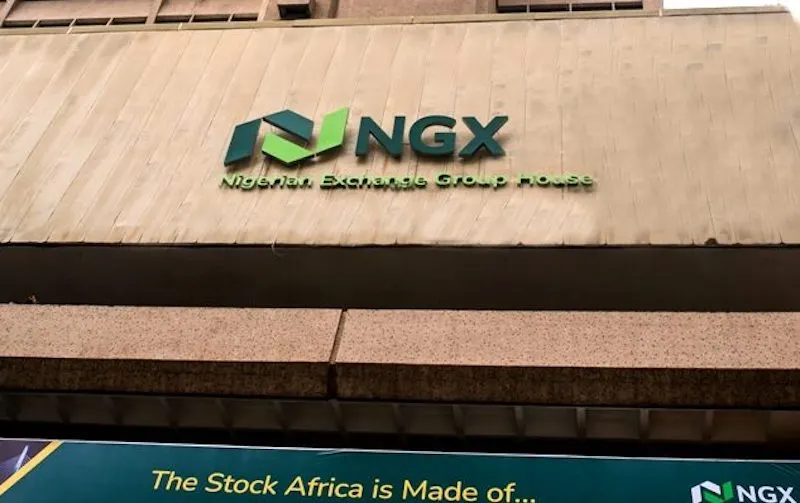
Nigeria's capital market is completing its best run of record closes since its founding, and the business behind the trading floor is growing into the moment. NGX Group, the listed holding company that owns and operates the Nigerian Exchange, has filed nine-month 2026 results showing profit before tax of N20.6 billion, an 83.3 per cent increase on the corresponding period of 2025, with profit after tax of N14.7 billion, up 86.4 per cent. The figures, published on Monday, 27 October, position the operator to close the full year with earnings well ahead of its entire 2025 after-tax result of about N10.5 billion.
The exchange's income model, repriced
An exchange operator's revenue is a derivative of activity in the market it runs, and the current Nigerian market is generating volumes, values and listings at extraordinary rates. The exchange has spent recent weeks setting all-time closing highs in succession, with market capitalisation crossing N164.97 trillion on Thursday and the All-Share Index at 254,083.02 points after four record sessions in as many days. Active markets produce trading fees, listing charges, market data subscriptions and post-trade service income in proportion to the flow, and NGX Group's 83.3 per cent growth in pre-tax profit reflects a year in which that flow has been relentless.
The group's structural improvements are compounding the cyclical windfall. Digital access to the market, through the exchange's electronic channels and its data infrastructure, has widened participation among retail and institutional users, and correspondingly expanded the recurring, subscription-style income that supports the trading-fee line. Cost discipline, meanwhile, has held operating expenses well below the pace of income growth, which is why profit grew faster than revenue and why the group's nine-month after-tax result stands roughly 40 per cent above where all of 2025 finished.
[irp][irp][irp][irp][irp]
Why the stock exchange's own results matter
NGX Group is a listed company whose performance feeds directly into the index it operates, an unusual positioning in which the market operator is also one of the market's constituents. Its results therefore land twice: once as corporate news for shareholders, and once as evidence about the health of the market itself. Nine-month growth of that magnitude signals that the current rally is being transacted, cleared, settled and reported on infrastructure whose own profitability is expanding, a reassuring signal for the integrity of the price-setting process.
For investors, the group's results also provide a lens on where capital market revenues are heading. Exchange businesses globally monetise three categories of cyclicality: transaction volumes, listings and data. Nigeria's current market cycle rewards all three simultaneously, with domestic institutions reallocating into equities, with issuers reconsidering listings as valuations recover, and with data consumers, from global asset managers to local fintech, paying subscription fees for price and depth information. The nine-month scorecard captures the overlap of all three currents.
The fourth-quarter outlook
The operator's final quarter inherits a market that entered November at record values after the busiest trading weeks of the year. Earnings season is providing additional transaction activity as results filings flow through the platform, and the pipeline of new listings and capital raises that a record market typically produces will show up in the operator's first-quarter 2027 income if it converts. The risk profile is symmetric: a market correction or a policy shock to liquidity would compress the fee lines that powered the nine-month growth, and profit forecasts anchored on record volumes would need to be rebuilt.
For now, the group enters the final stretch with an income statement that validates the market's own performance, revealing that the record week's activity is translating into record operating results. An exchange whose own profits are growing by more than 80 per cent is the institution version of the signal that investors outside the market see: the Nigerian capital market has entered a new valuation regime, and the companies inside it, whether operating it or trading on it, are being paid for providing the infrastructure that enables it.
Up next
TotalEnergies takes 25% stake in 26 Chevron-operated US exploration leases
The offshore acreage transaction expands their exploration partnership without establishing new reserves or an immediate increase in production.
More in Business
See all
Lagos delivers 10,623 housing units as Sanwo-Olu touts state housing programme
Lagos State Governor Babajide Sanwo-Olu says the state has delivered 10,623 housing units under its housing programme, a multi-year high for public delivery in a market still defined by affordability gaps.

SMEs warned to verify levy collectors as multiple taxation persists
Illegal and duplicated levies raise costs and deter investment, with small businesses bearing a disproportionate burden.

Nigeria targets African capital-hub status with new listing rules
Regulators hope simpler listings and stronger disclosure will deepen the NGX, but bureaucracy and macro risk remain obstacles.
About the author
Adaeze Okonkwo
Markets Editor
Adaeze Okonkwo writes for BusinessPress.
More by Adaeze Okonkwo
More coverage


