
CBN Research Links Fiscal Deficits to Naira Instability
New CBN journal research finds budget deficits drive naira depreciation and higher interest rates, and recommends a binding deficit ceiling and stabilisation fund.
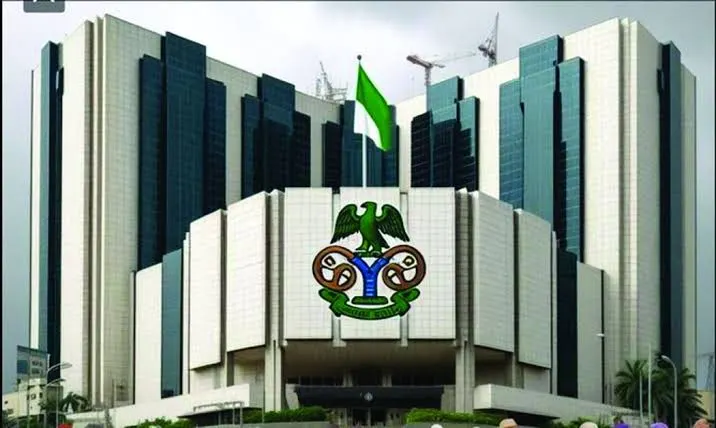
Central Bank of Nigeria research has concluded that the country's persistent budget deficits are a primary driver of exchange-rate depreciation, fuelling naira instability and adding delayed upward pressure on interest rates — findings that amount to the central bank's most pointed internal critique yet of the federal government's fiscal conduct. The study, published in the CBN Journal of Applied Statistics and publicised this week, used a Vector Autoregressive framework to map how fiscal imbalances propagate through Nigeria's foreign exchange, money and credit markets.
The analysis found that budget deficits account for a substantial share of exchange-rate movements in the immediate period and generate a sustained currency decline over time. It also showed that fiscal imbalances exert delayed upward pressure on interest rates while paradoxically inducing a contraction in money supply — a pattern the researchers attribute to defensive monetary tightening as the central bank counters the inflationary and external consequences of government overspending.
The self-reinforcing deficit problem
Perhaps the study's most consequential finding is that fiscal imbalances perpetuate themselves. Deficits accounted for 100 per cent of their own variations initially and retained roughly 53 per cent of their influence by the tenth period, suggesting the borrowing-spending cycle becomes increasingly difficult to reverse once entrenched. Each round of deficit financing raises debt-service obligations, which in turn widens the following year's deficit — a dynamic that converts temporary fiscal stress into a structural condition.
That diagnosis lands on sensitive ground. The federal government remains heavily reliant on domestic and external borrowing, with a fresh external borrowing plan of about $7.7 billion currently before the National Assembly at a time when debt service already absorbs the dominant share of retained revenue. The CBN's own researchers are effectively warning that every increment of borrowed spending transmits into a weaker naira and costlier credit — precisely the outcomes the monetary side of the reform agenda has been fighting to reverse since 2023-2024.
Inflation is not mainly a fiscal story
Notably, the research punctures one popular assumption: it found no statistically significant direct relationship between budget deficits and inflation. Instead, Nigeria's inflationary pressure correlates more closely with supply-side shocks — food seasonality, logistics chains, structural bottlenecks — and with the transmission of exchange-rate movements into domestic prices. That distinction matters enormously for policy design because it redirects attention from aggregate-demand suppression alone towards production, transport and distribution fixes, and it suggests the channels through which fiscal excess hurts households are indirect — through the currency and interest rates rather than headline money growth.
The finding also complicates the narrative around the central bank's rapid easing cycle. The Monetary Policy Rate stands at 23 per cent after an historic 350-basis-point cut in September, and headline inflation slowed to 14.63 per cent in September from 15.39 per cent in August. If inflation is driven by supply shocks and FX pass-through rather than fiscal inflation per se, then further disinflation depends heavily on stabilising the naira — which in turn depends on fiscal discipline that lies outside the CBN's direct control.
The remedies the researchers prescribe
The study's policy package is unusually explicit. It advocates a legally binding fiscal rule capping budget deficits as a share of GDP, which would hard-wire discipline against pilot-cycle borrowing and neutralise the political temptation of deficit expansion. It calls for a non-oil Fiscal Stabilisation Fund to buffer public finances against oil-revenue volatility — a structural answer to the boom-bust cycle that has repeatedly hit Nigerian budgets when crude prices retreat, going back to the Excess Crude Account debate of two decades ago.
It further recommends more strategic management of external reserves, proactive trade policies that incentivise domestic production to cut import dependence, and improvements in private-sector access to credit through reduced borrowing costs and stabilised inflation expectations. Behind those items lies a single conviction: crowding out is real. When government borrowing competes with companies for the same banking liquidity, the result is more expensive credit for manufacturers, developers and SMEs — and, as the study notes, weaker private investment formation.
Implications for markets and investors
For bond investors, the research bears on the money-market price signals visible this week. The CBN absorbed about N3.46 trillion through Open Market Operations and Treasury bill auctions on November 3-4, drawing total subscriptions of N5.57 trillion against N2.30 trillion offered, with stop rates between 17.67 and 17.77 per cent on OMO bills. Elevated yields of that magnitude reflect both abundant system liquidity and the term premium investors attach to Nigerian fiscal risk; the study's findings explain why that premium persists even after successful disinflation.
For the currency market, the VAR evidence reinforces the position that naira stability cannot be engineered by the CBN alone. The official rate has hovered near N1,349 per dollar this week with the parallel market at about N1,375-1,400, while gross external reserves stand around $55.2 billion. Reserves can smooth flows, and the bank's transparency reforms have narrowed the official-parallel gap to roughly N29 — but sustained stability requires the fiscal side to stop feeding depreciation pressure, which is exactly what the proposed debt-ceiling rule and stabilisation fund are designed to deliver.
What it means for the reform agenda
The political economy is the hard part. A deficit ceiling requires the National Assembly to constrain itself, and Fiscal Stabilisation requires the executive to leave windfall earnings untouched when they would be most useful politically. Yet the CBN publishing this analysis is itself significant: it shifts the burden of naira stability from the bank's balance sheet onto the fiscal authorities, and it gives market participants a benchmark for judging the 2027 budget. If the coming fiscal plan incorporates a credible deficit path or any new constraint, investors should treat it as the single most important currency-specific reform signal since the 2023 float.
Up next
NGX Investors Lose N3.28tn as Dangote Cement Tumbles
The NGX sheds N3.28 trillion in one session as Dangote Cement falls 10 per cent, erasing about N2.5 trillion of value while the index stays up 60% for 2026.
More in Economy
See all
Nigeria Money Supply Approaches The 100tn Mark
Nigeria broad money supply has climbed to N99.23 trillion despite CBN tightening, reviving inflation and naira concerns ahead of the December MPC.

Debt Service Bill Overshadows Five Sector Budgets
Nigeria debt servicing bill exceeds the combined budgets of five key sectors by N3.16 trillion, underscoring the fiscal consolidation challenge.

Business confidence in Nigeria slips to 13.4 points but stays positive, CBN survey projects acceleration to 36.6 by March 2027
The Central Bank of Nigeria's September 2026 Business Expectations Survey placed the Business Confidence Index at 13.4 points, down marginally from 14.8 in August, but businesses projected the reading to rise to 23.6 points this month and 36.6 points by March 2027.
About the author
Yaw Boateng
Corporate Reporter
Yaw Boateng writes for BusinessPress.
More by Yaw Boateng


