Nigeria Risks $1bn Export Loss Over EU Deforestation Rules, NEPC Warns
The Nigerian Export Promotion Council warns that exporters could lose more than $1 billion a year if they fail to meet EU deforestation rules, with cocoa most exposed.
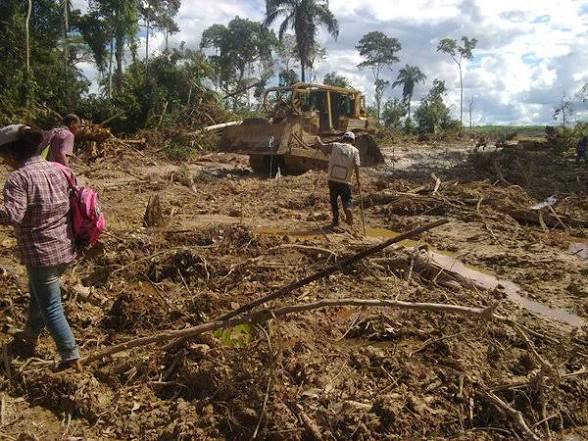
Nigeria risks losing more than $1 billion in annual export earnings if its exporters fail to comply with the European Union's new deforestation rules, the Nigerian Export Promotion Council (NEPC) has warned, with cocoa the most exposed commodity in the country's trade basket.
The warning was delivered at a seminar on the EU Deforestation Regulation (EUDR) and the National Single Window in Lagos, where the NEPC's regional coordinator, Benedict Hegbe, said the compliance gap is now an urgent commercial risk rather than a distant regulatory concern.
Cocoa is the pressure point
Europe is the destination for the overwhelming share of Nigeria's cocoa. EU imports of Nigerian cocoa were worth about €1.49 billion in 2024, equivalent to 89 per cent of the country's cocoa exports. Under the EUDR, exporters must be able to prove that their produce is not linked to deforested land — a requirement that demands geolocation and traceability data many Nigerian smallholders do not yet have.
Only about half of Nigeria's 350,000 smallholder cocoa plots have been geolocated, according to the council, leaving a large share of the supply chain unable to demonstrate compliance. Other affected commodities include rubber, wood, oil palm, soya, coffee and cattle-derived products.
Tight deadlines
The regulation's deadlines are approaching fast. Large operators must comply from December 30, 2026, while small and medium-sized operators have until June 30, 2027. Nigeria's National Single Window export module is expected to go live in November 2026, a piece of trade infrastructure the NEPC views as central to easing the compliance burden.
The scale of the task is formidable. Traceability requires mapping farms, issuing farmer identities, tracking produce from plot to port and digitising documentation — all of which demands coordination across federal agencies, state governments, commodity associations and exporters.
Business Insight
For exporters and agribusinesses, the EUDR is both a threat and an opportunity. Compliance costs money and time, and firms that move slowly could lose their most valuable market. But traceability also commands a premium: buyers increasingly pay more for verified, sustainable produce, and early movers could win multi-year supply contracts that less-prepared competitors cannot access.
The bigger risk is systemic. Cocoa is a leading non-oil export earner and a major source of rural income in the south-west and south-south. A compliance failure across the sector would hit farmers, cooperatives, processors and the foreign exchange earnings the government is counting on to diversify away from crude oil.
Background
The EUDR was designed to curb global deforestation by requiring importers to prove their supply chains are clean. It has been criticised in producer countries as an administrative burden that penalises smallholders, and several West African governments have pushed for support and transition periods. The regulation has already reshaped global cocoa markets, contributing to price volatility that has both helped and complicated Nigeria's exporters.
Nigeria has been trying to raise non-oil exports as part of its economic diversification agenda, but logistics, quality standards and access to finance have long limited its reach.
Conclusion
The EUDR deadline is no longer theoretical. With large operators facing compliance in less than three months, the window for Nigeria's cocoa and other exporters to get traceability right is closing. Without rapid, coordinated action, a market worth billions of dollars in annual earnings could shrink sharply.
Up next
Liberia Seeks Nigeria's Insurance Playbook After N720 Billion Recapitalisation
Liberia's central bank has turned to NAICOM for guidance on supervision, after Nigeria's recapitalisation raised about N720 billion and strengthened 50 insurers.
More in Economy
See allG-24 Warns Developing Nations Pay $500bn More for Debt Than Rich Countries
G-24 chair Taiwo Oyedele said developing countries pay about $500 billion more for debt than developed economies, urging cheaper IMF and World Bank financing.

Nigeria Trade Surplus Doubles to N12.6 Trillion in Q2 2026
Africa's largest economy posted a record quarterly trade surplus in the second quarter of 2026 as exports outpaced imports, with non-crude receipts now accounting for more than half of outbound trade.

CBN Cuts Monetary Policy Rate to 23% in Its Largest-Ever Easing Move
The Central Bank of Nigeria lowered its benchmark interest rate by 350 basis points on September 22, 2026, the steepest cut on record, as inflation eased for a third straight month and reserves strengthened.
About the author
Tunde Balogun
Economics Correspondent
Tunde Balogun writes for BusinessPress.
More by Tunde Balogun