
China Halts Yuan Rally As Star 50 Index Slumps
China tightened FX rules to halt yuan strength while fresh market tools failed to stop equity declines, with the Star 50 Index down over four percent.
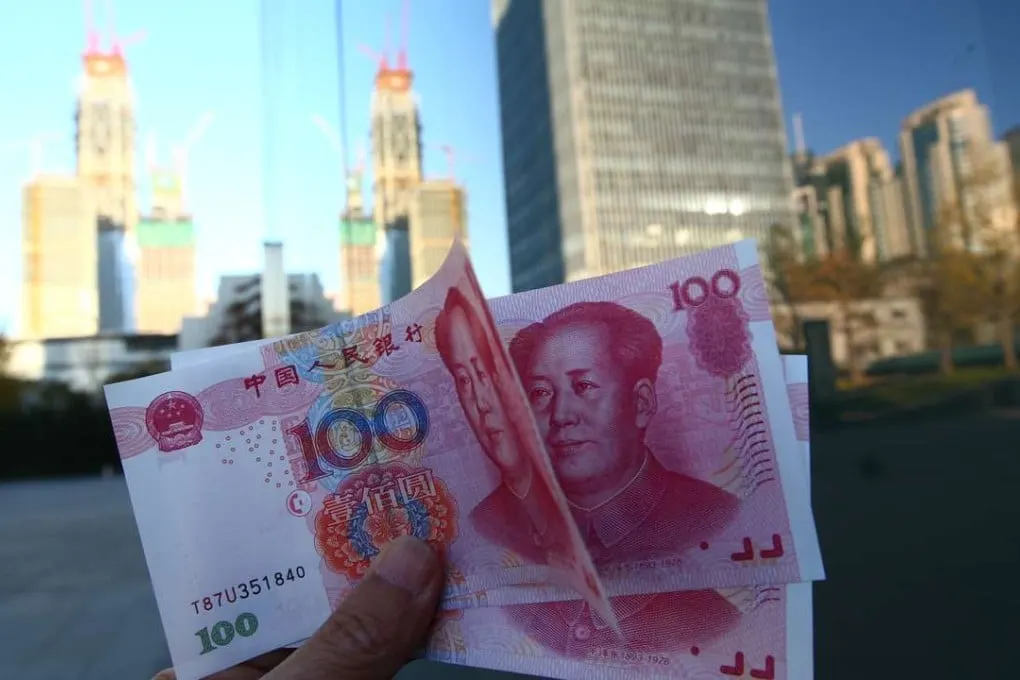
China's policy machinery fought a two-front market battle on Tuesday, with the People's Bank of China deploying foreign-exchange tightening measures to halt the renminbi's offshore appreciation while freshly unveiled stock stabilisation tools failed to stop the equity slide — leaving the tech-heavy Star 50 Index down more than four percent and raising the stakes on the world's most consequential open question: whether China's leadership will move from liquidity bandages to demand-led rescue.
Bloomberg and the IMF's global markets monitor reported the renewed declines as the market judged Monday's stabilisation package insufficient. The Star 50 Index forfeited its prior session's gains entirely, while the broader CSI 300 fell as much as 1.2 percent before ending the day moderately lower. Meanwhile the PBOC's FX measures — which market reports say aim to slow outflow pressure and cap currency strength — have paused the offshore yuan's rally, Steering numbers at 6.6534 per dollar in offshore trade through the week's session.
An appreciating currency meets a defensive stock market
The currency market's posture is unusual. Most emerging economies spend their FX reserves defending against depreciation; China's problem is the reverse — incoming export receipts, trade-flation-driven dollar inflows and the speculative flows positioning for a Chinese policy pivot have been pushing the yuan upward, threatening the export price competitiveness that remains the economy's most reliable growth engine. Tightening the outflow regime and supplying dollar liquidity through state banks caps the appreciation but also signals to global investors that moving capital both directions through China's gates will be managed, not free — a posture that can chill the very equity flows the market's stabilisers need.
Equity weakness, by contrast, reflects domestic fundamentals: property market overhang unresolved, precautionary savings historically high, private confidence in the policy environment fragile and consumer demand reliant on fiscal stimulus signals that have yet to arrive at market-moving scale. Markets that price future earnings need conditions that change the outlook — which is why liquidity instruments, no matter how cleverly constructed, have left the investable community asking for more than infrastructure this cycle.
What the Star 50's slide transmits globally
China's technology-heavy benchmark indexes the companies that matter most to global supply chains — semiconductor, battery, advanced-hardware and AI-linked names that integrate into the world's electronics architecture. A four percent slide in that cohort lands directly into the global technology conversation at a moment when the AI-driven rally in developed markets is itself correcting, compounding the perception that 2026's technology trade has entered a consolidation that spans continents rather than a US-specific derating.
For the emerging-market capital that has underweighted China through the year, the question is now three-dimensional: whether China weakness drags all EM assets through export and metal-price channels; whether a stabilised yuan supports commodity restocking by making China's industrial purchases steadier; and whether the dollar's relative weakness encourages flows into frontier markets — including African exchanges — as allocators look for growth sources unpinned from China's correction cycle.
The African trade consequences of a capped yuan
China-Africa trade runs substantially through the currency pair, and a stabilised yuan keeps the continent's largest bilateral trading relationship predictable. For Nigerian importers of Chinese manufactures — machinery, vehicles, electronics and consumer goods — the yuan's recent appreciation had quietly raised landed costs against every other currency; capping that strength removes pressure from the procurement mathematics of businesses whose margins have been squeezed by the naira's own consolidation arithmetic. For African sovereigns holding Chinese-currency-linked project debt, from railway programmes to power infrastructure, a stable yuan keeps debt service remeasured in local-currency terms unchanged.
The export direction matters as well. African commodity suppliers — oil, metals, minerals and agricultural goods — selling into China's manufacturing complex benefit from a steady, rather than sharply strengthening, yuan that keeps China's industrial buyers' procurement budgets intact. The 2026 corrective phase in Chinese equities, if it extends to Chinese industrial output, would be the demand channel in which African commodity markets register the consequences — through metal prices, crude import orders and the shipping rates that connect the two continents.
What would actually end the slide
Analysts converge on the missing ingredient: private-sector oriented, demand-supporting fiscal expansion. Property resolution structures of a scale that clears inventory overhang and rescues developer balance sheets, consumption subsidies that move household demand rather than state investment, and a regulatory signal that the private economy is trusted again would — on the evidence of every previous Chinese market bottom — do more for equity valuations than any further liquidity instrument. The 2026 policy conversation has produced signals in all three directions, but none at the scale the market has asked for.
The PBOC's FX measures, which sophisticated observers read as pre-emption rather than crisis response, buy policy time without solving the underlying confidence question. The ball is now with fiscal authorities, whose year-end planning discussions will produce the budget and stimulus decisions that equity markets have asked for all year — and whose design will determine whether 2027's Chinese growth story gives the global economy the demand anchor that developed-market rate policy and emerging-market trade forecasts have both assumed.
For investors watching November's sessions — from emerging-market funds to African policymakers tracking commodity demand — China's yields on credible announcements will set the tone. The lesson of this corrective market is that liquidity tools do not repair confidence, and November's market tapes will keep pricing exactly that gap.
Up next
MTN Moves MoMo Onto Alipay+ As Fintech Slides
MTN Nigeria migrates MoMo onto Alipay+ while fintech revenue fell 26 percent during the platform rebuild and credit service suspension.
More in Markets
See allSeventeen Firms Pay N1.13 Trillion in Dividends in First Half of 2026
Seventeen companies listed on the Nigerian Exchange have paid or proposed dividends totalling N1.13 trillion in the first half of 2026, underscoring the cash return profile of Nigeria's largest listed companies.
Ten NGX stocks account for 71% of N160tn market value
Ten leading stocks on the Nigerian Exchange account for N115.98 trillion, or about 71 per cent of the bourse's equity market value of around N160 trillion, underscoring high market concentration.
Naira Firms to N1,332/$ Ahead of September Inflation Report
The naira strengthened at the official window while holding near N1,358 in the parallel market as traders positioned for the September inflation release.
About the author
Abiodun Abdullahi
Author / Business and Markets Writer
Abiodun Abdullahi writes for BusinessPress.
More by Abiodun Abdullahi
Australia Extends Rate Hike Streak To An 18-Year High
Markets6 mins ago
Oil Whiplash Tests Markets As US-Iran Talks Wobble
Markets8 mins ago
US Midterms Look Set To Spare Global Markets
Markets1 hr ago


