G-24 Warns Developing Nations Pay $500bn More for Debt Than Rich Countries
G-24 chair Taiwo Oyedele said developing countries pay about $500 billion more for debt than developed economies, urging cheaper IMF and World Bank financing.
Developing countries are paying roughly $500 billion more for their debt than developed economies, G-24 chair Taiwo Oyedele has said, urging the International Monetary Fund and the World Bank to extend more accessible and affordable financing to vulnerable nations.
Speaking at a G-24 press briefing on the sidelines of the IMF/World Bank Annual Meetings, Oyedele said the problem is no longer only the size of developing-country debt but its cost.
The cost, not just the stock
"What we have seen by members of the G-24 is an increasing body of not just high debts, but high costs of debts," Oyedele said, pointing to the estimated $500 billion premium developing nations pay relative to richer countries for access to credit.
The figure captures a structural disadvantage: many low- and middle-income countries borrow at interest rates several times higher than those available to advanced economies, even when their debt-to-GDP ratios are lower. The spread reflects perceived risk, shallow domestic capital markets and, in many cases, a reliance on short-tenor domestic borrowing that must be rolled over constantly.
Iyabo Masha, director of the G-24 secretariat, put the consequence bluntly. "Debt is something that restrains growth, because countries then do not have enough resources to finance further growth," she said.
What the G-24 wants
The grouping, which represents major emerging and developing economies, is pushing the IMF and World Bank to provide more concessional financing in the near term, arguing that cheaper money is essential to keep debt sustainable and to free up resources for investment. The appeal lands at a moment when global borrowing costs remain elevated and aid budgets in some advanced economies are under pressure.
For Nigeria, the message is particularly relevant. The country spends far more servicing its domestic debt than its external obligations, and its interest burden has become one of the defining constraints on the federal budget.
Business Insight
Cheaper financing would change the calculus for governments and for the private sector. When sovereign borrowing is expensive, it crowds out credit to businesses and pushes up the cost of capital across the economy. Lower sovereign spreads tend to feed through to corporate bonds, project finance and bank lending rates, making investment in infrastructure, manufacturing and energy more viable.
For Nigerian firms, the more immediate benefit of a sustained reduction in the country's risk premium would be cheaper access to foreign capital and a more stable exchange rate — both of which have been in short supply in recent years.
Background
The G-24 was established to coordinate the position of developing countries on international monetary and development finance issues. Its lobbying has taken on new urgency as a wave of sovereign debt restructurings — from Zambia to Ghana to Sri Lanka — exposed the slow, costly and fragmented nature of today's crisis-resolution architecture.
Nigeria has itself borrowed heavily on domestic markets, with the DMO scheduling N5.75 trillion in bond auctions for the fourth quarter of 2026 alone, a reflection of how much the government still depends on local investors to fund its deficit.
Conclusion
The G-24's appeal rests on a simple arithmetic: high debt costs are as damaging as high debt levels. Whether the IMF and World Bank respond with meaningfully cheaper financing will determine how quickly countries like Nigeria can shift resources from interest payments back toward growth. Until then, the burden will keep compounding.
Up next
Nigeria Risks $1bn Export Loss Over EU Deforestation Rules, NEPC Warns
The Nigerian Export Promotion Council warns that exporters could lose more than $1 billion a year if they fail to meet EU deforestation rules, with cocoa most exposed.
More in Economy
See all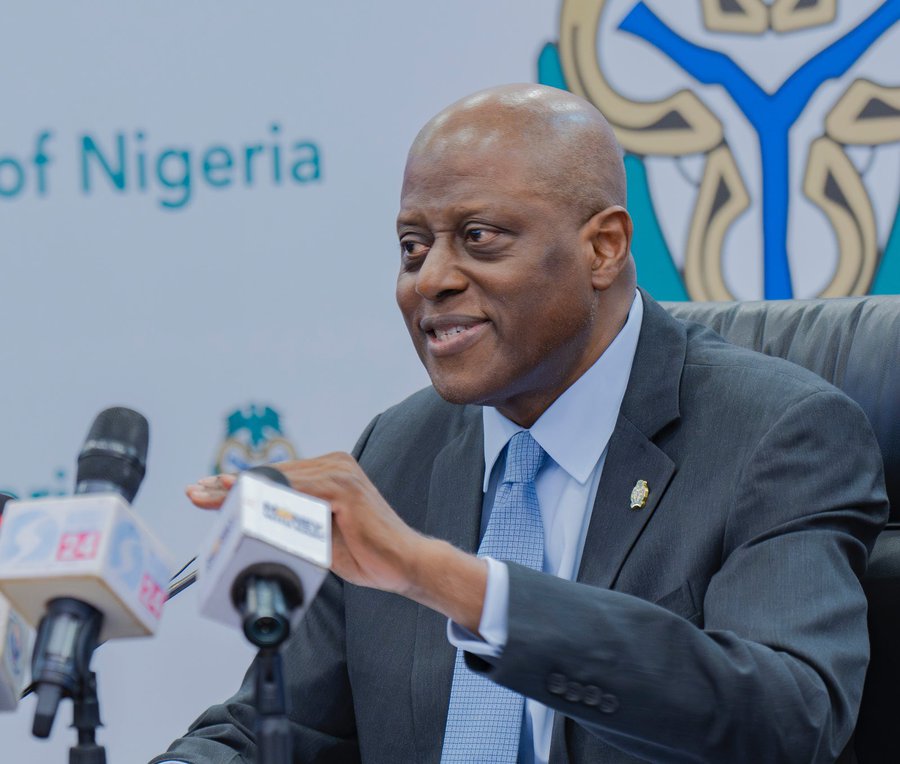
CBN Cuts Monetary Policy Rate to 23% in Its Largest-Ever Easing Move
The Central Bank of Nigeria lowered its benchmark interest rate by 350 basis points on September 22, 2026, the steepest cut on record, as inflation eased for a third straight month and reserves strengthened.

Nigeria Unveils $7.1 Billion Sugar Master Plan to Cut Imports and Create 110,000 Jobs
The National Sugar Development Council has unveiled a $7.1 billion, ten-year investment plan to lift annual sugar production above two million tonnes and cut reliance on imports.

Nigeria's Foreign Direct Investment Plunges 92% to $11 Million in September
Nigeria's foreign direct investment fell 92% month-on-month to $11 million in September, highlighting the gap between hot portfolio money and long-term capital commitments.
About the author
Tunde Balogun
Economics Correspondent
Tunde Balogun writes for BusinessPress.
More by Tunde Balogun