
Five Nigerian Lenders Post Combined N2.29 Trillion Profit in First Half of 2026
Five leading Nigerian financial institutions reported a combined pre-tax profit of about N2.29 trillion in the first half of 2026, cementing banking's dominance of corporate earnings.

Five Nigerian financial institutions reported a combined profit before tax of about N2.29 trillion in the first half of 2026, underscoring the banking sector's outsized role in a corporate landscape still grappling with a weak consumer economy.
FirstHoldCo led the group with profit before tax of N653.5 billion, followed by Zenith Bank, which reported N637 billion for the half-year, a modest 2 per cent increase year-on-year. Guaranty Trust Holding Company (GTCO) was also among the leaders. Stanbic IBTC posted the fastest profit growth of the five, while Sterling Financial Holdings recorded a 21.9 per cent rise. Zenith and GTCO reported slower growth, reflecting a degree of normalisation after several years of exceptional gains.
Where the profits came from
The earnings were supported by higher interest income, trading gains, improved asset quality and strong non-interest revenue. Nigerian banks have profited from sustained high yields on government securities and from the repricing of loans in a high-interest-rate environment. They have also benefited from foreign exchange gains in the years since the naira was devalued.
That mix is now shifting. As the central bank cuts its benchmark rate and government yields fall, the easy gains from holding sovereign paper will compress. The banks that sustain profitability in the next phase will be those that grow their loan books, expand non-interest income and manage costs.
Bank profits have been a rare bright spot in Nigeria's economy. The test is whether that strength flows into lending that supports businesses and households.
The recapitalisation backdrop
The results came as the banking sector works through a recapitalisation exercise that requires lenders to raise substantially more capital. Most major banks have raised or are raising funds through public offers and rights issues, strengthening their buffers and positioning them to underwrite larger loans. FirstHoldCo has drawn attention from prominent investors, including billionaire Femi Otedola, who has increased his stake.
Strong profits support those capital raises, giving investors confidence that the banks can absorb new equity without diluting value. They also give the banks room to lend more, which is critical if Nigeria's economic recovery is to be broad-based rather than confined to the sectors that do not need credit.
The concentration problem
The dominance of a handful of banks in Nigeria's corporate earnings is a double-edged story. On one hand, it shows a resilient, well-regulated financial sector. On the other, it highlights the relative weakness of the real economy, where manufacturers, farmers and small businesses struggle to generate comparable returns.
For policymakers, the priority is to channel the banking system's strength into productive investment: credit for small businesses, infrastructure and industry. If the profits stay concentrated in financial assets, the broader economy will continue to lag the banks' balance sheets.
Up next
Naira Holds Near N1,370/$ as Reforms Steady the Foreign Exchange Market
The naira held broadly steady around N1,370 to the dollar as stronger reserves, tighter policy and returning portfolio inflows kept the currency within a narrow range.
More in Finance
See all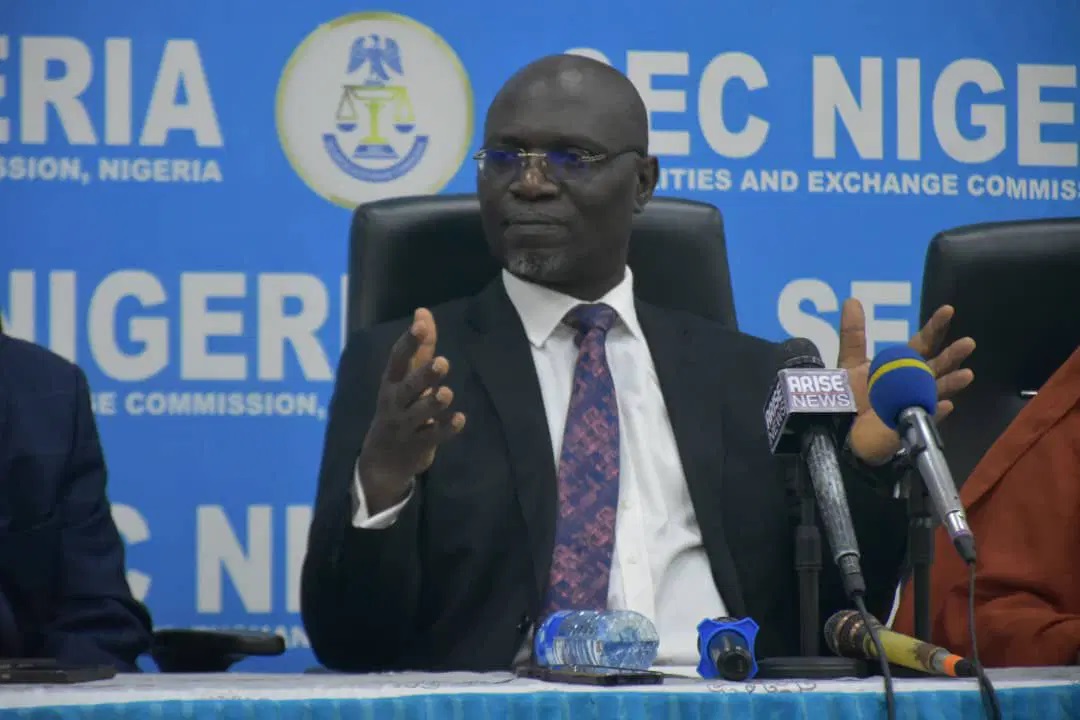
SEC Warns Shortage of Credible Issuers Is Holding Back Nigeria's Capital Market
The Securities and Exchange Commission has warned that a lack of credible companies willing to list is limiting the depth of Nigeria's capital market.
CBN's Liquidity Squeeze Keeps Banks Tight Despite Trillion-Naira Inflows
The Central Bank of Nigeria is mopping up excess cash to keep money-market conditions tight, supporting the naira and inflation but keeping borrowing costs elevated.
KuCoin Nigeria Wins SEC Approval-in-Principle for Regulatory Incubation
KuCoin Nigeria has secured conditional approval-in-principle from the Securities and Exchange Commission to join its regulatory incubation programme.
About the author
Musa Abdullahi
Finance Correspondent
Musa Abdullahi writes for BusinessPress.


