African Leaders Push 30% Local Processing Mandate as Raw Materials Bill Returns to Tinubu
Nigeria and other African countries renewed calls for local raw-material processing at the Second African Raw Materials Summit, as a bill requiring 30 per cent value addition returned to President Tinubu for assent.
Nigeria and other African countries have renewed calls for increased local processing of raw materials, as a bill proposing a minimum of 30 per cent value addition to raw materials returned to President Bola Tinubu for assent and stakeholders warned that another summit without delivery would be a failure.
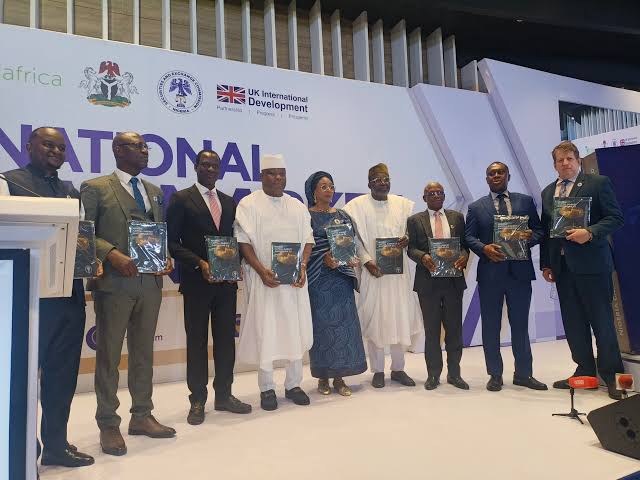
The call came at the Second African Raw Materials Summit 2026 in Abuja, themed "From African Feedstock to African Factories." Government officials, industry experts and development partners stressed the need for stronger policies, investment, research and regional cooperation to convert the continent's natural resources into finished products rather than exporting them raw.
The 30 per cent value-addition bill
Minister of Innovation, Science and Technology Dr Kingsley Tochukwu Udeh said the proposed legislation requiring at least 30 per cent value addition had been returned to the President for assent following review by the Ministry of Justice and further legislative action. Senator Aminu Abbas, chairman of the Senate Committee on Science and Technology, said lawmakers were working on the bill again and hoped to pass it within two to three weeks.
Udeh framed the bill as part of efforts to support the President's ambition of growing Nigeria's economy to one trillion dollars, arguing that local processing and the commercialisation of research and innovation are critical to that target. He also disclosed that the Federal Executive Council had approved the establishment of a National Research and Innovation Development Fund, with the enabling bill before the National Assembly.
From cocoa to batteries: the value gap
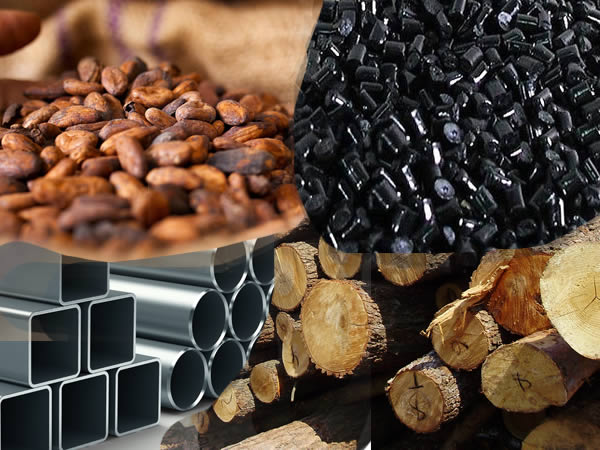
Raw Materials Research and Development Council Director-General Professor Nnanyelugo Ike-Muonso delivered the summit's sharpest diagnosis of the value gap. "We dug the cobalt, but imported the batteries. We harvested 69 per cent of the world's cocoa, but imported the chocolates. We mined the lithium, but bought back the electric vehicles," he said, adding that Africa exported its soil's riches along with its jobs, wealth and the dreams of its youth.
He proposed five action areas: a continental raw materials value-addition compact, an industrial investment pipeline, a raw materials intelligence platform, regional value chains linked to the African Continental Free Trade Area, and partnerships to transfer African research and technology into local industries. He urged delegates to focus on concrete industrial agreements rather than speeches and declarations.
What implementation requires
UNIDO Representative to Nigeria and ECOWAS Ambassador Philbert Johnson said Africa's dependence on unprocessed raw-material exports constrains industrial development, job creation and economic diversification, calling for stronger research, reliable infrastructure, workforce development, regional trade partnerships and investment in agricultural and mineral value chains. He noted UNIDO is supporting Nigeria through its Programme for Country Partnership.
The summit's proposed value-addition compact faces the same constraints that have slowed industrialisation across the continent: reliable energy, transport infrastructure, access to finance and industrial capacity. A mandate to process 30 per cent of raw materials locally creates demand for processing plants — but those plants need power, feedstock logistics and financing that many African economies still struggle to supply.
Sudan's Minister of Minerals, Professor Nour Al-Daem Taha, called for cooperation to curb mineral smuggling and strengthen training, technology transfer and workforce development. For Nigeria, where lithium, cocoa and solid minerals are among the most export-exposed resources, the value-addition bill's impact will hinge on whether it is backed by the enabling infrastructure and investment climate that make local processing commercially viable — not merely legally required.
The summit's most consequential demand was institutional rather than legislative. Udeh called for an active secretariat to monitor progress, preserve records of commitments and sustain engagement among governments, researchers, manufacturers and investors, warning that there should be no third summit if commitments from the first two are not collated and acted upon.
That accountability mechanism addresses a familiar weakness in African industrial policy: repeated declarations that never convert into tracked projects. The proposed secretariat, and the raw materials intelligence platform designed to map deposits, processing capacity and manufacturing demand, would give policymakers the data to match resources with factories. Without them, the 30 per cent mandate risks becoming a paper requirement rather than an industrial strategy.
For investors, the signal to watch is whether the bill moves from assent to enforcement with a credible transition period for existing exporters. For Nigeria's mining and agriculture value chains, the opportunity is real but conditional: local processing only retains value when energy, logistics and finance allow factories to run at competitive cost. The summit has set the ambition; the next two to three weeks of legislative action will test whether it becomes law — and whether the law becomes capacity.
Up next
NGX Market Capitalisation Slips Below N160 Trillion as Dangote Cement Leads Profit-Taking
The All-Share Index fell 0.91 per cent to 245,278.34 points and market capitalisation dropped N1.47 trillion to N159.257 trillion as Dangote Cement declined 5.5 per cent.
More in Business
See all
TotalEnergies Deepens Nigeria Bet With Two Gas Investment Decisions
TotalEnergies EP Nigeria has taken two gas investment decisions in just over a year, tying the Ubeta and Ima projects to Nigeria LNG expansion.

FG Backs Plan to Give Students 10 Dangote Refinery IPO Shares Each
FG hails Aliko Dangote Foundation plan to give eligible tertiary students 10 Dangote Refinery IPO shares each, potentially reaching four million students.

Niger Bans Petrol, Diesel Exports in Fresh Fuel Supply Tightening
Niger has banned exports of petrol and diesel, a move that tightens regional fuel supply and affects the cross-border trade that has long moved petroleum products between Niger and its neighbours, including Nigeria.
About the author
Amaka Obi
Senior Business Reporter
Amaka Obi writes for BusinessPress.