Ecobank Signs CIPS MoU to Deepen Renminbi Settlement Across 34 African Markets
Ecobank Group's memorandum with China's CIPS aims to strengthen renminbi payment connectivity between China and Africa, though operational rollout details remain undisclosed.
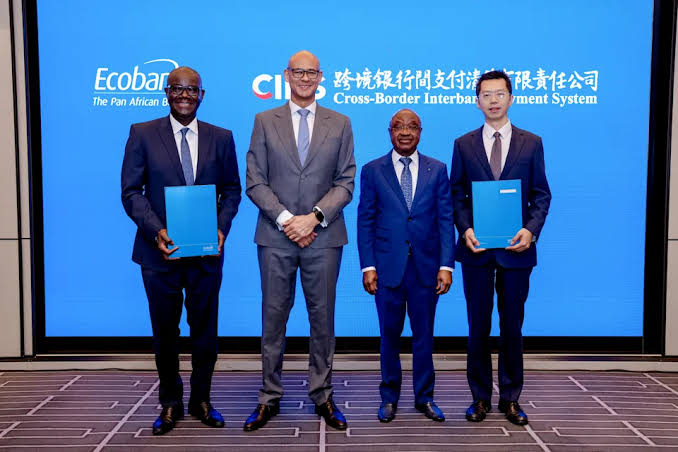
Ecobank Group has signed a memorandum of understanding with China's Cross-Border Interbank Payment System (CIPS) to strengthen renminbi payment connectivity between China and Africa, a step that could give businesses across the pan-African lender's 34 markets a more direct route to settle trade in yuan.
The signing took place in Beijing in the presence of Togo's Minister of Finance and Budget, on the sidelines of an official visit to China by the President of the Council of the Republic of Togo, Faure Essozimna Gnassingbé. Ecobank operates in 34 sub-Saharan African countries and has maintained a presence in China since 2012, and it used the occasion to inaugurate expanded Beijing office premises.
What CIPS brings to the corridor
CIPS provides clearing and settlement infrastructure for cross-border renminbi payments. Ecobank chief executive Jeremy Awori told Reuters that the system connects more than 5,000 banks in over 100 countries and territories, and the bank intends to link that infrastructure with its African network. The anticipated benefits are smoother renminbi payments, reduced settlement complexity, broader access to cross-border payment channels and stronger financial plumbing behind China–Africa trade.
China remains Africa's largest trading partner, with bilateral trade reaching approximately $348 billion in 2025. As volumes rise, the cost and speed of settling payments becomes a competitive issue for importers and exporters on both sides of the corridor, particularly for businesses that currently route yuan transactions through multiple intermediary banks and currencies.
A framework, not yet a live service
The memorandum establishes cooperation but does not by itself show that a technical connection or customer service is operational. The parties did not publish an implementation timetable, a technical participation status, a list of the first Ecobank markets to receive services, or any pricing, settlement volumes or launch date.
Reuters also reported that Ecobank is discussing yuan-settlement services with Bank of China, a prospective product that is separate from the signed CIPS memorandum and has not been announced as live. The near-term milestone to watch is confirmation of CIPS connectivity or a named renminbi settlement service within Ecobank's network.
Africa's widening renminbi settlement push
Ecobank is not moving alone. Standard Bank's subsidiary Stanbic Bank connected to CIPS across markets including Kenya, Tanzania, Uganda, Ghana and Namibia between late July and August, while the Bank of Kigali announced in late September that it had become a direct CIPS participant. Ghana's GCB Bank and Angola's Banco de Fomento Angola have also signalled plans to join.
The trend aligns with China's full implementation in May of zero-tariff treatment for 53 African countries with which it has diplomatic relations. Direct renminbi settlement can reduce unnecessary currency conversions, lessen reliance on intermediary banks, improve transaction efficiency and lower foreign exchange risk — all of which matter in a year when African currencies have faced choppy dollar liquidity.
What African importers and exporters stand to gain
For African companies, the appeal of direct renminbi settlement is straightforward: fewer conversion steps, shorter settlement cycles and reduced exposure to third-currency volatility. Standard Bank executives have said renminbi connectivity in 10 African markets already allows some cross-border payments to settle within minutes rather than days, a benchmark that illustrates the efficiency gap CIPS access is meant to close.
Ghana's central bank governor, Johnson Asiama, has said authorities will work with Chinese counterparts to eliminate third-party currency settlements in transactions between Ghanaian traders and Chinese suppliers — a statement that captures the policy direction across the continent. The shift is as much about negotiating leverage and monetary plumbing as it is about transaction fees.
For Nigerian businesses specifically, the practical significance depends on whether Ecobank's Nigerian operation is among the early markets to gain live yuan settlement and on the pricing attached to it. Nigeria's own trade with China is large and import-heavy, so any reduction in settlement friction could improve working-capital cycles for distributors and manufacturers that source inputs from Chinese suppliers.
Beijing's push to internationalise the renminbi gives African banks an additional settlement option alongside the dollar and euro. Converting that option into everyday use will require the same operational follow-through — connectivity, documentation, liquidity and pricing — that the memorandum has so far left conditional. The signed agreement resolves the earlier uncertainty over whether Ecobank would join the corridor; it does not yet answer how quickly the corridor will carry Nigerian trade.
Up next
Nigeria Earns N52.12 Trillion From Nine-Month Crude Output on War-Driven Price Spike
Nigeria produced 402.86 million barrels of crude worth about N52.12 trillion between January and September 2026, a gross value lifted by conflict-driven Bonny Light prices rather than by hitting budget production targets.
More in Finance
See all
Nigerian Banks Park Over N6 Trillion at CBN After N2.4 Trillion OMO Repayment
Banks are holding more than N6 trillion in deposits at the Central Bank of Nigeria after a N2.4 trillion Open Market Operation repayment injected a surge of liquidity into the banking system.

Fidelity Bank Raises Over N500 Billion to Meet CBN Recapitalisation Bar
Fidelity Bank has raised over N500 billion in new capital as Nigerian lenders race to meet the Central Bank of Nigeria's recapitalisation thresholds ahead of regulatory deadlines.

Nigerian Banks Cut Lending to Manufacturers by 26.8% to N5.19 Trillion
Nigerian banks reduced credit to the manufacturing sector by 26.8 per cent in the second quarter of 2026, according to Central Bank data, with outstanding loans falling to N5.19 trillion as high rates and risk pricing constrained disbursement.
About the author
Amina Suleiman
Finance Correspondent
Amina Suleiman writes for BusinessPress.