NGX slips 0.05% as market capitalisation falls to N159.07trn
Nigeria's All-Share Index fell 0.05 per cent to 244,989.9 points on October 22 as market capitalisation slipped to N159.07 trillion, with more stocks declining than advancing.
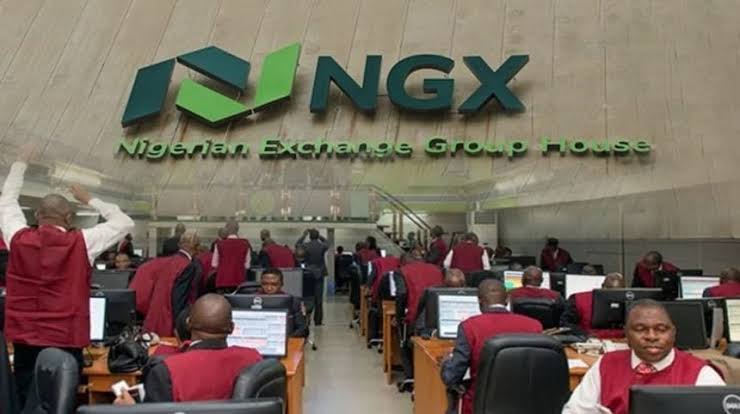
Nigeria’s equities market closed marginally lower on Thursday, October 22, 2026, as the Nigerian Exchange’s All-Share Index fell 126.59 points, or 0.05 per cent, to 244,989.9 points. Market capitalisation slipped by N82.20 billion to N159.07 trillion, extending the soft tone that followed the previous session’s N516 billion decline.
The small headline loss concealed a weaker underlying breadth. Eighteen stocks advanced, 26 declined and eight were unchanged, according to market data compiled by Kobo Terminal. Total volume stood at 338.10 million shares, valued at N19.17 billion across 30,208 deals. Livestock Feeds was the most actively traded stock by volume, with 40.95 million shares changing hands, while Aradel Holdings led by value.
A narrow decline masks weak breadth
Fortis Global Insurance topped the gainers’ chart with a 9.94 per cent rise to N1.81, followed by AVA Capital, which gained 9.85 per cent, and PZ, which added 8.58 per cent. Thomas Wyatt Nigeria led the losers with a 10 per cent fall to N2.52. The distribution of gainers and losers mattered more than the index movement: more than twice as many stocks fell as rose, even though the benchmark index barely moved.
That pattern is typical of a market in which a small number of large capitalised stocks stabilise the index while the broader list weakens. It also suggests that investors were not abandoning equities in general, but were repositioning within them. The previous session had been shaped by profit-taking in banking and insurance shares, and Thursday’s trading showed only a partial recovery in sentiment.
Banks and insurers set the tone
The prior session’s pressure was concentrated in financial stocks. The NGX Banking Index fell 1.49 per cent on Wednesday, with Access Holdings down 6.12 per cent to N26.10, First HoldCo down 4.59 per cent to N131.00, Zenith Bank down 1.21 per cent to N122.00 and Ecobank Transnational down 1.47 per cent to N67.00. Fidelity Bank was a notable exception, rising 6.02 per cent to N22.00.
The insurance index also fell 1.41 per cent on Wednesday, led by Custodian Investment, Royal Exchange, Consolidated Hallmark Holdings and Regency Alliance Insurance. On Thursday, Fortis Global Insurance’s strong gain showed that some buyers were willing to pick up beaten-down insurance names, but the broader sector did not stage a decisive rebound.
The market remains substantially higher than it was at the start of the year. The All-Share Index was up by more than 57 per cent year to date before Thursday’s close, according to separate market summaries, reflecting a rally driven by bank recapitalisation, corporate earnings and increased domestic participation. That longer-term gain gives the recent pullback a different meaning: it is a pause inside a strong uptrend, not evidence that the rally has reversed.
Why a N82bn loss matters less than the signal
A N82.20 billion reduction in market value is large in absolute terms, but it represents only about 0.05 per cent of the market’s total capitalisation. The more important signal is the negative breadth and the modest value traded. Investors are not running from the market; they are becoming more selective as third-quarter earnings season approaches and as fixed-income yields remain attractive.
The competition from government securities is real. Average FGN bond yields closed at 16.39 per cent on Wednesday, while average Treasury bill yields stood at 17.81 per cent and the overnight money-market rate was 20.34 per cent. With headline inflation at 14.63 per cent in September, short-dated naira securities still offer positive real returns, particularly for banks and pension funds that can hold them without taking equity risk.
That does not make equities unattractive by default. Many listed companies are reporting stronger earnings and paying higher dividends, and the NGX has benefited from a wave of domestic liquidity. But when risk-free yields are high, investors demand a clearer earnings case before adding to stock positions. Thursday’s trading reflects that calculus: buyers appeared in selected insurers and consumer names, while sellers reduced exposure elsewhere.
What to watch
The next test will come from third-quarter filings. BUA Cement’s board has approved its nine-month results for filing by October 30, and several other large companies are expected to report within the regulatory window. Earnings from banks, cement producers and consumer goods companies will determine whether the market’s year-to-date gains are supported by profits or merely by liquidity.
Investors will also watch the Central Bank of Nigeria’s liquidity management. The CBN offered N2 trillion in open market operations bills on Thursday, and the outcome of that auction will influence short-term rates and bank funding costs. A larger-than-expected allotment could drain some of the excess cash that has supported both equities and fixed-income demand.
For now, the market’s message is one of caution rather than distress. The index is within a narrow range, market capitalisation remains above N159 trillion, and trading activity is orderly. But the negative breadth shows that the easy phase of the rally is over. Stock selection, earnings quality and dividend sustainability are likely to matter more than broad index exposure in the coming weeks.
[irp] [irp] [irp] [irp] [irp]
Up next
FG settles over N100bn in gas debts as power sector reforms gain traction
Government settles more than N100bn in gas debts under power sector financial reforms.
More in Markets
See all
Nigeria revives NNPC, NLNG listing plan in push for N750trn market
Vice-President Kashim Shettima has revived plans to list NNPC and NLNG as part of a ten-year strategy to grow Nigeria's equity market to N750 trillion by 2036.
NGX RegCo fines 15 listed companies N123.17m for late filings as experts call for tougher sanctions
NGX Regulation imposed N123.17m in penalties across 15 companies, renewing debate over enforcement.
NGX ASI declines 0.32% to 245,116.49 as banking drags, turnover slips to N23.6bn
Nigerian equities fell as banking stocks led losses, with breadth turning negative and turnover moderating.
About the author
Adaeze Okonkwo
Markets Editor
Adaeze Okonkwo writes for BusinessPress.
More by Adaeze Okonkwo