Shettima sets up technical committee for wheat, staples, livestock
Vice-President Kashim Shettima has constituted a technical committee to develop interventions in wheat, staple crops and livestock, though no deadline or funding has been announced.
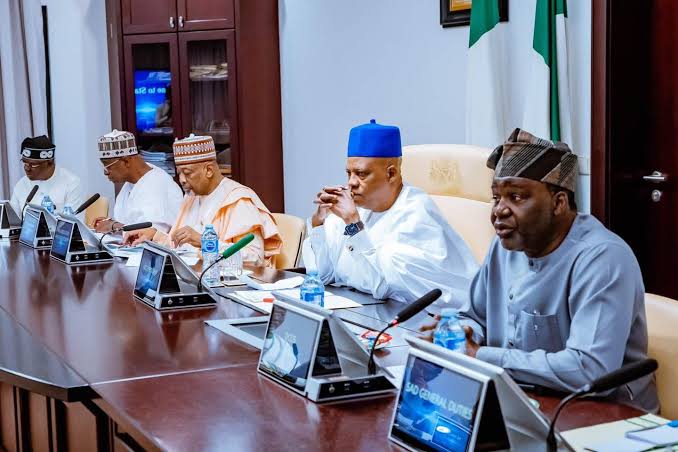
Vice-President Kashim Shettima has constituted a technical committee to develop a blueprint for interventions in wheat, staple crops and livestock, as the federal government searches for ways to raise domestic food production and reduce dependence on imports.
The committee was inaugurated on Tuesday, October 20, at the Presidential Villa in Abuja. It brings together officials from the ministries of agriculture and food security, water resources and sanitation, and livestock development, as well as the Ministry of Finance Incorporated and the presidential livestock reform team.
The committee also includes the chief executives of the Bank of Industry, the Bank of Agriculture, the National Agricultural Development Fund, the National Centre for Agricultural Mechanisation, the National Sugar Council, the Nigeria Commodities Exchange and the National Agency for Science and Engineering Infrastructure.
What the committee is expected to do
The committee’s mandate is to prepare a blueprint for strategic interventions in wheat, staple crops, livestock and dry-season farming. It is expected to identify quick wins, propose financing mechanisms and recommend ways to coordinate the activities of the many agencies involved in agriculture.
The choice of wheat is significant. Nigeria imports a large share of its wheat, and global prices have been volatile since the war in Ukraine. Increasing domestic production would reduce the import bill and improve food security.
Livestock is another priority. The government has been trying to modernise the sector, reduce conflict between herders and farmers and attract private investment in ranching and processing. A technical committee could help turn those ambitions into concrete projects.
No deadline, no funding yet
The committee has not been given a deadline, a funding envelope or a specific production target. That is a weakness. Without clear timelines and resources, committees can become talking shops that produce reports nobody implements.
The Minister of Agriculture and Food Security, Abubakar Kyari, said the committee’s report would go to another committee before being presented to the vice-president and president. That adds another layer of review, which could slow decision-making.
The committee’s coordinator is Marion Moon, the technical adviser on agriculture and head of the Presidential Food Systems Coordinating Unit. She has experience in agricultural policy and programme management, but she will need political backing to push through reforms.
The food security context
Nigeria’s food security situation is deteriorating. The Food and Agriculture Organization estimates that 36.3 million people faced acute food insecurity between June and August 2026. Food inflation stood at 19.59 per cent in September, driven by higher prices for staples such as rice, beans and maize.
Fertiliser prices have also risen. The FAO reported that NPK prices increased 12 per cent and urea prices rose 43 per cent between February and May 2026. That makes it more expensive for farmers to maintain yields.
The government has responded with a mix of policies, including duty-free food imports, cash transfers and support for dry-season farming. Critics say those measures are temporary and do not address the structural problems: low productivity, poor infrastructure, insecurity and weak extension services.
The coordination problem
Nigeria has many agencies involved in agriculture. The federal ministry sets policy, state governments implement programmes, research institutes develop technologies and development partners fund projects. Coordination is weak, and responsibilities often overlap.
The technical committee is an attempt to improve coordination. By bringing the heads of key agencies together, the government hopes to align their activities and avoid duplication. But coordination alone will not solve the problem. The agencies need clear mandates, adequate funding and accountable leadership.
The committee’s composition is broad, but it is heavily weighted toward federal agencies. State governments, which control land and extension services, are not directly represented. That could limit the committee’s ability to implement its recommendations.
Wheat and dry-season farming
Wheat is a priority because Nigeria’s wheat import bill is large and the crop can be grown during the dry season in the north. The government has supported wheat production through irrigation schemes and input subsidies, but yields remain low compared with global averages.
Dry-season farming could help increase output, but it requires reliable irrigation, affordable energy and access to markets. The committee is expected to examine those constraints and propose solutions.
Livestock is more complex. The sector is dominated by smallholders and pastoralists, and conflicts over land and water have killed thousands of people. The government’s livestock reform plan aims to develop ranches, improve animal health and attract private investment. A technical committee can help design the plan, but implementation will require political will and significant funding.
What to watch
The committee’s report will be judged by whether it contains specific, costed proposals with clear timelines. A vague document that repeats existing policies will not inspire confidence.
The government’s ability to fund the proposals is also uncertain. Nigeria’s fiscal position is tight, and the agriculture ministry’s budget is small relative to the scale of the challenge. Private investment and development finance will be needed.
Finally, the committee’s work will be judged by results. If wheat production rises, food prices fall and livestock conflicts decrease, the committee will have succeeded. If nothing changes, it will be another example of a well-intentioned initiative that failed to deliver.
The bigger picture
Nigeria’s food problem is not just about production. It is about storage, transport, processing, finance and market access. A farmer who grows more wheat but cannot sell it at a fair price will not plant more next season.
The technical committee should therefore look beyond the farm gate. It should consider the entire value chain, from inputs to consumers. That means investing in rural roads, storage facilities, processing plants and market information systems.
The government has a role to play, but it cannot do everything. The private sector, states, development partners and farmers themselves must be part of the solution. A technical committee can provide direction, but it cannot substitute for collective action.
[irp] [irp] [irp] [irp] [irp]
Up next
Fertiliser summit pushes soil intelligence to boost food security
Experts at the 2026 Nigeria Fertiliser Summit called for better soil data, targeted nutrient recommendations and stronger coordination to improve agricultural productivity.
More in Agriculture
See all
Fertiliser, Cocoa Lead Nigeria's Non-Oil Export Surge
Fertiliser has emerged as a top non-oil export earner alongside cocoa as Nigeria's industrial and agricultural shipments gain momentum in its diversification drive.
UK Clean Energy Fund Backs Solar Cold Storage for Nigerian Food Markets
More than £2 million from the UK's ZE-Gen Scale-up Fund will back ten African clean energy projects, including 100 solar cold storage units and four solar agricultural hubs in Nigeria.
The Bigger Business of Feeding Africa: Farmers, Buyers and Processors
Africa's food system still fails to match farmers with fair buyers and processors with reliable supply, making the business of feeding the continent as much a market-design problem as a production one.
About the author
Tunde Balogun
Economics Correspondent
Tunde Balogun writes for BusinessPress.
More by Tunde Balogun
NUPRC data shows oil output, revenue shortfall against budget
Economy53 mins ago
Cocoa prices collapse as producers push Abuja Declaration raw-export strategy
Agriculture5 hrs ago
AFEX maize plunges 13.44% below guaranteed minimum price as supply pressures weigh
Agriculture5 hrs ago