Fertiliser summit pushes soil intelligence to boost food security
Experts at the 2026 Nigeria Fertiliser Summit called for better soil data, targeted nutrient recommendations and stronger coordination to improve agricultural productivity.
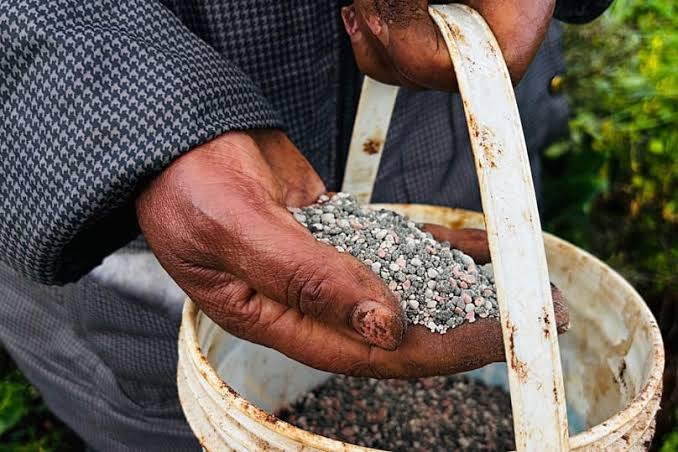
Nigeria’s fertiliser policy is shifting from a focus on volume to a focus on soil intelligence, with experts at a national summit calling for better soil data, targeted nutrient recommendations and stronger coordination between research institutions, regulators and the private sector.
The 2026 Nigeria Fertiliser Summit on Phosphorus and Food Security, held in Abuja, brought together more than 280 participants from government, academia, industry and development organisations. It was organised by the Institute of Agricultural Research and Training at Obafemi Awolowo University, the Fertiliser Producers and Suppliers Association of Nigeria and the Fertiliser and Inputs Support Services Department of the Federal Ministry of Agriculture and Food Security.
The summit’s theme reflected a growing recognition that Nigeria’s fertiliser problem is not simply a matter of supply. The country has expanded domestic production, but many farmers still apply the wrong nutrients, in the wrong quantities, at the wrong time. That wastes money, reduces yields and damages soil health.
Soil as the foundation
Professor Jibrin Mohammed Jibrin of Bayero University Kano told the summit that the basis of food production and food security is the soil. He argued that Nigeria cannot achieve sustainable food security without accurate information about the nutrient status of its soils.
That information is often missing. Nigeria’s soil maps are outdated, laboratory capacity is limited and many farmers rely on general recommendations rather than field-specific data. The result is a mismatch between what the soil needs and what farmers apply.
Jibrin called for a coordinated approach that brings together soil scientists, extension workers, fertiliser companies and policymakers. He said soil intelligence should be treated as a public good, with data shared across institutions and used to design better fertiliser blends.
Digital soil maps and advisory tools
Dr Bello Shehu, a senior agronomist, highlighted the role of digital soil maps, soil information systems and laboratory services. He said these tools could help identify nutrient deficiencies, recommend crop-specific fertiliser blends and monitor changes in soil health over time.
The technology exists, but it is not yet widely used in Nigeria. Many smallholder farmers do not have access to soil testing, and those who do often receive recommendations that are difficult to interpret or afford. Digital advisory tools could bridge that gap by delivering simple, actionable advice through mobile phones.
The summit heard that several initiatives are already testing this approach. The Coalition of the Willing, a group of public and private stakeholders, is working on a national soil information system. The aim is to create a single platform that can be used by researchers, extension agents and farmers.
Phosphorus and food security
Phosphorus is essential for root development, flowering and seed formation. Many Nigerian soils are deficient in phosphorus, particularly in the savannah regions. But applying too much phosphorus can be harmful, leading to nutrient runoff and water pollution.
The summit focused on phosphorus because it is a strategic nutrient for cereal production. Wheat, maize, rice and sorghum all require adequate phosphorus, and Nigeria’s ambition to boost domestic food production depends on improving yields.
Fertiliser prices have risen sharply in recent years. The Food and Agriculture Organization reported that NPK prices increased 12 per cent and urea prices rose 43 per cent between February and May 2026. That makes it even more important for farmers to use the right amount of fertiliser.
The coordination challenge
Nigeria has many institutions involved in fertiliser policy. The Federal Ministry of Agriculture and Food Security sets policy, the Fertiliser and Inputs Support Services Department regulates quality, the Standards Organisation of Nigeria sets standards and the Central Bank of Nigeria has financed imports and local production.
That fragmentation has led to duplication and gaps. The summit heard calls for a national technical working group to coordinate soil intelligence, fertiliser recommendations and farmer education. The group would include representatives from research institutes, universities, the private sector and development partners.
The Minister of Agriculture and Food Security, Aliyu Abdullahi, was represented at the summit by Oshadiya Olanipekun. He said the ministry was committed to evidence-based fertiliser policy and would support efforts to improve soil data and advisory services.
Why it matters for farmers
For farmers, better soil intelligence could mean lower costs and higher yields. Instead of buying a standard bag of NPK, they could buy a blend that matches their soil’s needs. That would reduce waste and increase the return on every naira spent on fertiliser.
But the benefits depend on access. Soil testing must be affordable and nearby. Recommendations must be simple and practical. Fertiliser blends must be available in local markets. Without those conditions, soil intelligence remains an academic exercise.
The private sector has a role to play. Fertiliser companies can use soil data to develop new products and target them to specific regions. Agritech companies can build digital advisory platforms. Banks can use soil data to assess credit risk for farmers.
The food security imperative
Nigeria’s food security situation is fragile. The FAO estimates that 36.3 million people faced acute food insecurity between June and August 2026. Food inflation stood at 19.59 per cent in September, well above the headline rate.
Raising agricultural productivity is essential to reducing food prices and improving nutrition. Fertiliser is one of the most important inputs, but it is not a silver bullet. Farmers also need better seeds, irrigation, extension services and market access.
The summit’s focus on soil intelligence is a recognition that Nigeria cannot solve its food problem by importing more fertiliser. It needs to use fertiliser more efficiently. That requires data, coordination and a long-term commitment to soil health.
What happens next
The summit is expected to produce a communiqué with recommendations for government, industry and research institutions. The key test will be whether those recommendations are implemented or shelved like previous conference reports.
Nigeria has the institutions, the expertise and the private-sector capacity to improve soil intelligence. What it lacks is coordination and sustained funding. The summit has raised the profile of the issue. The next step is to turn the talk into a national soil information system that farmers can actually use.
[irp] [irp] [irp] [irp] [irp]
Up next
FG, FAAN, Bi-Courtney end 20-year MMA2 dispute with settlement
The federal government, FAAN and Bi-Courtney have signed agreements to end their long-running MMA2 dispute, with the operator waiving a N132 billion claim and FAAN set to collect concession fees.
More in Agriculture
See allNigeria Marks 2026 World Food Day With Innovation Drive as FMAFS, FAO Flag Off Activities
The Federal Ministry of Agriculture and the FAO begin World Food Day 2026 activities under the theme Innovate Today, Nourish Tomorrow, spotlighting innovation in Nigeria's food system.
FG Launches Project WHEAT-NESS to Strengthen Nigeria's Wheat Value Chain
The Federal Government's WHEAT-NESS programme targets value chain development, MSME support and a dedicated fund as annual wheat consumption and imports hit six to seven million metric tonnes.
Bank of Agriculture Reports N450bn Programmes Reaching 500,000 Smallholder Farmers
Progress figures show 2.5 million bags of fertiliser supplied, N20 billion mobilised under the price floor and 1,500 tractors deployed across 23 states, while beneficiary counts reported elsewhere differ.
About the author
Tunde Balogun
Economics Correspondent
Tunde Balogun writes for BusinessPress.
More by Tunde Balogun
NUPRC data shows oil output, revenue shortfall against budget
Economy1 hr ago
Cocoa prices collapse as producers push Abuja Declaration raw-export strategy
Agriculture5 hrs ago
AFEX maize plunges 13.44% below guaranteed minimum price as supply pressures weigh
Agriculture5 hrs ago