Bank of Canada raises rate to 2.5% as energy costs threaten wider inflation
A quarter-point increase responds to persistent energy pressure, while the bank warns further tightening may be needed.
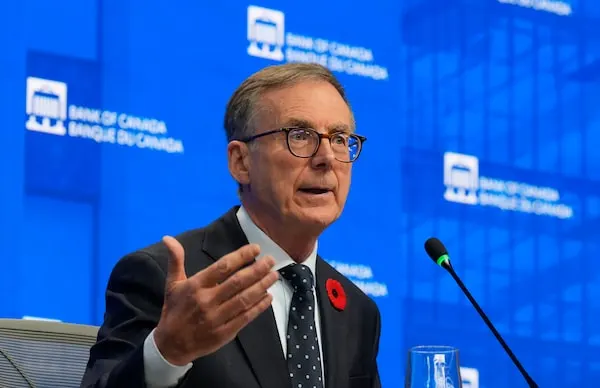
The Bank of Canada increased its policy rate by a quarter percentage point to 2.5% on 28 October, saying persistent energy-price pressure risked spreading into a broader rise in prices. It also warned that further increases could be necessary, while stopping short of committing to a fixed sequence of tightening.
The decision illustrates the tension facing economies where expensive energy coincides with stronger activity. It is relevant to African markets as another signal that the global interest-rate cycle can move towards restraint even when some sectors remain under pressure from trade disruptions.
The bank is responding to the risk of wider price increases
In its official decision statement , the central bank set the Bank Rate at 2.75% and the deposit rate at 2.45%. It said higher fuel costs were raising production and transport costs.
The distinction is between a direct increase in an energy bill and the later adjustment of prices elsewhere in the economy. Firms may initially absorb higher input spending in their margins. If they later pass those costs to customers, inflation can persist beyond the first energy-price movement.
A rate increase cannot produce additional oil or repair a disrupted supply route. It can, however, influence spending and financing conditions as policymakers seek to prevent a temporary cost shock becoming embedded in broader price-setting behaviour. That is the transmission problem identified by the bank.
The inflation projection shifts the policy calculation
The bank forecast inflation averaging 3% in 2027, one percentage point above its July projection, before returning to 2% around the middle of 2028. It projected Canadian economic growth of 1% in 2026 and 2% in each of the next two years.
These are forecasts rather than completed economic outcomes. Their importance lies in the combination: the bank sees more persistent inflation alongside enough resilience to justify additional restraint.
The revision also shows why a forecast change can matter even when a current inflation reading has not moved sharply. Monetary policy works with a lag, so policymakers consider where price pressures appear likely to go. An outlook can nevertheless change again if energy markets, trade rules or business responses differ from the assumptions.
Energy producers and energy users face different exposures
A sustained increase in energy prices can support revenues for producers while raising costs for manufacturers, transport operators and households. The net effect on an economy depends on its production, consumption and import structure.
For Nigeria, that is a useful distinction when interpreting global oil developments. A higher export price is not equivalent to an improvement in every company's margins or household purchasing power. The volume exported, the cost of energy consumed domestically and the route through which receipts enter the economy all matter.
The Canadian decision is not evidence of a new Nigerian policy move. It provides a separate example of how a central bank is responding to the risk that energy costs spread beyond the energy sector. Domestic decisions require domestic evidence.
A quarter-point move is not a quarter-point change in every loan
The policy increase is 25 basis points, or 0.25 percentage points. The effect on a particular borrower depends on whether its facility is fixed or floating and how the lender sets the contractual rate.
For businesses with Canadian-dollar commitments, the relevant exposure includes both financing costs and the exchange rate at which payments are made. A policy increase can influence currency expectations, but it does not guarantee appreciation.
Investment comparisons also need to account for risk and maturity. A short policy rate is not the same as the yield on a long bond, and neither automatically describes the return available to an investor after fees, taxes and currency conversion.
The next decision remains conditional on evidence
The bank said it would proceed carefully given uncertainty, with the next scheduled rate announcement on 9 December. Its warning about further increases is conditional, rather than a completed decision.
The relevant follow-through is whether businesses pass higher costs into selling prices and whether inflation expectations remain contained. For global borrowers, the announcement reinforces the need to assess funding terms under several interest-rate outcomes instead of assuming that the next move across advanced economies must be a reduction.
Up next
Fed holds rates at 3.75%–4% as two policymakers seek an increase
The 10–2 vote leaves dollar policy rates unchanged, with dissenters favouring tighter policy as inflation remains elevated.
More in Markets
See allNaira Firms to N1,332/$ Ahead of September Inflation Report
The naira strengthened at the official window while holding near N1,358 in the parallel market as traders positioned for the September inflation release.

CBN introduces NOFR as transaction-based benchmark for naira markets
The secured overnight reference rate is intended to improve pricing transparency and give financial contracts a more reliable base rate.

VFD profit nearly doubles but comprehensive income grows just 3%
Investment income lifted net profit, while smaller gains outside the income statement and substantial financing costs qualify the improvement.
About the author
Adaeze Okonkwo
Markets Editor
Adaeze Okonkwo writes for BusinessPress.