Lagos delivers 10,623 housing units as Sanwo-Olu touts state housing programme
Lagos State Governor Babajide Sanwo-Olu says the state has delivered 10,623 housing units under its housing programme, a multi-year high for public delivery in a market still defined by affordability gaps.
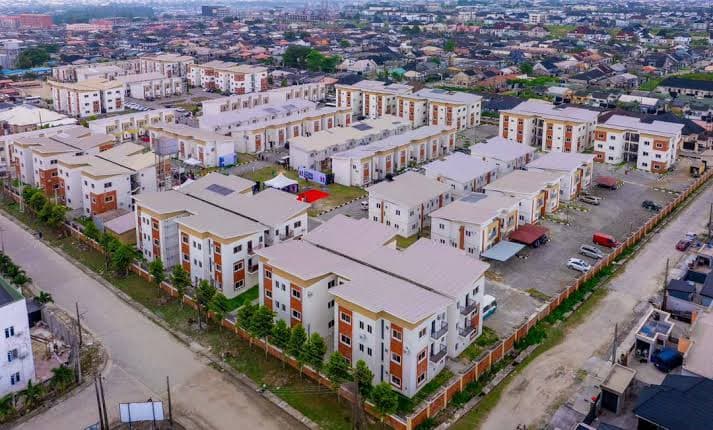
Lagos State Governor Babajide Sanwo-Olu has reported that his administration delivered 10,623 housing units across the state under its most recent housing programme phase, according to reporting on the governor's disclosure published last week, a figure that positions the Lagos housing market's public-sector delivery at its highest multi-year pace even as affordability constraints remain the sector's binding constraint.
The delivery spans multiple schemes across the state's residential corridors, from the mainstream public-housing estate completions in areas including Ikorodu, Abijo, Sangotedo and the Lagos-Ogun border axis, to the regeneration projects in inner-city neighbourhoods where the state has partnered with private developers under mixed-income structures. The governor presented the figures against the backdrop of Nigeria's estimated national housing deficit, which experts repeatedly place at more than 20 million units, and Lagos's own population pressure, which makes the state the country's most intense housing market.
Why the private sector remains the engine
While the state's 10,623 units are a substantial public investment, they represent a small fraction of annual housing demand in a metropolis where inflows of new residents are estimated in the hundreds of thousands per year. The market's response is where the real momentum sits: private developers, from large-scale corporate names to mid-market players constructing across the mainland and island corridors, have continued to launch projects at rising construction costs, aided by institutional capital from pension funds and development finance institutions that have warmed to Nigerian real estate as interest rates and inflation have repriced rental yields upward.
Government's role, in this structure, is catalytic rather than substitutive. Provision of serviced land, infrastructure connections, planning efficiencies, the state's long-running building-permit digitisation, and, most importantly, mortgage liquidity, have the effect of multiplying private output. The delivery milestone also serves a signalling function, reassuring investors in the state's real-estate ecosystem that public infrastructure, roads, drainage and utilities, is tracking the private projects that need it.
[irp]
The affordability mathematics remains the sector's problem
Nigeria's home-ownership hurdle remains prohibitive for most urban households. Mortgage rates at commercial banks have run at double-digit levels for years, and with the mortgage finance system's penetration measured in tens of thousands of residential mortgages against tens of millions of households, outright ownership is out of reach for wide segments of the population. The Lagos market's answer has been rental supply, informal and formal, but this too has repriced sharply in recent years, with rental inflation in core Lagos neighbourhoods running well ahead of wage growth.
Interventions that compress the homeownership gap carry correspondingly greater weight. The National Housing Fund's mortgage system, repeat family-homes schemes, the Federal Ministry of Housing and Urban Development's Renewed Hope housing programme, with its first phase targeting thousands of units nationwide, and Lagos State's own affordable-housing corridors all compete to bring delivery down to price points that salaried urban workers can carry. The 10,623 units delivered by the state constitute one data point in that wider contest, and the affordability of those units, and the allocation transparency, will determine their social impact.
[irp]
Real estate as an investment market
The delivery milestone also lands in a year when real estate itself has been one of the NGX's earn-out sectors, following revaluation rules that allow listed property companies to carry investment properties at fair value. Property-linked equities have seen earnings growth driven by rent escalation, and housing delivery data feeds directly into the occupancy and rental-growth assumptions those companies carry.
Institutional investors are watching two things. The first is the supply pipeline that government infrastructure supports, which de-risks private development and supports the occupancy assumptions in real-estate investment trusts. The second is the affordability pathway, because sustained development of affordable corridors opens the middle-income segment, the largest untapped pool in the Lagos market, to developers and mortgage providers, whose economics depend on volume rather than on headline unit prices.
[irp]
What to watch
Three metrics will test whether the 10,623-unit delivery is a wave or a plateau: the pace of new state housing-scheme launches in the next budget year, the take-up rate and allocation process for the delivered units, particularly what share reaches the low- and middle-income segments the schemes state as their target, and mortgage take-up among the buyers, which would show whether delivery is converting into affordability or simply into another round of purchases by investors.
For longer-term observers of Nigerian urbanisation, Lagos's housing challenge is the domestic market's clearest case study in the economics of rapid urban growth. The state's delivery numbers, along with the infrastructure investments that accompany them, will remain the most frequently cited evidence of whether public policy is keeping up with private demand, and 2027's budget will show whether the delivery rate is intended to be sustained, increased or merely held.
[irp]
Up next
Africa Prudential posts N4.07bn nine-month PBT as interest income rises 46%
Africa Prudential reported nine-month 2026 profit before tax of N4.07bn, driven by a 46% jump in interest income on treasury yields, with its registrar and technology services providing the underlying franchise.
More in Business
See all
NPA MD warns of AI and cybersecurity risks for African ports at Casablanca conference
Nigerian Ports Authority MD calls for stronger cybersecurity as ports digitise and adopt AI.
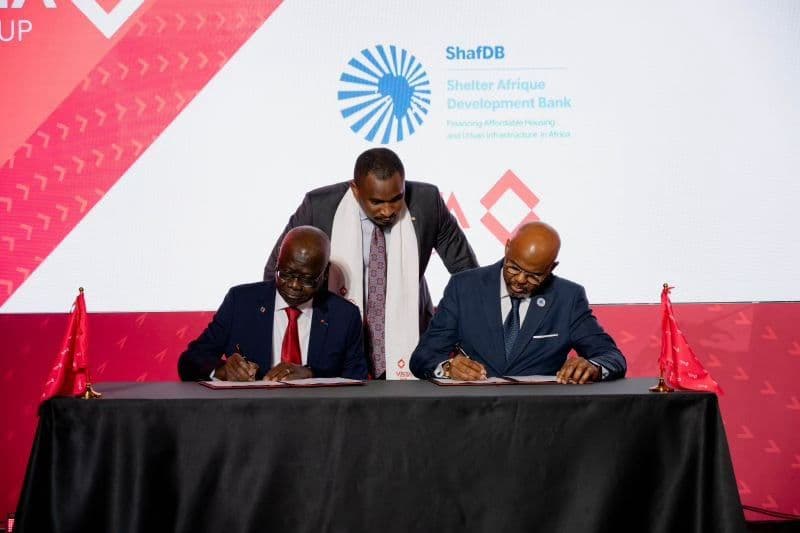
Shelter Afrique Development Bank, Vista Group sign MoU to boost affordable housing finance
The MoU aims to expand long-term financing and risk-sharing for affordable housing across Africa.
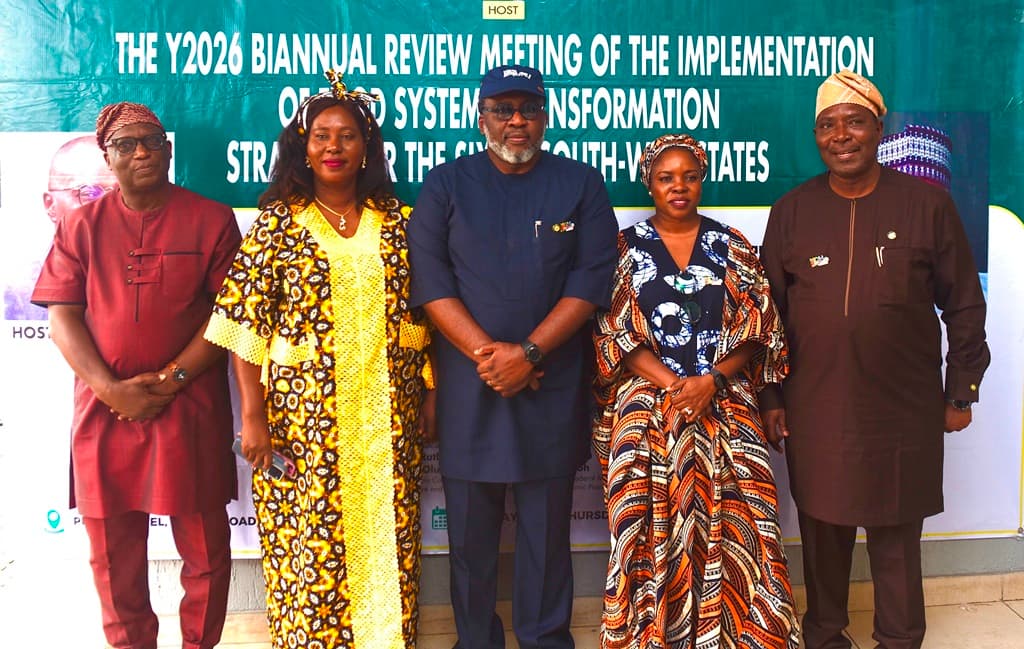
FG Moves to Strengthen Food Security as South-West States Target Food Losses, Supply Chain Gaps
As the regional review concludes on October 22, attention will turn to the recommendations adopted, the finalisation of the operating...
About the author
Amaka Obi
Senior Business Reporter
Amaka Obi writes for BusinessPress.