Oyedele Rules Out Fuel and FX Subsidy Return as FG Targets 7% Growth
Finance Minister Taiwo Oyedele says there will be no return to fuel subsidies or multiple exchange rates, as Nigeria targets 7% growth above the IMF's 4.3% projection for 2027.
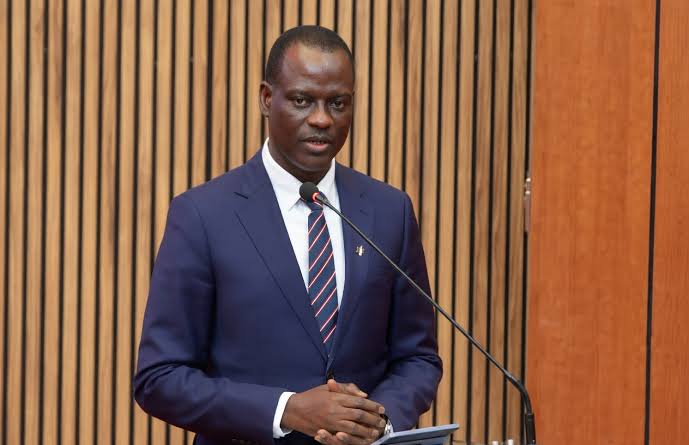
Nigeria will not reverse the removal of fuel subsidies or return to multiple exchange rates, Finance Minister and Coordinating Minister of the Economy Taiwo Oyedele said on Saturday, ruling out a policy rollback even as petrol prices and living costs remain ahead of the 2027 elections. The stance marks the clearest pre-election commitment yet to the post-subsidy framework. Markets have been watching for any sign that election-year politics would soften the reform stance; the absence of one has kept naira risk premium from spiking despite higher pump prices.
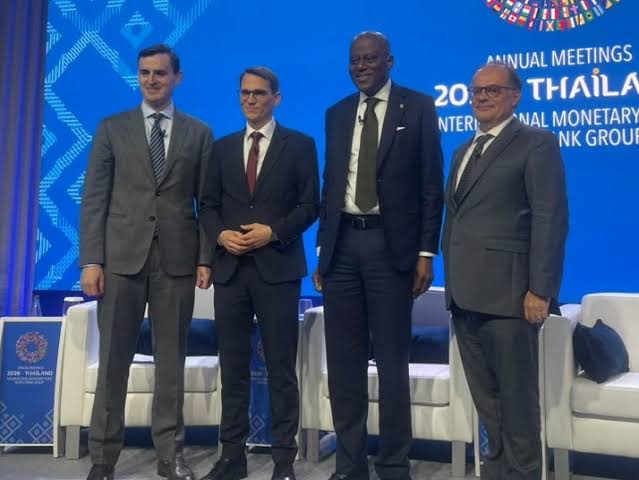
"Let me be clear: there will be no return to fuel subsidies or multiple exchange rates," Mr Oyedele told reporters in Bangkok at the closing briefing of the 2026 IMF and World Bank Annual Meetings. He said the 30-day retail margin discount being offered at NNPC stations is a time-bound commercial decision by the state oil company, not a subsidy paid from public funds.
The minister also set a more ambitious growth path than the Fund's own numbers. Nigeria is targeting economic expansion of 7%, he said, against the IMF's projection of 4.3% for 2027, arguing that the Fund has historically underestimated Nigerian performance and that fiscal reforms will soon complement the central bank's monetary measures.
Why the government is holding the line
Broad-based subsidies remain politically attractive ahead of elections, but the fiscal arithmetic is unforgiving. Oyedele has previously warned that restoring pre-reform petrol prices could cost more than N20 trillion a year, money that would compete with health, education and infrastructure budgets. The IMF has made the same point from the other direction: Rodrigo Valdés of the Fund's Fiscal Affairs Department said this week that fuel-price smoothing can cost about 4% of GDP, while transfers to the poorest 40% deliver the same benefit for at most half a percent.
Oyedele identified food, energy and logistics costs as the main sources of remaining inflationary pressure. Bringing inflation to low single digits, he argued, would create the conditions for single-digit interest rates and cheaper credit for businesses currently borrowing near 30%.
Cardoso backs continuity
Central Bank Governor Olayemi Cardoso, speaking at the same briefing, said sustaining investor confidence depends on maintaining the reform course. He linked the narrower official-parallel market gap to better prospects for long-term naira financing and development bank investment, saying the chances of securing long-term domestic capital have "increased astronomically" because of market stability.
The combined message from the fiscal and monetary authorities is one of continuity under electoral pressure: the reforms that restored reserves, narrowed the FX gap and attracted rating agencies will not be traded for short-term price relief, even as the government challenges the IMF's growth arithmetic from below. Whether voters reward that consistency is the political question the markets are not pricing.
Up next
MeCure Industries Opens ₦14 Billion Commercial Paper Offer Priced at 21% Yield
MeCure Industries has opened a Series 8 commercial paper offer of up to ₦14 billion under its ₦40 billion programme, priced at a 21% gross implied yield as the drugmaker funds working capital ahead of expanding production investment.
More in Economy
See allIMF Sees Sub-Saharan Africa Growing 4.5% in 2026 as Aid Flows Shrink
The IMF's October Regional Economic Outlook upgraded Sub-Saharan Africa's 2026 growth forecast to 4.5% while warning that bilateral aid will fall another 12% after dropping about a quarter in 2025.
IMF Backs CBN's 350bps Rate Cut, Says Monetary Stance Still Tight
The IMF said the CBN's cut of the policy rate to 23% was appropriate and 'the right thing to do', but stressed Nigeria's monetary stance remains tight and disinflation incomplete.
Nigeria Unveils $78.5 Billion, 65-Project Investment Pipeline at IMF-World Bank Meetings
Nigeria has unveiled a pipeline of 65 investment projects requiring a combined $78.5 billion in capital, pitched to global investors at the IMF and World Bank Annual Meetings in Bangkok.
About the author
Amaka Obi
Senior Business Reporter
Amaka Obi writes for BusinessPress.