Nigeria Loses $2 Billion Yearly as Cocoa Processing Capacity Sits Idle
Nigeria uses only about 30% of its installed cocoa processing capacity, losing an estimated $2 billion a year in potential value addition, the Agriculture Ministry disclosed at a Lagos cocoa conference.
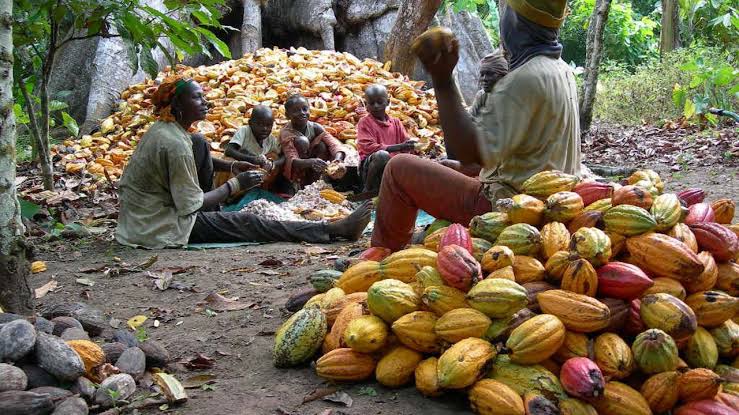
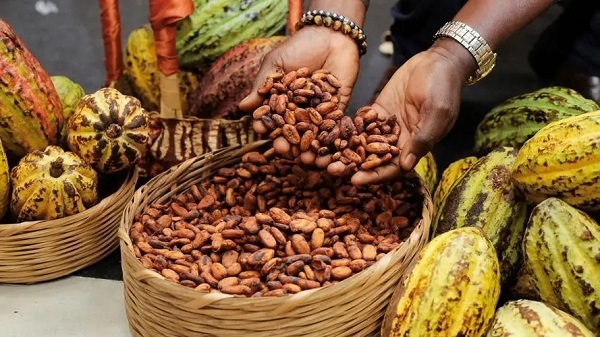
Nigeria is forgoing an estimated $2 billion in annual revenue by using only about 30 per cent of its installed cocoa processing capacity, the Federal Ministry of Agriculture and Food Security has disclosed, highlighting a structural gap between farm production and industrial value addition.
Agriculture Minister Abubakar Kyari disclosed the estimate at the Africa Cocoa and Coffee Conference in Lagos, organised by the Cocoa and Coffee Farmers Alliance Association of Africa with the ministry and the Cocoa Research Institute of Nigeria. He said the country has installed processing capacity of roughly 2,000 tonnes, of which only about 30 per cent is utilised. The gap between farm output and industrial capacity has widened as exporters have preferred the simpler logistics of raw-bean shipments. Processors argue that reliable bean supply, predictable export rules and consistent power are prerequisites before they will commit to higher utilisation of existing plants.
"Roughly $2 billion in value addition slips away every year. It is not a shortage of resources; it is an opportunity waiting for the right investors," the minister said, calling for investment in domestic facilities that can produce cocoa butter, liquor, powder and chocolate instead of exporting raw beans.
Yields are the other constraint
Processing is only half the problem. Cocoa Research Institute of Nigeria acting executive director Abiodun Adedeji said productivity has remained between 250kg and 300kg per hectare for years, despite distribution of 601,000 improved pods between 2011 and 2015 and 300,000 seedlings during the COVID period. The ministry has now mandated the institute to produce and distribute one million hybrid seedlings.
Post-harvest losses compound the shortfall. Industry estimates cited at the conference suggest Nigeria loses 30% to 50% of agricultural output after harvest, including about 37% of cocoa, to inadequate storage, transport and handling. Weak farm-gate supply is itself a deterrent to processors justifying high utilisation.
Price volatility compounds the case
COCCEFAAA founder Adeola Adegoke noted the 2023-24 global cocoa deficit of roughly 490,000 tonnes drove prices above $10,000 a tonne before a subsequent correction, illustrating why raw-bean exporters are exposed to swings they cannot control. "When there is bumper harvest, price goes down. When there is shock, price goes to $12,000. Why should we produce more and earn less?" he asked.
The policy direction is value addition without banning raw exports, leaving room for beans shipments while trying to pull processors downstream. Whether $2 billion of stranded value moves depends on power, logistics, patient capital and a predictable export framework, none of which a conference communiqué can deliver alone.
For investors, the test is whether utilisation can be raised without solving every upstream problem at once, or whether reliable bean supply must come first. For policymakers, the risk is export restrictions that strand farmers without building the factories the strategy promises.
Up next
Ecobank Cuts SuperSavers Rates as MPR Reset Reaches Nigerian Savers
Ecobank Nigeria has cut interest rates on its SuperSavers product effective October 16, with reductions of up to 3.18 percentage points across four deposit tiers after the CBN's MPR reset to 23%.
More in Agriculture
See all
LCCI warns export curbs could hurt farmers
Inconsistent export policies could hurt farmers, says LCCI's Tunde Banjoko, calling for guaranteed offtake, better storage, affordable credit and a commodity board to set benchmark prices.
Cocoa grindings rebound, prices rise
Asia's cocoa grindings jumped 29.2% in Q3 2026 and Europe's rose 3.2%, pushing prices higher as demand recovers, with implications for Nigeria and Cote d'Ivoire.
FG, IFAD Begin 13th VCDP Supervision Mission as Programme Approaches Completion
The FG and IFAD launch the 13th Joint Supervision Mission of the Value Chain Development Programme, praising rice and cassava gains while flagging disbursement and counterpart-funding gaps.
About the author
Yaw Boateng
Corporate Reporter
Yaw Boateng writes for BusinessPress.