Stanbic IBTC subsidiaries lift nine-month profit 35% as group offers scrip at N159.86
Stanbic IBTC group nine-month profit before tax rose 35% to N113.37bn, driven by subsidiaries across banking, pensions and asset management, alongside a scrip dividend programme at N159.86 per share.
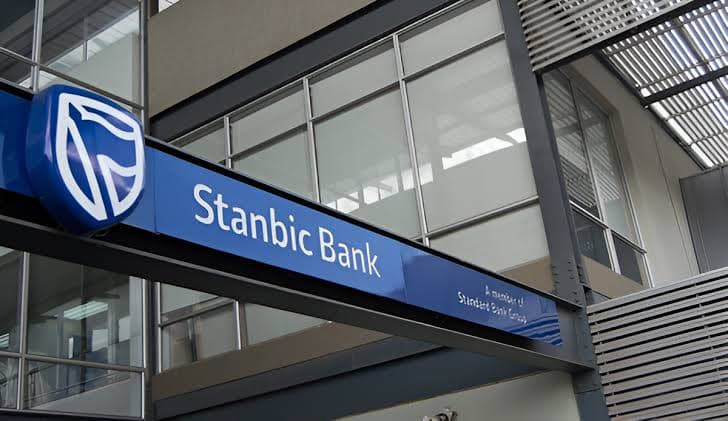
Stanbic IBTC Holdings' subsidiaries drove a 35 per cent increase in group profit before tax for the nine months ended September 30, 2026, a performance that has prompted the financial group to move early on a scrip dividend programme offering shareholders new ordinary shares at N159.86 per share in place of cash, according to its results and corporate disclosures.
The disclosures show that the subsidiaries, spanning the group's banking, pension, investment management and insurance operations, delivered the bulk of the pre-tax profit growth, a pattern that distinguishes Stanbic IBTC from the Nigerian financial sector's earnings profile, where banking often dominates but non-bank financial services carry an outsized share of the group's operating leverage.
Why the scrip programme is strategic
The scrip dividend, offering shares at N159.86, is not merely a shareholder convenience. By giving investors the option to take new shares instead of cash, the group preserves its capital while allowing heavily taxed custodial investors who prefer accumulation to increase their positions without brokerage friction. Scrip programmes of this kind are standard practice for large financial groups internationally, and Stanbic IBTC's use of the mechanism signals management's preference for retaining capital during a growth phase rather than distributing it.
That preference makes sense given the environment. With system liquidity above N6 trillion and CBN-issued bills yielding near 18 per cent, the group can deploy retained earnings across its pension custodial and asset-management franchises, which benefit directly from rising retirement-savings flows, without needing external funding. Shareholders who elect scrip participate in the same compounding, and the exchange will treat the exercise as an ordinary allotment process with standard CBT settlement.
[irp]
The earnings drivers behind the 35 per cent
The subsidiaries' contribution reflects the diversified model's strengths. The pension business benefits from the continued growth of Retirement Savings Account balances as contributions rise with wages and informal-sector pension participation expands; the custodial and asset-management franchises earn fees on market volumes that have repeatedly set records in 2026; while the insurance arm rides the sector's rising premiums. Banking, though still the group's largest earner, has grown more slowly in net interest income under the CBN's rate environment, which shifts relative weight to the non-bank businesses.
That structure also reduces the group's cyclicality risk relative to peers that are pure bank holdcos. In quarters when trading income or money-market spreads compress, Stanbic IBTC's pension and investment-management fee streams provide stability, which management believes supports a premium valuation over pure banks. The nine-month result, in which subsidiaries drove 35 per cent growth while the banking operation provided steadier contribution, is evidence for that argument.
[irp]
What investors should watch
The scrip election mechanics will determine how much capital the group retains. If a majority of shareholders elect scrip, the dividend into capital raises the share count but strengthens equity, positioning the group for further peripheral expansion in Africa, something the group's strategy documents have long flagged as direction of travel. A higher cash-election outcome, by contrast, would signal that income-focused investors dominate the register and slow the retention.
Attention will also go to Q4 performance, which for financial groups typically includes the year-end bonuses, fee recognition and seasonal inflows that decide the full-year subtotal. Stanbic IBTC's ability to carry its nine-month momentum into a strong finish would put the group's full-year profit on course for a record, affirming the diversified holdco model as a superior structure for Nigeria's current rate-and-reform environment.
[irp]
The wider significance
Within the NGX's financial services complex, Stanbic IBTC's results season performance has been among the more interesting because it demonstrates that non-bank financial businesses are no longer the poor cousin of Nigerian banking. Pension assets under management have grown into trillions of naira, asset-management fee pools are expanding with market volumes, and the group's ability to generate 35 per cent PBT growth across a diversified portfolio of financial franchises speaks to the maturing demand for savings and retirement products in Africa's most populous economy.
For income investors, meanwhile, the scrip programme at N159.86 offers an option; for growth investors, the subsidiaries' momentum justifies attention well beyond the banking headline. Both constituencies should now track Q4 disclosures, when the group's full-year dividend policy, including how much scrip flywheel becomes permanent capital, will become clear.
[irp]
Up next
LASACO swings to N1.60bn nine-month profit from N4.72bn loss a year earlier
LASACO Assurance posted a N1.60bn profit before tax for the nine months ended September 30, 2026, reversing a N4.72bn loss in the same 2025 period, on revenue of N23.81bn, though operating cash flow remained negative.
More in Corporate
See all
Dangote Refinery extends IPO as African investor demand surges
The extension gives more investors time to participate in a landmark listing that tests African capital-market depth and refinery valuation.

Ibile Holdings takes 51% of LASACO as insurer cuts losses
Ibile’s majority stake reshapes LASACO’s ownership as the insurer reduces accumulated losses and moves closer to dividends.
Transcorp Power stays resilient in Q3 as gas and grid risks persist
Transcorp Power maintained output and revenue despite gas-supply and grid constraints, showing the value of well-run generation assets.
About the author
Yaw Boateng
Corporate Reporter
Yaw Boateng writes for BusinessPress.