FG, FAAN, Bi-Courtney end 20-year MMA2 dispute with settlement
The federal government, FAAN and Bi-Courtney have signed agreements to end their long-running MMA2 dispute, with the operator waiving a N132 billion claim and FAAN set to collect concession fees.
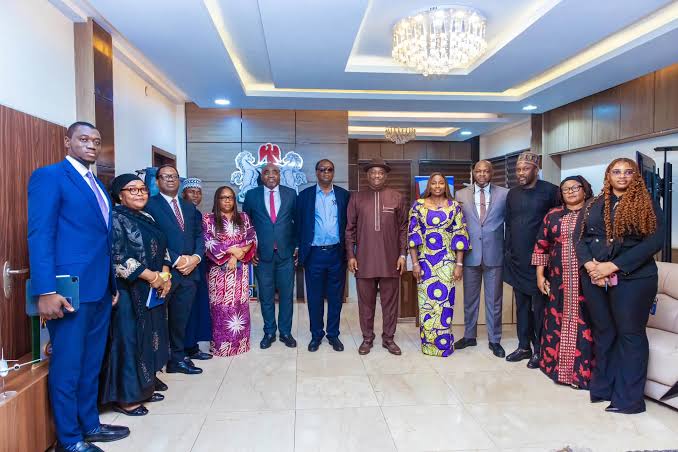
The federal government, the Federal Airports Authority of Nigeria and Bi-Courtney Aviation Services have signed agreements to end a dispute over the Murtala Muhammed Airport Terminal Two that has lasted nearly two decades and blocked the government from collecting concession fees.
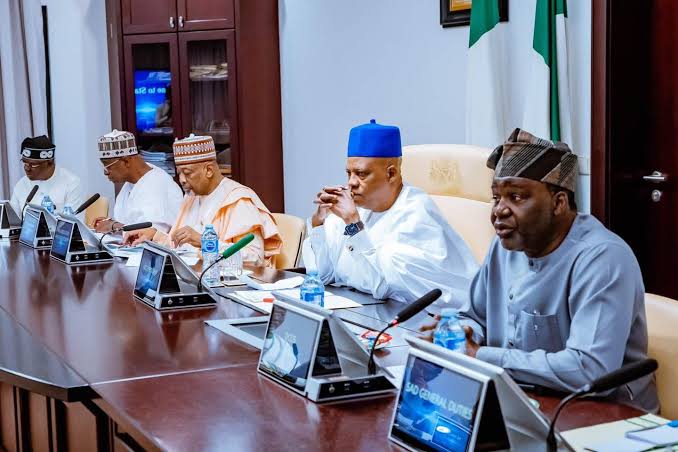
The agreements were signed in Abuja on Tuesday, October 20, by Aviation Minister Festus Keyamo, FAAN and Bi-Courtney, the operator of MMA2. The Federal Executive Council approved the settlement on April 30. The deal also involves Stabilini Visinoni, the construction contractor linked to the terminal.
Under the settlement, Bi-Courtney will waive its N132 billion judgment claim and the associated interest that had accrued since 2009. In return, the government and FAAN will waive their own claims against the company. FAAN will begin collecting concession fees from MMA2, a payment stream it had not received since the terminal began operations.
The origins of the dispute
The MMA2 concession was signed on April 24, 2003, between the federal government and Bi-Courtney. The terminal was built under a build-operate-transfer arrangement. The concession was originally for 12 years, starting from May 7, 2007, but it was later extended to 36 years.
The dispute began almost immediately. Bi-Courtney accused the government of failing to fulfil its obligations, including providing access roads and supporting the terminal’s commercial viability. The government accused the company of not paying concession fees and of mismanaging the asset.
The disagreement spilled into the courts, arbitration and the media. At various points, Bi-Courtney threatened to shut down the terminal, while the government threatened to take over the asset. Passengers and airlines bore the brunt of the uncertainty.
What the settlement changes
The most immediate change is financial. Bi-Courtney’s N132 billion claim was a contingent liability for the government. By waiving it, the company removes a potential fiscal burden and clears the way for a commercial relationship based on regular concession payments.
FAAN will now collect concession fees from MMA2. The amount and payment schedule have not been publicly disclosed, but the principle is important: the government will receive a share of the terminal’s revenue, just as it does from other airport concessions.
The settlement also clarifies the ownership of the General Aviation Terminal, which remains with the federal government and will continue to be operated by FAAN. That removes a long-running source of confusion over which entity controls the adjacent facility.
Expansion and regional flights
Bi-Courtney will be allowed to expand the MMA2 apron and operate regional flights to African destinations, subject to capacity and regulatory approvals. That is a significant opportunity for the company, which has long argued that the terminal’s growth was constrained by government restrictions.
The apron expansion would allow more aircraft to be handled at the terminal, increasing passenger throughput and revenue. Regional flights could position MMA2 as a hub for West African travel, competing with terminals in Accra, Lome and Abidjan.
The hotel and conference centre at the terminal will remain under separate leases. That means Bi-Courtney’s control over the commercial assets is not absolute; the government retains an interest in the broader airport city development.
Why it took so long
The dispute persisted because both sides had strong legal arguments and political backing. Bi-Courtney’s claim was based on a court judgment, while the government argued that the concession was poorly structured and that the company had not met its obligations.
The case was also complicated by changes in government, regulatory uncertainty and the involvement of multiple agencies. Each new administration inherited the dispute and had to decide whether to settle or fight. The FEC’s approval in April was a breakthrough, but it took another six months to finalise the agreements.
The settlement is a reminder that long-running disputes are costly. They tie up capital, deter investment and create uncertainty for passengers and businesses. A negotiated solution is usually better than a protracted legal battle, even if it requires compromises on both sides.
What it means for aviation
Nigeria’s aviation infrastructure is under strain. Airports are congested, terminals are outdated and regulatory oversight is weak. Private investment is essential to modernise the sector, but investors need confidence that contracts will be honoured.
The MMA2 settlement sends a positive signal. It shows that the government is willing to resolve legacy disputes and create a more predictable environment for public-private partnerships. That could encourage other investors to participate in airport upgrades, cargo terminals and maintenance facilities.
But the deal also raises questions. Will FAAN use the concession fees to improve airport infrastructure, or will the money disappear into general government spending? Will Bi-Courtney’s expansion plans be approved quickly, or will they get bogged down in bureaucracy? The answers will determine whether the settlement delivers real benefits.
The passenger perspective
For passengers, the most visible impact will be better facilities and more flight options. MMA2 is generally regarded as one of Nigeria’s better terminals, but it has been constrained by its size and the disputes over its operations. Expansion could reduce congestion and improve the travel experience.
Regional flights would also give passengers more choices. Currently, many West African routes are served from other terminals or require connections through hubs outside the region. A stronger MMA2 could make Lagos a more attractive regional gateway.
What happens next
The parties will need to implement the settlement, including transferring claims, setting concession fees and approving expansion plans. The process will require cooperation from FAAN, the Nigerian Civil Aviation Authority and other agencies.
Investors will watch for signs that the government is serious about honouring the deal. A smooth implementation would strengthen Nigeria’s reputation for resolving commercial disputes. A messy one would undermine the credibility of the settlement.
The MMA2 saga is not just a story about one terminal. It is a test of how Nigeria handles public-private partnerships. The settlement offers a chance to close a painful chapter and build a more stable framework for future infrastructure deals.
[irp] [irp] [irp] [irp] [irp]
Up next
BUA Cement board approves Q3 results ahead of October 30 filing
BUA Cement's board has approved its nine-month results, with the company set to file the statements by October 30 after a first half marked by strong revenue and profit growth.
More in Corporate
See all
Guinness Nigeria Q3 PAT jumps 53.1% to N40.69bn on lower finance costs
Guinness Nigeria reported strong Q3 growth with revenue up 20.4% and PAT rising 53.1% to N40.69bn.
Secure Electronic Technology Q3 Revenue Falls 15.5% as Quarterly Loss Doubles
The listed lottery operator reported revenue of N920.7 million for the third quarter against N1.09 billion a year earlier, with a loss after tax of N105.8 million and accumulated losses of N2.92 billion against equity of N3.48 billion.
Dangote Buys 25% of Kenya Pipeline for $327 Million as Lamu Refinery Looms
The $327 million purchase of 25% of Kenya Pipeline, disclosed in London, aligns the group with the Kenyan government equity plan for the $16 billion Lamu refinery and the East African allocation of its Lagos IPO.
About the author
Yaw Boateng
Corporate Reporter
Yaw Boateng writes for BusinessPress.
More by Yaw Boateng