
Fuel and Power Drained N820.7bn From NGX Industrial Firms in Nine Months
Fuel and power costs across listed industrial goods companies rose 6.3 per cent to N820.7 billion in the nine months to September, squeezing margins with no relief in sight.
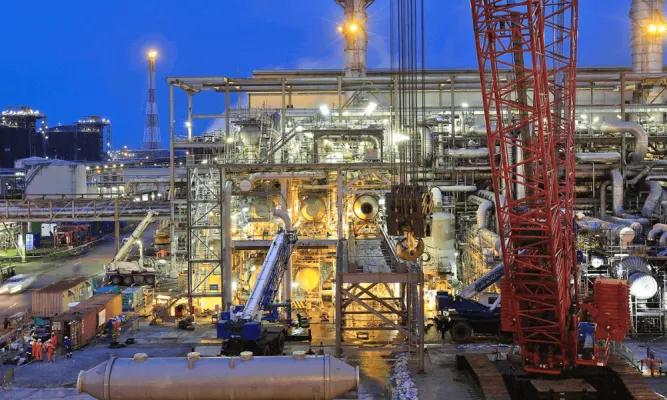
Industrial goods companies listed on the Nigerian Exchange spent a combined N820.7 billion on fuel and power in the nine months ended September 30, 2026, according to their unaudited financial statements — a 6.3 per cent increase on the N771.9 billion recorded in the same period of 2025, and a sum that shows no sign of easing as the year closes.
The filings cover the sector's biggest names: Dangote Cement, BUA Cement, Beta Glass, Berger Paints, Chemical and Allied Products, HBM Nigeria and Austin Laz. For these manufacturers, energy is no longer a line item to be managed but a structural cost that sits directly between revenue and profit, and analysts warn the squeeze is now visible in reported margins across the sector.
What N820.7 billion actually buys
The spending covers diesel, gas and other self-generation inputs that keep Nigerian factories running when grid supply fails or arrives at industrial-hostile voltages. It is an energy bill in two parts: the fuel that powers kilns, furnaces and boilers as a core production input, and the redundancy premium paid to operate when public power is unavailable. Cement kilns and glass furnaces are the extreme cases — both cannot tolerate interruption, so both buy reliability at whatever price the market charges.
The Manufacturers Association of Nigeria's own data show how the redundancy premium has grown: manufacturers spent N1.34 trillion on alternative power sources in 2025, 21 per cent higher than the N1.11 trillion of 2024. The nine-month filings suggest 2026 is tracking to a similar increase.
The margin mathematics
Energy inflation of 6.3 per cent against industrial revenue growth in the single digits means the cost line is winning. Manufacturers face an uncomfortable choice: absorb the increase and watch margins compress, or raise prices and risk volume losses in a consumer market already strained by 14.63 per cent inflation. Analysts quoted in sector reporting note that manufacturers cannot easily pass the added costs through without losing competitiveness — the textbook definition of a margin squeeze with no easy exit.
The cumulative picture is what matters for the broader economy. Energy costs at this scale function as a shadow tax on production, and every naira spent on diesel and self-generation is a naira unavailable for capacity expansion, hiring or product development.
Why self-generation keeps growing
The structural driver is the gap between what the grid delivers and what industry needs. Nigeria's power system has spent recent weeks in visible distress — the grid operator attributing constrained generation to gas shortages and low water levels, a claim the NNPC disputes — and industrial users plan around the worst case, not the average. Captive power, gas-fired plants and inverters are now standard factory equipment, financed from operating cash flow that would otherwise fund growth.
The policy response has been piecemeal: tariff banding, gas-supply interventions and state-level electricity markets all move slowly relative to diesel price cycles. Until grid power becomes contractually reliable at industrial scale, the N820.7 billion line will keep compounding.
The read-through for investors
The burden also distorts competition across borders. A Nigerian factory that must self-generate competes against regional peers drawing firm grid power at a fraction of the effective cost, which trims the margin on every export order and makes import substitution harder to defend — precisely the opposite of what an industrial policy built on AfCFTA market access intends.
For equity investors, energy intensity is now a screening criterion. The cement and building-materials names that dominate the industrial index have pricing power and have so far defended margins, but the smaller industrials — paints, chemicals, light manufacturing — absorb the same cost inflation with far less market power. Their nine-month results, landing over the coming weeks, will show which business models survive the arithmetic.
For the country, the number is a quiet argument for the one reform that changes everything: firm, gas-supplied grid power. N820.7 billion in nine months is the price of not having it.
Up next
Financing Overtakes Power as Nigerian Traders’ Number-One Constraint, NESG Finds
The NESG’s H1 2026 trade report ranks access to financing first, shows operating profit slipping to 98.1 into contraction, and finds investment plans stuck at neutral despite 156.1 expectations.
More in Economy
See allAjaokuta steel revival falters on power and raw-material gaps
Nigeria’s flagship steel complex needs reliable power, inputs and financing before it can anchor industrialisation, analysts warn.

Europe’s diesel and jet fuel supplies stay tight as refinery gaps bite
Refinery closures, sanctions and strong demand are keeping European product markets tight, with knock-on effects for African importers.

World Bank Lifts Nigeria’s 2026 Growth Forecast to 4.3 Per Cent
The revision reflects stronger domestic activity and a durable reform environment, but the bank stresses that household welfare and productive investment remain the tests of growth quality.
About the author
Abiodun Abdullahi
Author / Business and Markets Writer
Abiodun Abdullahi writes for BusinessPress.


