World Bank Moves to Mobilise $5.79 Billion in Private Financing for Nigeria
The World Bank Group says it is helping to mobilise up to $5.79 billion in private financing for Nigeria in 2026, a push projected to support about 850,000 direct and indirect jobs.
The World Bank Group said it is helping to mobilise up to $5.79 billion in private financing for Nigeria in fiscal year 2026, a push it projects will support about 850,000 direct and indirect jobs across agriculture, telecommunications, small businesses and other sectors.
The figure was set out in a World Bank feature titled "Unlocking $5.79 Billion in Private Financing", which described how coordinated public-sector reforms and private capital can be blended to address Nigeria's infrastructure and development gaps. The approach combines the bank's investment projects and platforms, financing from the International Finance Corporation, and guarantees from the Multilateral Investment Guarantee Agency.
How the model works
The World Bank's strategy is to use public resources to de-risk and crowd in private capital rather than to fund development entirely from its own balance sheet. Reforms improve the enabling environment; investment projects create viable opportunities; the IFC structures and mobilises private financing around them; and MIGA mitigates the political and regulatory risks that deter investors.
That sequencing is designed to stretch limited concessional funds. A dollar of World Bank support can anchor several dollars of commercial investment if the underlying project is bankable and the policy environment is predictable. The bank said the payoff would be more affordable broadband, stronger agricultural value chains, better access to finance for small businesses and more opportunities for women and young people.
Public money should open doors for private capital, not replace it. The test of the strategy is whether it builds markets that can finance themselves.
Nigeria's investment gap
Nigeria's need is vast. The country faces an infrastructure shortfall estimated in the hundreds of billions of dollars over the coming decades, from power and transport to water and digital connectivity. The government alone cannot meet it, especially with debt service consuming a large share of revenue. Private capital, both domestic and foreign, is essential.
Yet attracting it has been difficult. Foreign direct investment fell sharply in September, and portfolio flows have been volatile, reflecting the skittishness of global investors toward frontier markets. The World Bank's pitch is that its involvement signals reduced risk, encouraging pension funds, insurers and other institutional investors to participate.
The conditions for success
Mobilising $5.79 billion will require more than good intentions. It depends on stable macroeconomic policy, enforceable contracts, a transparent pipeline of bankable projects and a regulatory environment that protects investors without sacrificing public interest. It also depends on Nigeria's ability to spend well and to demonstrate that projects deliver.
The jobs projection — 850,000 direct and indirect positions — sets a benchmark against which the programme can be judged. If the financing materialises and flows into productive uses, it could help convert Nigeria's macroeconomic stabilisation into the tangible investment and employment that have so far lagged. If it does not, the gap between ambition and delivery will widen further.
Up next
Nigeria's Poverty Rate Rises to 38.7% as Global MPI Tops 1.2 Billion People
Nigeria's poverty rate rose to 38.7% in 2024 from about 33% in 2021, according to the 2026 Global Multidimensional Poverty Index, which recorded the first global rise since 2010.
More in Economy
See all
Nigeria's growth accelerates to 4.2% as World Bank urges better state spending
The economy expanded faster in the first half of 2026 and retained a current-account surplus, but the development lender says stronger public revenue must translate into services and jobs.

Nigeria Trade Surplus Doubles to N12.6 Trillion in Q2 2026
Africa's largest economy posted a record quarterly trade surplus in the second quarter of 2026 as exports outpaced imports, with non-crude receipts now accounting for more than half of outbound trade.
CBN Cuts Monetary Policy Rate to 23% in Its Largest-Ever Easing Move
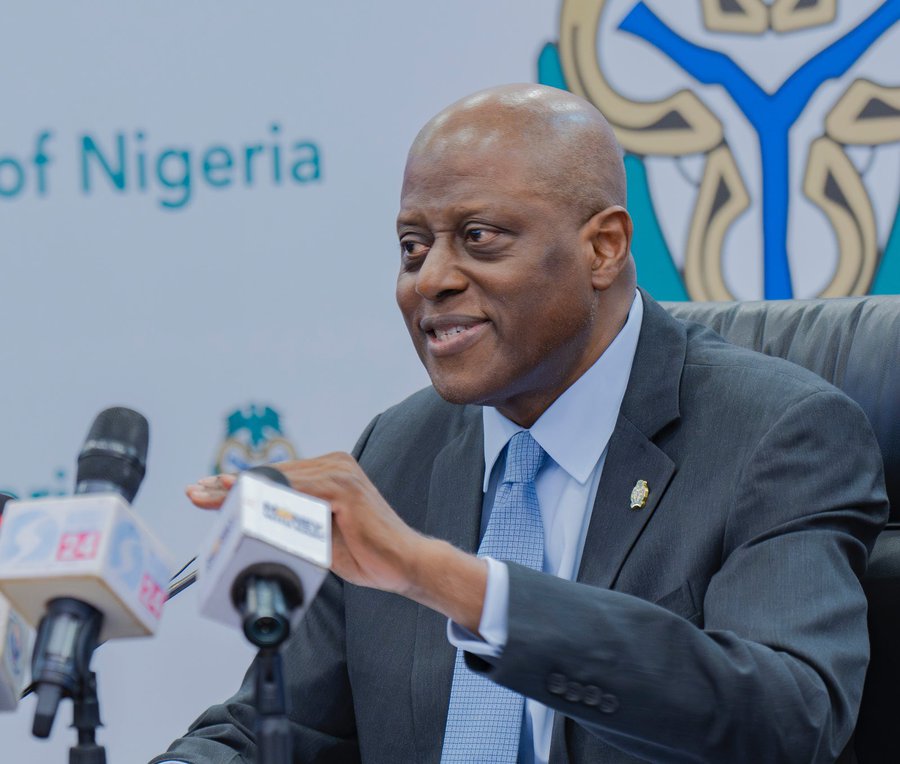
The Central Bank of Nigeria lowered its benchmark interest rate by 350 basis points on September 22, 2026, the steepest cut on record, as inflation eased for a third straight month and reserves strengthened.
About the author
Tunde Balogun
Economics Correspondent
Tunde Balogun writes for BusinessPress.
More by Tunde Balogun